
Eupelmus
Eupelmus
Description
How to identify
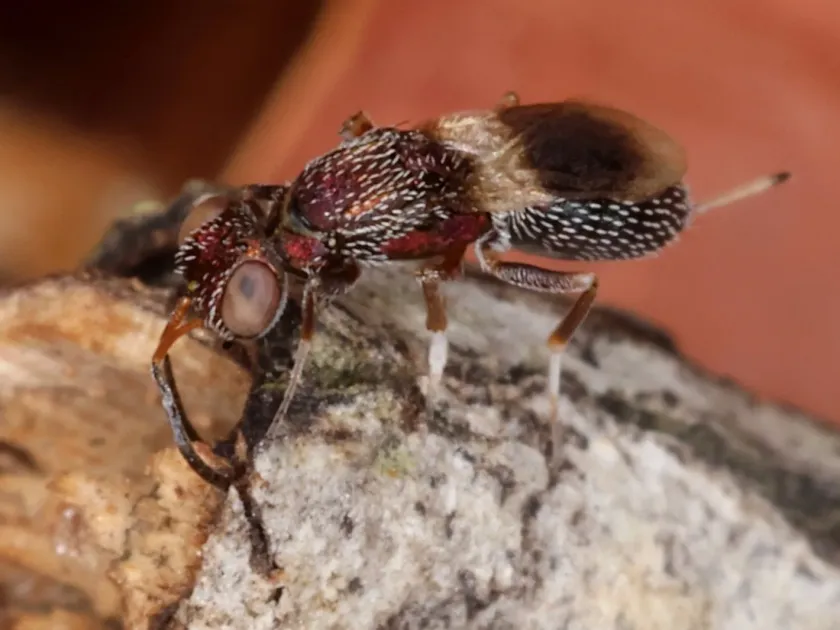
Eupelmus is a genus of insects within the family Eupelmidae, belonging to the superfamily Chalcidoidea. These are small parasitic wasps that have a complex role in agricultural environments.
Adult specimens are characterized by their iridescent, metallic coloration, which can range from green to bronze, making them distinct under magnification.
The morphology of their antennae and wing venation are key diagnostic features used by entomologists to distinguish them from other closely related hymenopterans.
While many species within this genus act as beneficial parasitoids, some are known to cause damage to crops or act as hyperparasitoids, affecting biocontrol efficacy.
Correct identification is crucial for farmers to determine whether the observed insect population is causing economic damage or providing natural pest control services.
What it damages
Eupelmus larvae can cause significant damage to cereal crops by infesting stems and developing grain, leading to stunted plant growth and reduced yields.
The feeding process of the larvae disrupts the plant's vascular system, preventing proper nutrient transport and affecting the overall weight and quality of the grain.
Infested plants may exhibit symptoms such as reduced vigor, discoloration, and increased susceptibility to secondary infections by fungal pathogens.
The severity of the damage is often correlated with the timing of the infestation; early attacks during the boot stage are particularly detrimental to the grain filling process.
In high-density infestations, the cumulative loss in yield can be substantial, necessitating proactive management and monitoring programs throughout the growing season.
When it appears
The activity of Eupelmus usually begins in spring when ambient temperatures become sufficient to support the emergence of adult insects from their overwintering sites.
The peak population levels typically coincide with the critical developmental phases of cereal crops, including the tillering and jointing stages.
Multiple generations may occur throughout a single growing season, depending on the climatic conditions and the availability of suitable host tissues.
Overwintering occurs in the larval or pupal stages within plant residues or stubble, making these areas primary reservoirs for the pest in the following year.
Weather patterns, particularly variations in moisture and temperature, play a significant role in determining the population dynamics and reproductive success of the pest.
Signs of infestation
Early warning signs of Eupelmus presence include yellowing or premature drying of specific leaves and stems within the field, often occurring in localized patches.
Deformed or empty heads in wheat and barley are common indicators of internal damage caused by the larvae during the grain maturation phase.
Tiny entry or exit holes on the stalks provide evidence of larval feeding activity and movement within the plant tissues.
- Flag leaf yellowing.
- Distorted ear development.
- Reduced stem density in infested areas.
- Small perforation marks on the stems.
Professional field scouting, utilizing sweep nets and plant dissection, is the most reliable method for detecting early-stage infestations.
Control measures
Effective management begins with sound agronomic practices, such as crop rotation, which helps break the life cycle of the pest by removing host availability.
Deep tillage after harvest is highly recommended to bury crop residues, thereby destroying overwintering larvae and significantly reducing population survival.
Chemical control with systemic insecticides should be implemented only after threshold levels are met, based on verified scouting data to minimize environmental impact.
Balanced fertilization and irrigation strategies support plant health, enabling crops to better withstand the stress caused by pest feeding.
Integrated Pest Management (IPM) programs should be adopted to ensure the preservation of beneficial insect populations while effectively targeting Eupelmus outbreaks.
Taxonomy
- Latin name
- Eupelmus
- Order
- Hymenoptera
- Family
- Eupelmidae
- EPPO code
- EUPESP
Discussion
No discussions yet — be the first.