
Anastatus reduvii
Anastatus reduvii
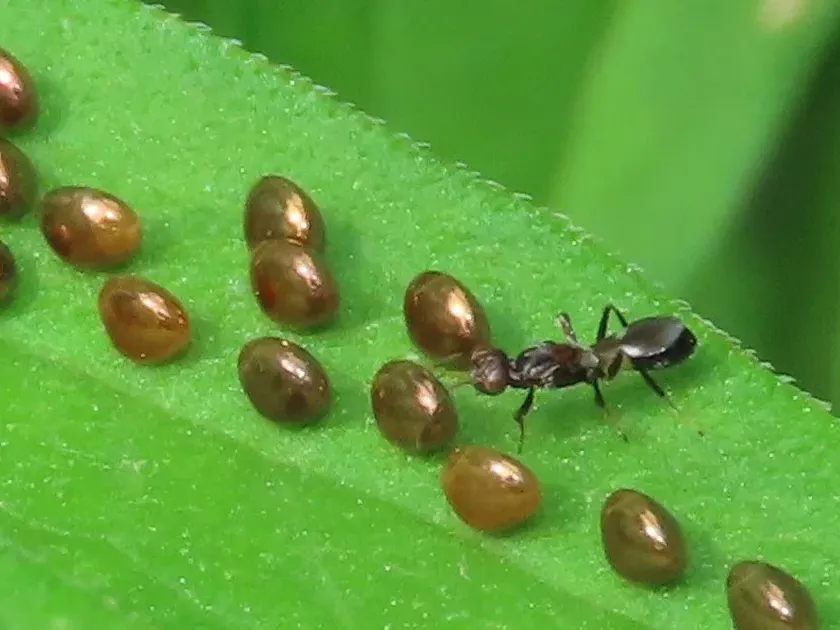
Description
How to identify
Anastatus reduvii is a parasitic wasp species belonging to the family Eupelmidae, order Hymenoptera. It is known for its role in the complex web of insect populations within agricultural landscapes.
The adult insect has a slender body with a metallic luster. Females possess specialized structures, including a well-developed ovipositor, which is used for inserting eggs into the host's egg batches.
The life cycle involves complete metamorphosis, consisting of four distinct stages: egg, larva, pupa, and adult. The development is highly dependent on the availability of suitable host insects, primarily pentatomids.
These wasps are specialized in exploiting the eggs of other insects, effectively acting as egg parasitoids in various habitats ranging from grasslands to dense crop fields.
Due to their small size and cryptic habits, identifying them in the field requires specialized knowledge of entomological markers and microscopic examination of host egg clusters.
What it damages
While Anastatus reduvii does not feed directly on plant tissues, it exerts a significant indirect impact by interfering with the biological control of major crop pests.
By parasitizing the eggs of beneficial insects or competing with other natural enemies, it can inadvertently disrupt the ecological balance that suppresses herbivorous pests.
The damage is particularly relevant in crops susceptible to shield bug infestations, such as cereals, maize, and soybeans, where the parasite actively seeks host clusters.
Indirect losses are manifested through the inability of the ecosystem to naturally regulate pest populations, leading to an increase in insect damage to leaves and stems.
Agronomists consider the presence of this species a factor that needs to be monitored to ensure the efficacy of integrated pest management programs.
When it appears
Adult emergence typically occurs in the late spring, triggered by rising temperatures and the activation of host species within the surrounding environment.
Peak activity is observed during mid-summer, coinciding with the reproductive period of various shield bugs that lay eggs on the leaves and stems of host plants.
The number of generations per year depends on the climatic conditions of the area, allowing the species to adapt its lifecycle to seasonal changes in host availability.
As temperatures begin to decline in autumn, the insects transition into their overwintering phase, often seeking shelter in debris or protected cracks to survive the winter months.
Monitoring efforts should prioritize the use of sticky traps and sweep netting in the late spring to track the emergence patterns and density of the local population.
Signs of infestation
The most reliable sign of the parasite's presence is the identification of perforated or abnormally colored egg clusters found on the underside of crop leaves.
Exposing a cluster to microscopic examination reveals circular exit holes on the eggs, which indicates that a wasp has successfully completed its development inside.
A decline in the survival rates of beneficial predatory insects in the area can serve as a biological indicator of the parasite's activity in the field.
Field inspectors look for abnormal clusters that fail to hatch typical nymphs, which often signals that the cluster has been successfully colonized by Anastatus.
Proper identification requires collecting suspected egg clusters and maintaining them in laboratory settings to confirm the emergence of the wasps.
Control measures
Control measures emphasize sustainable agricultural practices that minimize the disruption of natural predator-prey dynamics within the field.
- Maintain non-crop areas to preserve a stable population of both pests and beneficial insects.
- Avoid the use of broad-spectrum insecticides that may indiscriminately kill beneficial parasitoids.
- Implement selective bio-insecticides that target specific pest populations without harming the wider insect community.
- Use crop rotation strategies to disrupt the reproductive cycles of host bugs that the parasite relies on.
- Enhance field margins with diverse flowering plants to support the health and longevity of natural insect populations.
Taxonomy
- Latin name
- Anastatus reduvii
- Order
- Hymenoptera
- Family
- Eupelmidae
- EPPO code
- ANAURE
Discussion
No discussions yet — be the first.