
Anastatus dasyni
Anastatus dasyni
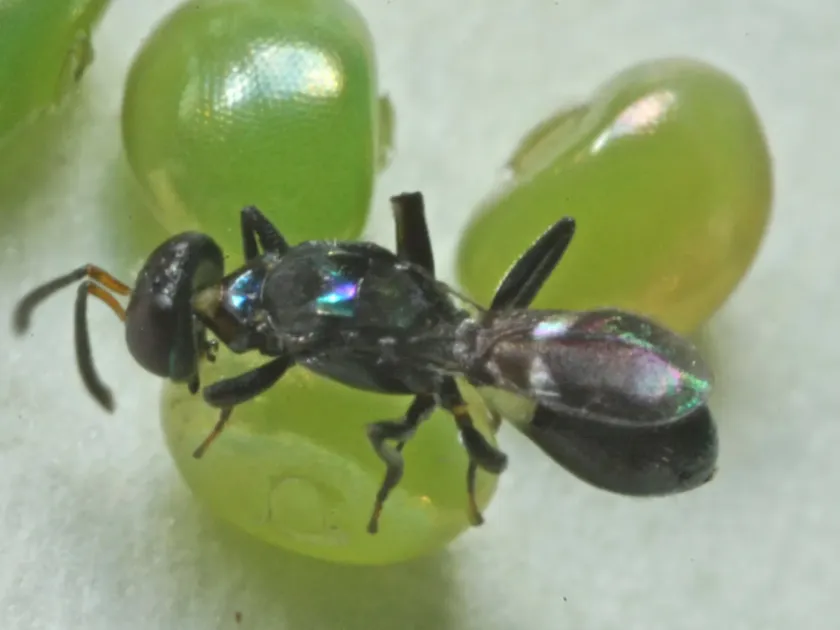
Description
How to identify
Anastatus dasyni is a species of parasitic wasp belonging to the family Eupelmidae. This insect is primarily recognized for its role in biological control, as it acts as an egg parasitoid of various harmful insects found in tropical and subtropical agriculture.
Visually, the adult wasp is small and possesses a distinctive morphology, with specialized structures on the abdomen and wings. They are highly mobile and exhibit remarkable searching behavior to locate host eggs hidden in foliage.
Systematically, this wasp is an important member of the Hymenoptera order, adapted to life cycles synchronized with specific plant-feeding bugs that cause significant agricultural damage.
Identification is best performed by entomologists examining the antennal structure and the shape of the ovipositor, which allows the female to penetrate protective layers of host egg masses.
They are generally recognized by their ability to maintain populations even when the density of the host species is relatively low, making them efficient biological agents.
What it damages
The primary impact of Anastatus dasyni is the suppression of pest populations, particularly bugs (Hemiptera) that feed on crops like coconut, cocoa, and various legumes. By parasitizing their eggs, the wasp prevents the development of larvae that would otherwise damage the crop.
While the wasp itself does not damage plants, its presence is a critical indicator of the health of the local agroecosystem. Over-reliance on chemical controls can inadvertently reduce these beneficial populations.
The economic value of this species is most evident in its ability to mitigate damage such as fruit scarring, stunted growth, and the spread of pathogens vectored by its insect hosts.
In specific scenarios where the host-parasite balance is disrupted, monitoring is essential to ensure that the ecological benefits are not outweighed by potential competition with other beneficial insects.
Effective management focuses on leveraging the natural parasitism activity of Anastatus dasyni to reduce the need for synthetic chemical inputs across agricultural fields.
When it appears
The activity of Anastatus dasyni is heavily dependent on seasonal climatic changes, which dictate the emergence and availability of its target host species.
Warm, humid conditions are ideal for the development of several generations of the wasp throughout the growing season, coinciding with the peak reproductive periods of agricultural pests.
Overwintering typically occurs within the host egg, providing a safe haven during colder or less favorable periods, ensuring the population persists from one season to the next.
During the peak of the harvest season, the wasp population density often reaches its maximum, providing a natural buffer against pest outbreaks that would otherwise threaten yield stability.
Successful timing of agricultural interventions requires knowledge of the wasp's life cycle to avoid periods where the parasitoids are most active and vulnerable to external stressors.
Control measures
Management strategies emphasize integrated pest management (IPM) practices that prioritize the preservation of Anastatus dasyni in the field environment.
Conservation of natural habitats and surrounding vegetation supports the wasp population by providing alternative food sources and nesting sites when the primary host density fluctuates.
The application of selective pesticides is recommended, as broad-spectrum chemicals can severely deplete beneficial wasp populations and lead to secondary pest outbreaks.
- Implementation of refugia zones within the planting area.
- Monitoring of egg parasitism rates to determine the need for intervention.
- Strict adherence to safety intervals after insecticide application.
By integrating these practices, growers can maintain a stable ecological balance that minimizes reliance on artificial controls while maximizing productivity and sustainability.
Taxonomy
- Latin name
- Anastatus dasyni
- Order
- Hymenoptera
- Family
- Eupelmidae
- EPPO code
- ANAUDA
Discussion
No discussions yet — be the first.