
Anastatus bifasciatus
Anastatus bifasciatus
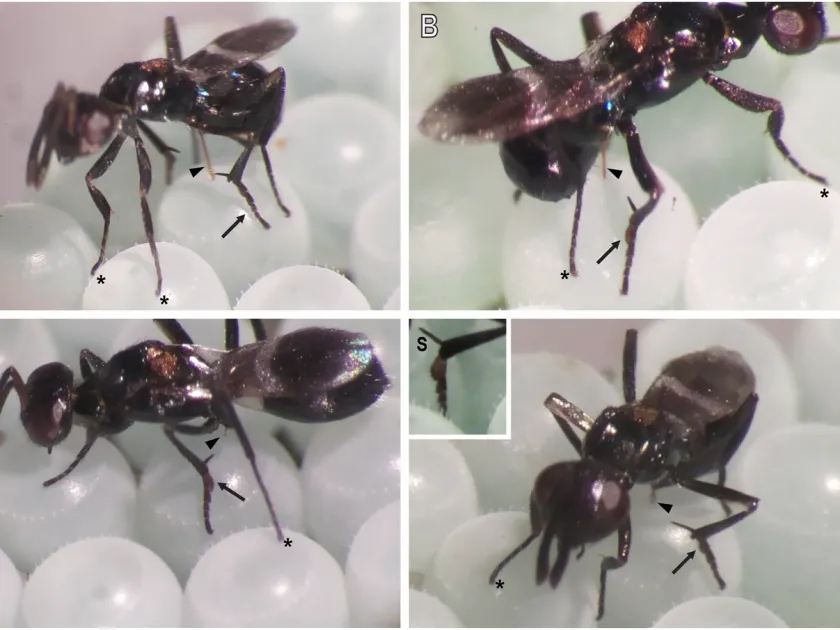
Description
How to identify
Anastatus bifasciatus is a small parasitic wasp belonging to the family Eupelmidae, known for its significant role in natural pest regulation.
The adult wasp measures approximately 3 to 5 millimeters in length, possessing a slender body often characterized by a metallic or bronze sheen.
The name bifasciatus originates from two distinct dark, transverse bands visible on the forewings, which serve as a primary diagnostic feature.
There is a notable sexual dimorphism; females are larger and possess a specialized ovipositor designed for laying eggs inside the host eggs.
Identification often requires careful microscopic examination of wing patterns and anatomical features to distinguish it from other related chalcid wasps.
What it damages
This insect is classified not as a pest, but as a beneficial parasitoid that provides natural suppression of harmful lepidopteran populations.
Its primary host is the gypsy moth, a notorious defoliator of forest trees and fruit orchards, which can cause significant damage to foliage.
The larvae develop inside the host eggs, consuming the embryo and effectively preventing the emergence of the caterpillar that would otherwise damage plants.
By drastically reducing the survival rate of pest eggs, this wasp acts as a critical biological agent in maintaining the ecological balance in orchards.
Adult wasps feed on nectar and honeydew, meaning they do not consume plant tissues and are entirely harmless to the vegetation itself.
When it appears
The seasonal activity of Anastatus bifasciatus is closely synchronized with the egg-laying habits of its primary host, the gypsy moth.
Adults typically emerge and become active during the summer months, seeking out fresh egg masses to lay their own eggs into the host's eggs.
The insect overwinters as a larva inside the host egg, providing a high level of protection against cold temperatures during the dormant season.
Multiple generations may occur in warmer climates, allowing for a rapid increase in the population of the parasitoid during the peak of the pest season.
Understanding the phenology of the wasp is essential for determining when to avoid pesticide applications to preserve their population.
Signs of infestation
The presence of this parasitoid is revealed after the host's development period, primarily through the examination of egg clusters.
Evidence of parasitization includes the appearance of tiny, perfectly round exit holes on the surface of the host eggs, created by the emerging wasps.
Parasitized egg masses may also show structural changes, such as a change in surface texture or color, making them look different from healthy egg clusters.
A reduction in the total number of emerging caterpillars in a monitored area is a strong indicator of successful biological control by the wasps.
Field surveys involving the collection and dissection of egg masses are the most accurate way to quantify the impact of the parasitoid on local pest levels.
Control measures
The primary control strategy for maintaining Anastatus bifasciatus is the conservation of its natural habitats through reduced chemical use.
Broad-spectrum insecticides are highly toxic to the wasps and should be strictly avoided during periods of adult activity in the orchard.
Integrated Pest Management (IPM) practices recommend the use of selective, biorational pesticides that spare natural enemies of pests.
Preserving adjacent hedges and flowering borders provides necessary food sources (nectar) for the adult wasps, supporting their longevity and reproduction.
Educational programs for orchard managers regarding the recognition of this wasp are vital for encouraging the use of natural control over chemical intervention.
Taxonomy
- Latin name
- Anastatus bifasciatus
- Order
- Hymenoptera
- Family
- Eupelmidae
- EPPO code
- ANAUBI
Discussion
No discussions yet — be the first.