
Anastatus
Anastatus
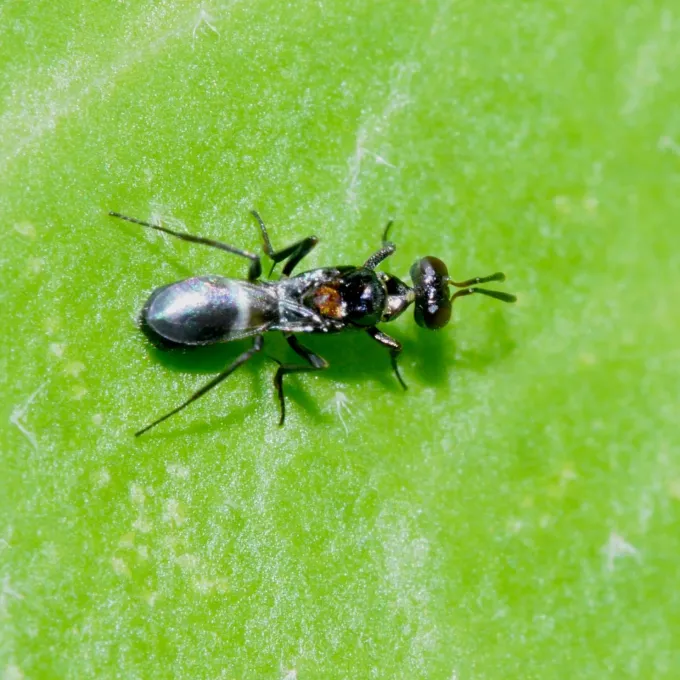
Description
How to identify
Anastatus is a genus of insects within the order Hymenoptera, belonging to the family Eupelmidae. These small parasitic wasps typically possess an elongated body, often with a metallic sheen, making them identifiable through close inspection.
The biology of these insects is complex and often tied to parasitism on the eggs of other arthropods. Most species lead a cryptic lifestyle, which complicates their detection during the early stages of field infestation.
Adults possess developed wings, allowing them to move actively in search of suitable hosts for oviposition. Their life cycle is closely intertwined with the development cycles of the pests they parasitize.
It is important to distinguish between beneficial species of this genus, used in biological control, and those that may cause harm by damaging agricultural produce through specific reproductive strategies.
For precise species identification, microscopic analysis is required, as the morphological differences between closely related Anastatus species are minimal.
What it damages
The primary objects affected by Anastatus are various agricultural and forestry crops, where the insect locates its host victims.
Specifically, some Anastatus species damage the reproductive organs of plants by laying eggs inside developing fruits or seeds, leading to disruption in their formation.
The damage manifests as a reduction in the quality and marketability of produce, as well as direct harvest losses due to damage to seed material.
In addition to direct impact, the presence of these parasitoids can provoke secondary infection of fruits by fungal or bacterial pathogens through ovipositor punctures.
Crops most at risk include orchard trees and certain legume species, where the pest finds optimal conditions for reproduction.
When it appears
The activity of Anastatus directly depends on climatic factors and the availability of target hosts in the agro-ecosystem.
Mass emergence of adults typically coincides with the vegetation period of plants on which their hosts develop, most commonly occurring in mid-to-late summer.
The insects overwinter as larvae or pupae inside the host eggs, providing them with protection against adverse environmental conditions.
The number of generations per year can vary depending on the temperature regime of the region, reaching several cycles in southern latitudes.
Monitoring for the pest should begin at the start of the target crop's flowering period, as this is when active migration of females occurs.
Signs of infestation
The first sign of pest presence is the appearance of small holes on the surface of fruits or seeds left after ovipositor punctures.
When infested eggs or seeds are dissected, larvae or puparia of the parasite may be found inside, having consumed all or part of the contents.
Infested fruits often drop prematurely or become deformed, acquiring an abnormal color or surface irregularities.
In some cases, necrotic spots are visible around the puncture site, indicating a plant tissue reaction to the pest's activity.
The presence of adults can be confirmed using sticky traps or by visual inspection of inflorescences during the morning hours when insects are less active.
Control measures
Controlling Anastatus requires an integrated approach that combines agrotechnical, chemical, and biological protection methods.
An important step is adherence to crop rotation and the timely destruction of plant debris, where the pest might overwinter.
The use of insecticides is effective only during the period of maximum adult activity; therefore, monitoring and spraying should strictly follow economic injury thresholds.
The use of pheromone traps can significantly reduce population density in orchards and production areas, preventing mass infestation.
Biological control, which involves conserving natural entomophages, also yields positive results within an integrated pest management (IPM) system.
Taxonomy
- Latin name
- Anastatus
- Order
- Hymenoptera
- Family
- Eupelmidae
- EPPO code
- ANAUSP
Discussion
No discussions yet — be the first.