
Tetrastichus schoenobii
Tetrastichus schoenobii
Description
How to identify
Tetrastichus schoenobii belongs to the family Eulophidae, order Hymenoptera, acting as a specialized parasitoid wasp.
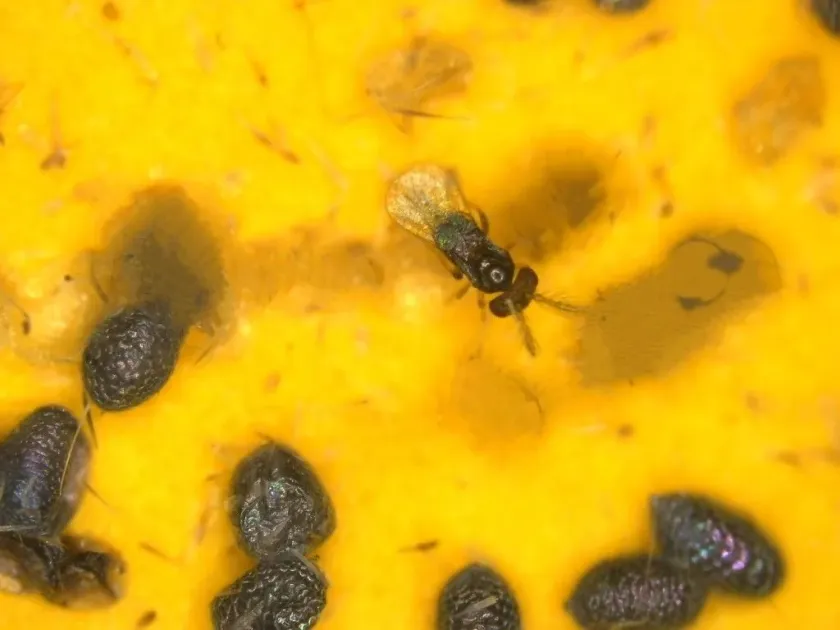
These insects are extremely small, often measuring only about 1 to 2 millimeters in body length.
They are characterized by a dark, metallic-looking body that is typical for many chalcid wasps.
The morphology includes transparent wings with a distinct venation pattern that helps researchers identify the species.
They are difficult to spot with the naked eye, often requiring specialized microscopic observation for correct identification in field conditions.
What it damages
This species is primarily known for parasitizing the eggs of the rice stem borer, such as Scirpophaga incertulas.
While the insect itself is beneficial, its existence is inextricably linked to the damage caused by these rice pests.
The wasp larvae develop inside the host eggs, effectively consuming the contents and preventing the pest larvae from emerging.
The overall impact on the crop is indirect, as it reduces the potential number of pests that would otherwise damage the rice stems.
It acts as a vital biological agent, reducing the population density of stem borers in paddy fields.
When it appears
The life cycle of this parasitoid is highly synchronized with the reproductive phases of its host species.
Emergence generally begins early in the season when the host moths initiate their egg-laying process on rice plants.
Multiple generations can occur throughout the growing season, tracking the presence of host egg clusters in the field.
Warm and humid environments are favorable for the rapid development and high activity of this parasitoid population.
The overwintering stage typically takes place within the remnants of host eggs or within agricultural plant debris.
Signs of infestation
The most reliable sign of their presence is the appearance of parasitized egg clusters on rice leaves.
Parasitized eggs often change color, appearing significantly darker or exhibiting a discolored appearance compared to healthy eggs.
Tiny exit holes on the surface of the egg clusters indicate that adult wasps have successfully completed their development.
The absence of characteristic "dead heart" or whitehead symptoms in rice plants often indicates effective parasitism.
- discoloration of host egg masses
- presence of tiny circular emergence holes in eggs
- decreased pest larvae density in rice stems
Control measures
Promoting and conserving populations of this natural enemy is the cornerstone of effective management.
Avoid the prophylactic use of broad-spectrum insecticides that could inadvertently kill these beneficial wasps.
Implementing integrated pest management (IPM) practices helps maintain the ecological stability of the rice field.
Preserving field borders with flowering plants can provide necessary resources for adult wasps, increasing their longevity.
Selective pesticides should be prioritized over highly toxic options to protect the native parasitoid populations.
Taxonomy
- Latin name
- Tetrastichus schoenobii
- Order
- Hymenoptera
- Family
- Eulophidae
- EPPO code
- TETSSC
Discussion
No discussions yet — be the first.