
Tetrastichus radiatus
Tetrastichus radiatus
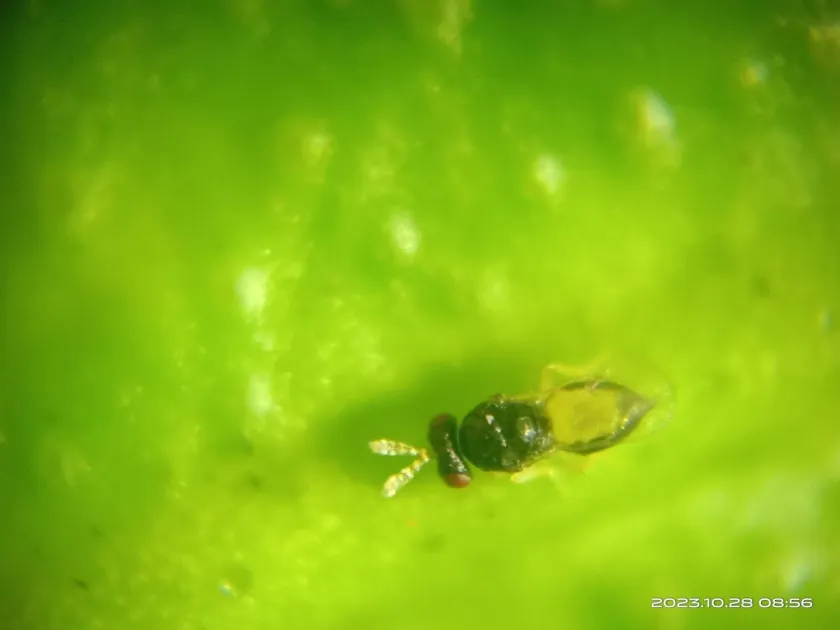
Description
How to identify
Tetrastichus radiatus is a tiny parasitoid wasp belonging to the family Eulophidae, order Hymenoptera. These insects are exceptionally small, typically measuring between 1 to 2 millimeters in length.
The adults are characterized by a dark, often metallic-colored body, which allows them to blend into the complex environment of a citrus canopy.
This species is highly specialized, having evolved to target the larval stages of the Asian citrus psyllid (Diaphorina citri) with precision.
Identification is challenging due to the insect's microscopic size, often requiring microscopic examination or molecular diagnostic methods in a laboratory setting.
Its biology is strictly tied to its host, making it a key component in the natural regulation of psyllid populations in various regions where citrus is cultivated.
What it damages
Tetrastichus radiatus does not cause direct damage to citrus plants; rather, it acts as a beneficial parasitoid that preys upon the Asian citrus psyllid.
The psyllid it targets is a vector for the Huanglongbing (HLB) disease, meaning the wasp plays a vital role in slowing the spread of this devastating pathogen.
While generally beneficial, its effectiveness can be limited in high-density orchards where the psyllid's reproductive rate outpaces the wasp's capacity to parasitize.
Indirect negative impacts might occur if the wasp suppresses other beneficial insects, although this is rarely the primary concern in citrus orchard management.
The overall impact of this species on agriculture is overwhelmingly considered positive as it provides a natural form of biological pest control.
When it appears
The activity of Tetrastichus radiatus is perfectly synchronized with the phenology of citrus flush and the life cycle of its host, the Asian citrus psyllid.
Population peaks are generally observed during the periods of maximum vegetative growth of citrus trees, which provide the primary habitat for the psyllid larvae.
The wasp thrives in warm, humid conditions, with optimal development occurring in temperature ranges between 25 and 30 degrees Celsius.
During the cooler months or periods of low host availability, the parasitoid survives in the pupal stage within the remnants of the host larvae.
Activity cycles generally resume in the spring as soon as the citrus trees begin to flush, providing the necessary host population to start a new cycle.
Signs of infestation
The most reliable sign of Tetrastichus radiatus activity is the presence of mummified psyllid larvae found on the undersides of young citrus leaves.
Under magnification, small circular exit holes can be observed on the bodies of the dead psyllid larvae, indicating where the adult wasp has emerged.
A noticeable decrease in the vigor and movement of psyllid larvae often suggests they have been successfully parasitized and are nearing the end of their life cycle.
The reduction of wax secretions in psyllid colonies is another indicator that the insects have been compromised by the parasitoid.
- Mummified, darkened psyllid larvae.
- Small, clean exit holes on the host body.
- Decline in the total population of psyllid nymphs.
- Presence of tiny black wasps resting on leaf surfaces.
Control measures
Management strategies for orchards where Tetrastichus radiatus is present must prioritize integrated pest management (IPM) practices.
Avoiding the use of broad-spectrum chemical insecticides is crucial to ensure the survival and continued efficacy of these beneficial parasitoids.
When chemical intervention is necessary, growers should select narrow-spectrum pesticides that are proven to be least harmful to Hymenoptera species.
Maintaining biological diversity in and around the orchard can support healthy populations of the parasitoid, contributing to long-term psyllid suppression.
Regular monitoring of the parasitism rate is recommended to assess whether biological control is sufficient or if additional interventions are required.
Taxonomy
- Latin name
- Tetrastichus radiatus
- Order
- Hymenoptera
- Family
- Eulophidae
- EPPO code
- TETSRA
Discussion
No discussions yet — be the first.