
Tetrastichus
Tetrastichus nyemitawus
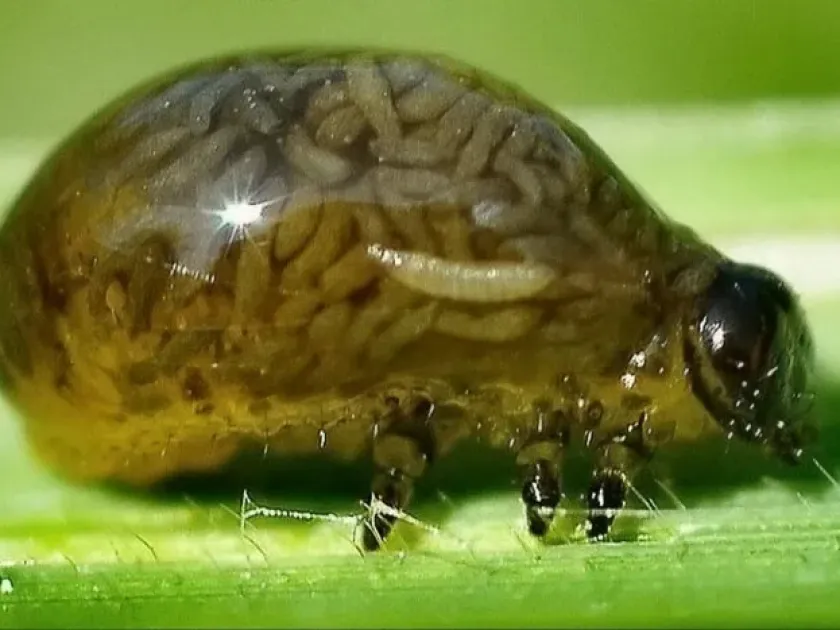
Description
How to identify
Tetrastichus (Tetrastichus nyemitawus) belongs to the order Hymenoptera, family Eulophidae. This small insect is often mistaken for a beneficial species, but this specific representative acts as a hyperparasitoid, negatively impacting populations of beneficial entomophages.
The adult insect has a compact body typically measuring 2–3 mm in length. Its coloration is usually dark, often with a metallic or greenish sheen, allowing it to camouflage effectively within the foliage of agricultural crops.
Accurate identification in field conditions often requires the use of a magnifying glass or microscope, as morphological characteristics are similar to other members of the Tetrastichus genus. Specialists identify them by antenna structure and wing venation.
The life cycle of Tetrastichus is closely tied to other insects. As a secondary parasite, it infests the pupae and larvae of primary beneficial insects, which poses a significant threat to biological control programs.
Its high reproductive capacity allows the pest to colonize agroecosystems rapidly. Females deposit eggs directly into the host, ensuring that offspring have a food source immediately upon hatching.
What it damages
The primary damage is the suppression of beneficial predator populations that control the numbers of aphids, leaf beetles, and other pests in vegetable and cereal crops.
By damaging the natural enemies of primary pests, Tetrastichus triggers outbreaks of those primary pests, leading to substantial crop losses and reduced produce quality.
This species can affect a wide range of crops, including wheat, corn, and vegetable crops in both open fields and greenhouses where parasitic Hymenoptera are present.
The presence of Tetrastichus reduces the effectiveness of biological control methods, forcing farmers to increase pesticide use, which disrupts the ecological balance of the agroecosystem.
Economic damage is indirectly linked to the need for additional insecticidal treatments in areas where the natural regulation of insect populations has been suppressed.
Control measures
The main control method is the monitoring of beneficial entomophage populations. It is critical to detect the presence of secondary parasites early to prevent their mass proliferation.
The use of insecticides must be strictly limited and selective to preserve populations of primary beneficial insects while suppressing the excessive numbers of secondary ones.
Integrated pest management (IPM) systems, including crop rotation and the establishment of buffer zones with nectar-bearing plants to support beneficial insects, are highly recommended.
Agrotechnical practices, such as deep plowing and the timely destruction of weeds, help reduce overwintering sites and breeding grounds for the pest.
- Utilization of selective biological agents.
- Regular entomological field monitoring.
- Limiting the use of broad-spectrum chemical sprays.
Taxonomy
- Latin name
- Tetrastichus nyemitawus
- Order
- Hymenoptera
- Family
- Eulophidae
- EPPO code
- TETSNY
Discussion
No discussions yet — be the first.