
Tetrastichus minutus
Tetrastichus minutus
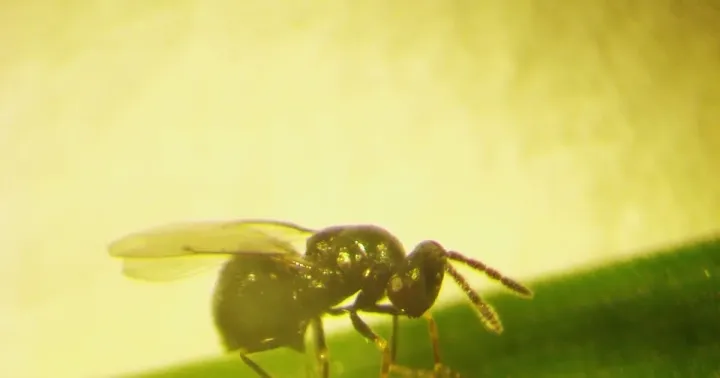
Description
How to identify
Tetrastichus minutus is a species belonging to the family Eulophidae within the order Hymenoptera. This tiny insect is of great interest in agricultural science due to its complex interactions with various plant tissues and potential host organisms.
Adult individuals are characterized by their extremely small size and typically dark coloration. Their wings are transparent with a specific venation pattern that serves as a diagnostic feature for identification among other micro-hymenoptera.
The life cycle of this species is closely linked to its specific environment, often involving the exploitation of host plant tissues or the parasitism of other smaller insects. Females possess specialized sensory organs for locating suitable breeding sites.
The larval stage passes through several developmental instars while feeding on plant parenchyma or the host organisms. Pupation typically occurs within the protected environment of the leaf or stem, ensuring survival against predators.
Optimal development occurs under conditions of high humidity and moderate temperatures. Under favorable circumstances, the species can complete multiple generations per season, leading to rapid population growth if left unchecked.
What it damages
The damage caused by Tetrastichus minutus involves the destruction of plant vegetative organs. The larvae primarily target leaves and young buds, which are the most active areas for nutrient transport and photosynthesis.
A wide range of horticultural and field crops can be affected by this pest. Young plants are particularly vulnerable, as damage to their apical growth points can lead to stunted development and reduced yields.
Feeding activities disrupt the plant's structural integrity, leading to deformation and chlorosis. As the larvae consume plant tissues, leaves often curl, turn yellow, and eventually undergo premature necrosis.
For ornamental crops, the presence of this pest is highly detrimental to the visual quality of the product. The aesthetic damage caused by leaf twisting and discoloration makes plants unsalable in professional markets.
Additionally, the feeding punctures created by the pest facilitate the entry of secondary pathogens, including various fungal and bacterial infections that can cause rapid tissue decay.
Signs of infestation
One of the earliest signs is the emergence of tiny necrotic spots on the leaf surface. These spots are indicative of early-stage larval feeding and tend to expand as the larvae continue their development.
Exhaust holes, which are extremely small openings, represent the points where adults have emerged from the plant tissue. These are key indicators that the pest population is currently active and reproducing.
Distortion of young shoots and curling of the foliage are common physical manifestations of infestation. When the apical buds are damaged, the entire growth pattern of the plant becomes irregular and slow.
Leaves affected by the pest often lose their vigor and turgor, resulting in a wilted appearance despite adequate irrigation. This systemic weakness is a result of the destruction of the internal vascular tissue.
Visual observation under high magnification often reveals a loss of the natural waxy cuticle and luster on the leaf surface. Affected areas appear matte and become increasingly fragile over time.
Control measures
Effective management begins with rigorous monitoring using sticky traps and regular visual inspections of the crop canopy. Early detection is essential to prevent the pest from reaching economic injury levels.
Cultural control practices, such as the removal of plant debris and the elimination of host weeds, are critical. By cleaning the growing area, the potential for overwintering generations is significantly reduced.
Biological control methods involving the introduction of predatory mites or other entomophagous insects can help regulate the population density of Tetrastichus minutus naturally.
In cases of severe infestation, systemic insecticides are often required. It is recommended to select products that are highly effective against internal plant feeders while minimizing impact on beneficial pollinators.
Application timing should be strategic, focusing on early morning or late evening hours to improve efficiency. Adherence to safety intervals between the last pesticide application and harvest is mandatory to ensure food safety.
Taxonomy
- Latin name
- Tetrastichus minutus
- Order
- Hymenoptera
- Family
- Eulophidae
- EPPO code
- TETSMI
Discussion
No discussions yet — be the first.