
Tetrastichus brevicornis
Tetrastichus brevicornis
Description
How to identify
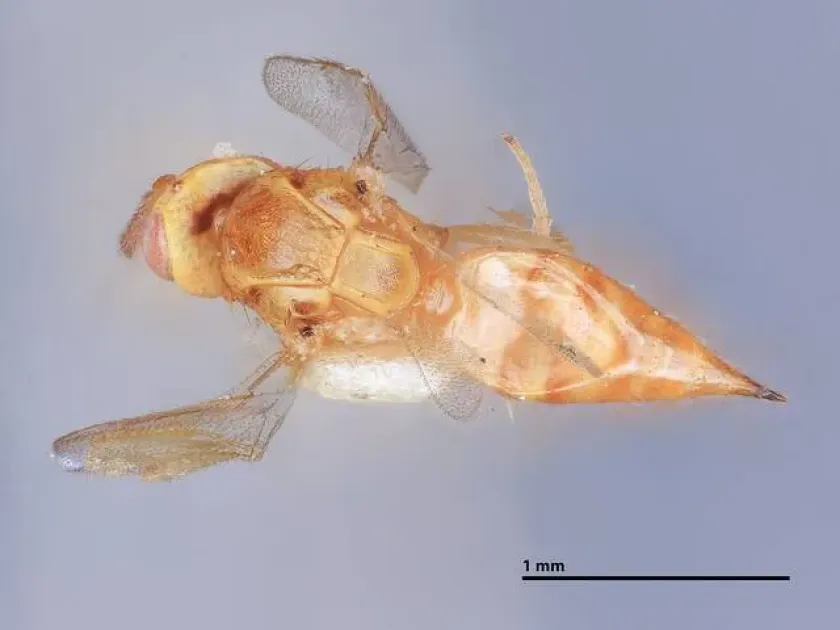
Tetrastichus brevicornis belongs to the Eulophidae family within the Hymenoptera order. These are tiny parasitic wasps that play a complex role in agricultural ecosystems, acting as both regulators and, in some cases, potential pests depending on their host range.
The adult insects are minute wasps, often with a dark body and a metallic sheen. They possess transparent wings with distinct venation patterns typical of the Eulophidae family, requiring high-magnification tools for identification.
The larval stage is endoparasitic, developing entirely within the body of a host insect. The larvae are legless and whitish, specialized for life inside a host, which protects them from environmental stressors.
The life cycle involves egg, larval, pupal, and adult stages. Females are equipped with an ovipositor used to locate and infect suitable host insects residing within plant tissues or foliage.
The biological success of this species is highly dependent on host availability and favorable climatic conditions, which determine the rate of population turnover during the growing season.
What it damages
This species impacts various crops by parasitizing insects that inhabit plant tissues. While often considered a regulator, its activity can cause disruption in Integrated Pest Management (IPM) programs.
The primary damage is caused by the larval consumption of the host, which can lead to the premature death of the host or a significant reduction in its reproductive potential, affecting the natural balance of insect populations.
Plant damage can occur as a secondary effect, especially if the host insect's presence or the parasite's emergence from the plant tissue creates entry points for fungal or bacterial pathogens.
The severity of the impact depends on the population density of the parasite. High infestation rates can lead to localized failures in biological pest control within agricultural plots.
Agronomists assess the economic threat by monitoring the impact of these wasps on the efficacy of natural enemies that are intentionally deployed to manage major crop pests.
When it appears
Adult activity typically begins during the spring as temperatures rise, allowing overwintering individuals to emerge and locate suitable hosts for their first generation.
Population peaks usually occur during mid-summer, coinciding with the peak activity of host insect species. Favorable humidity and warmth significantly accelerate their development.
Multiple generations can occur within a single growing season, provided that the availability of host insects remains high across the crop development stages.
As temperatures drop in autumn, the insects enter diapause. They successfully overwinter in plant debris, soil crevices, or protected areas within the field architecture.
Monitoring using yellow sticky traps is a standard practice to track the influx of adults and predict potential impacts on local pest populations.
Signs of infestation
The most visible signs of infestation are the tiny exit holes found on the pupae or bodies of the host insects after the wasp has completed its development and emerged.
Plants may show reduced vitality or stunted growth if the host insects were causing significant damage before being parasitized by the Tetrastichus wasps.
Adults can be observed by inspecting the underside of leaves during the early morning, where they often gather to rest or forage before becoming active in the sunlight.
A sudden decline in the target pest population, combined with physical evidence of parasitism on collected host samples, strongly suggests the presence of this species.
Laboratory confirmation via microscopic examination of field-collected samples is the only way to accurately identify this species among other similar Eulophidae.
Control measures
Effective management focuses on preserving natural ecological balance. Avoiding the broad-spectrum insecticide use protects the wider natural enemy complex.
Cultural practices, such as deep plowing and the removal of post-harvest crop residues, are effective in disrupting the overwintering cycle of these insects.
Crop rotation helps break the life cycle by ensuring that the primary hosts are not continuously available in high densities on the same piece of land.
Integrated Pest Management strategies should prioritize selective biopesticides that minimize collateral damage to non-target beneficial insect populations.
Field monitoring and the maintenance of hedgerows or wild flower strips can help stabilize the insect population and prevent excessive outbreaks of either the pest or its parasites.
Taxonomy
- Latin name
- Tetrastichus brevicornis
- Order
- Hymenoptera
- Family
- Eulophidae
- EPPO code
- TETSBC
Discussion
No discussions yet — be the first.