
Tetrastichus
Tetrastichus
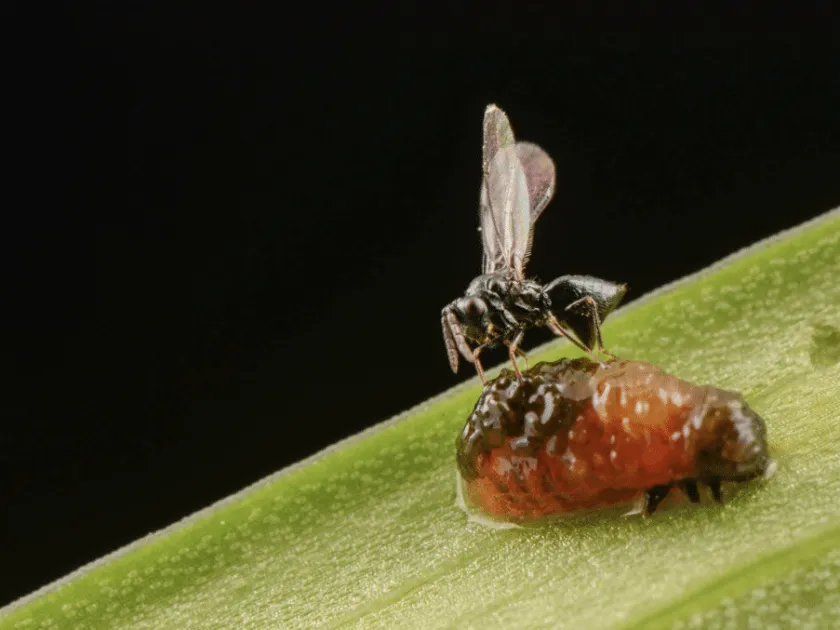
Description
How to identify
Tetrastichus belongs to the Eulophidae family within the Hymenoptera order. These are extremely small insects, typically measuring no more than 2-3 millimeters in length.
Visually, they resemble miniature wasps with a characteristic metallic sheen, often appearing black, dark blue, or greenish in color. The head and thorax are robust compared to the abdomen.
It is crucial to distinguish between species: while many Tetrastichus are beneficial parasitoids that prey on other pests, some species act as primary pests or hyperparasitoids that undermine biological control efforts.
The wings are transparent with a distinct vein pattern, which is a key diagnostic feature for species identification under a microscope. Females have elbowed antennae that assist in locating a host.
The larvae are legless, white or yellowish, and live concealed within plant tissues or inside the bodies of their host insects.
What it damages
The damage caused by members of the Tetrastichus genus depends on their specific biological specialization. Many species infest shoots, leaves, and fruits of various vegetable and ornamental crops.
Species that attack bulb scales, stem tissues, or develop within galls are particularly dangerous, as they cause severe deformation of plant organs.
The damage manifests as a weakening of the plant's overall immune system, leaving it susceptible to secondary fungal and bacterial infections.
In cases of high infestation, the pest can cause premature shedding of leaves and fruit sets, which critically impacts the overall crop yield.
Certain Tetrastichus species damage seeds by consuming their internal contents, leading to a complete loss of germination potential.
When it appears
The development cycle of Tetrastichus is highly dependent on temperature and humidity levels. The most active period occurs during the spring and summer when mean daily temperatures exceed 15 degrees Celsius.
These insects primarily overwinter as larvae or pupae, residing in plant debris, soil, or within the tissues of host plants.
In the spring, as temperatures stabilize, the adults emerge and begin searching for suitable substrates or hosts for oviposition.
Multiple generations can develop in a single season, with the total number of cycles directly correlated to the local climate and food availability.
Population peaks are typically observed in the second half of summer, as the cumulative number of generations reaches its maximum potential.
Signs of infestation
The first sign of infestation is the appearance of tiny exit holes on the surface of stems, leaves, or fruits, left behind by emerging adults.
Plants often exhibit signs of chlorosis, wilting of individual branches, or abnormal deformation of leaves without any visible external cause.
In the case of seed or fruit damage, premature browning and shriveling are common, often accompanied by a hollow sound when tapped.
The presence of specific galls or swellings on shoots serves as a strong indicator that this pest is inhabiting the plant structure.
Under close inspection with a magnifying glass, one may find microscopic egg clutches or larval waste on the undersides of leaves.
Control measures
Agricultural control measures include the mandatory removal and destruction of post-harvest debris where the pest may overwinter.
Deep autumn plowing helps significantly reduce the overwintering population by burying the larvae deep in the soil, where they are unable to survive.
Utilizing pest-resistant crop varieties and strictly following crop rotation schedules can substantially lower the risk of widespread infestation.
Chemical control is most effective during the peak emergence of adults, utilizing systemic insecticides with broad-spectrum activity.
It is important to remember that heavy chemical use can kill beneficial entomophagous insects; therefore, treatments should only be applied when the economic threshold of damage is exceeded.
Taxonomy
- Latin name
- Tetrastichus
- Order
- Hymenoptera
- Family
- Eulophidae
- EPPO code
- TETSSP
Discussion
No discussions yet — be the first.