
Tamarixia triozae
Tamarixia triozae
Description
How to identify
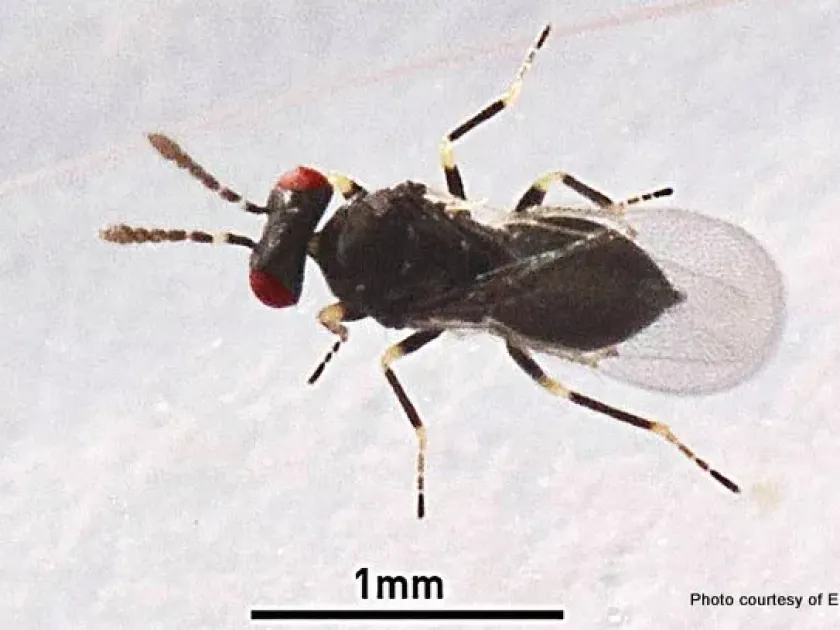
Tamarixia triozae is a minute insect belonging to the order Hymenoptera and the family Eulophidae. While frequently studied for its role as a biological control agent, it is intrinsically linked to the population dynamics of psyllids that plague various vegetable crops globally.
The adults are small parasitic wasps requiring microscopic examination for taxonomic confirmation. Understanding their specific niche in the ecosystem is crucial for agronomists, as their presence often indicates the presence of their host species, which are primary agricultural pests.
What it damages
This species is significantly associated with the potato psyllid, which causes severe damage to Solanaceous crops. The primary harm arises from the transmission of plant pathogens that lead to substantial yield losses in potato and tomato plantations.
The affected crops include tomatoes, potatoes, peppers, and eggplants. Plants attacked by the complex of these insects exhibit stunted growth, leaf chlorosis, and severe physiological disorders, often resulting in significant economic impact on farming operations.
When it appears
The activity of these insects is highly dependent on environmental factors, particularly temperature and humidity. Populations typically surge during the warmer months when the host plants are in their most vigorous growth phase.
Multiple generations can occur throughout the growing season. This rapid turnover makes them highly resilient to fluctuating climatic conditions, necessitating a proactive and sustained monitoring strategy during the entire agricultural cycle.
Signs of infestation
Symptoms of infestation are often characterized by leaf curling and the development of a distinct chlorotic pattern. Affected plants frequently develop a stunted appearance with shortened internodes, often referred to as a rosetting effect.
- Upward curling and yellowing of foliage.
- Purple discoloration of leaves in certain varieties.
- Stunted plant height and reduced fruit size.
- Poor crop development leading to uneven maturation.
Control measures
Integrated Pest Management (IPM) is essential for managing this pest complex. Control strategies should involve a combination of systematic insecticide applications to target the psyllid vectors and strict adherence to cultural practices.
Good agricultural practices, such as clearing weed hosts from the vicinity of fields and utilizing sticky traps for monitoring, are critical. Reducing the population density of the host psyllids is the most effective way to prevent the spread of associated diseases and minimize crop damage.
Taxonomy
- Latin name
- Tamarixia triozae
- Order
- Hymenoptera
- Family
- Eulophidae
- EPPO code
- TAMRTR
Discussion
No discussions yet — be the first.