
Sympiesis
Sympiesis
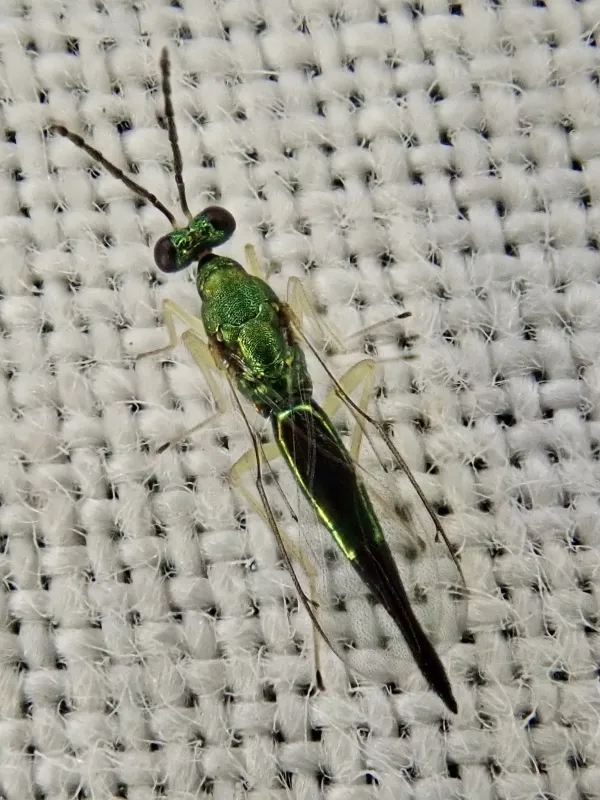
Description
How to identify
The genus Sympiesis belongs to the family Eulophidae within the order Hymenoptera. While many species are known as parasitoids, some have specific interactions with plant tissues that can lead to damage.
Adult insects are tiny, typically measuring between 1 and 3 mm in length. They are characterized by a metallic sheen, often displaying green or bronze colors, and have transparent wings with typical venation for the family.
Species identification usually requires a microscopic examination of antennal structure and genitalia. In agronomy, it is essential to distinguish between beneficial parasitic species and those that may harm crops.
Understanding their taxonomy and behavior is vital for integrating them into effective plant protection systems without disrupting natural ecological balances.
The life cycle encompasses four stages: egg, larva, pupa, and adult. Depending on environmental conditions, these insects can complete three to five generations per growing season.
What it damages
Sympiesis is primarily recognized for its role in controlling leaf-mining insects like those affecting apple trees, tomatoes, and other vegetables. However, certain species can damage plant tissues during oviposition or feeding.
Key affected crops include fruit trees, berry bushes, and greenhouse vegetable plants. Such damage often weakens the plant's overall vigor and immune system.
In cases of significant outbreaks, premature yellowing and leaf abscission are observed, which reduces the plant's photosynthetic capacity and ultimately decreases total yield.
Damage is often found on the lower and middle canopy layers where the microclimate is most favorable for the pest. These lesions can serve as entry points for secondary fungal and bacterial infections.
The greatest economic impact occurs in nurseries and intensive orchards, where foliage damage affects the visual quality and marketability of young trees and fruit.
When it appears
Activity begins in the spring when temperatures consistently reach 12–15 degrees Celsius. The first generation of adults emerges in sync with the activity of their primary host insects.
Population density peaks in mid-summer, favored by high temperatures and adequate humidity. These conditions provide optimal environments for reproduction and larval development.
Multiple generations follow until autumn cooling begins. As temperatures drop, the pests enter a state of diapause, overwintering in the soil or within plant debris.
Weather conditions significantly impact population dynamics; prolonged rain or sudden temperature drops can slow down their development, which is critical for forecasting.
Overwintering occurs primarily in the pupal stage, either within leaf mines or in the soil substrate, ensuring survival through harsh winter periods.
Signs of infestation
The first sign of presence is a change in leaf surface structure. Irregularly shaped necrotic spots often indicate tissue damage caused by the pest’s activity.
One may notice tiny puncture marks on the leaves from female oviposition. Over time, these marks may darken and expand into larger necrotic areas.
Using a magnifying glass, one can often find small larvae or empty pupal shells on the underside of leaves, which provides definitive evidence of infestation.
Reduced turgor in leaves and premature leaf deformation are secondary symptoms caused by the disruption of sap flow in damaged plant tissues.
- Chlorotic spots or discoloration on leaf blades.
- Small holes or clusters of necrotic tissue.
- Premature leaf drop.
- Deformation of young shoots during heavy infestations.
Control measures
Effective management relies on an Integrated Pest Management (IPM) approach, where chemical methods are a last resort. Maintaining populations of beneficial entomophages is a key priority.
Agronomic practices include deep autumn soil cultivation to destroy overwintering sites. Regular removal and disposal of fallen foliage are also crucial for reducing pressure.
Biological control agents, such as fungal or bacterial-based products, are highly effective against larvae while minimizing the need for synthetic pesticides.
If chemical application is necessary, selective insecticides with low toxicity to beneficial insects should be chosen. Proper rotation of active ingredients prevents resistance build-up.
Regular orchard monitoring using yellow sticky traps allows for early detection of adult emergence, enabling timely intervention before widespread damage occurs.
Taxonomy
- Latin name
- Sympiesis
- Order
- Hymenoptera
- Family
- Eulophidae
- EPPO code
- SYMISP
Discussion
No discussions yet — be the first.