
Quadrastichodella
Quadrastichodella
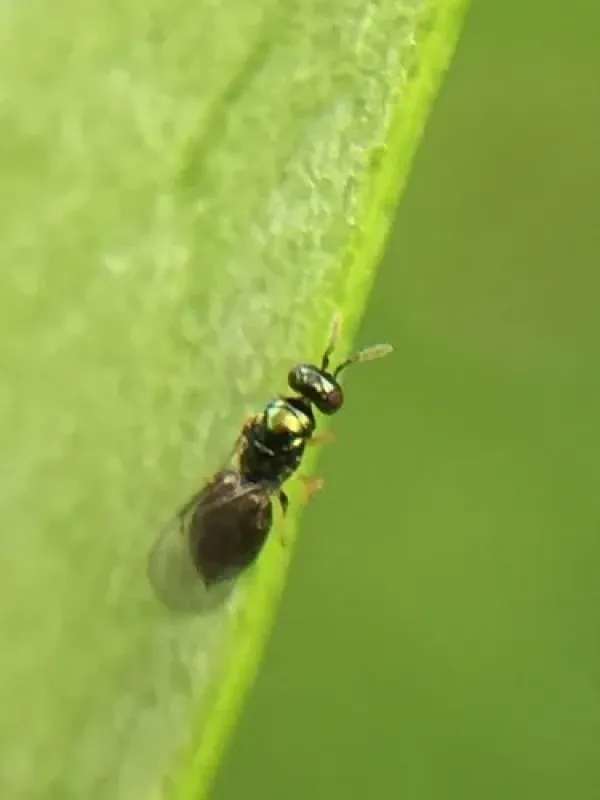
Description
How to identify
Quadrastichodella is a genus of minute parasitic wasps belonging to the family Eulophidae. These insects are known for their ability to induce the formation of galls on the tissues of their host plants, primarily within the Eucalyptus genus.
The adult wasps are tiny, often measuring only one to two millimeters in length. Due to their small size and specific morphological traits, identification usually requires specialized entomological equipment and expertise in taxonomy.
Systematically, they fall under the order Hymenoptera. Unlike many other chalcid wasps that are parasitoids of other insects, species within this genus are phytophagous, meaning they derive their nutrition directly from plant tissues.
Their biological success is linked to their specialized interaction with the host plant's physiology, allowing them to manipulate plant growth hormones to form protective galls where larvae complete their development.
These insects are considered significant pests in regions where Eucalyptus has been introduced for forestry or ornamental purposes, as they often establish populations in the absence of native natural enemies.
What it damages
The primary hosts of Quadrastichodella are Eucalyptus species. The larvae feed internally on leaves, twigs, and floral buds, causing the formation of abnormal growths known as galls.
This feeding behavior disrupts the nutrient transport system within the plant. Consequently, the affected foliage may drop prematurely, leading to reduced photosynthetic capacity and overall tree stress.
Significant infestations can result in stunted growth and a decline in the aesthetic value of the trees. This is particularly problematic in nurseries and urban forestry, where the appearance of trees is highly valued.
Impacts on floral buds can interfere with the tree's reproductive cycle, reducing seed production and limiting the natural regeneration of the forest stand over time.
In severe cases, a high density of gall-inducing insects can lead to the dieback of branches, particularly in younger trees that are less resilient to heavy pest pressure.
Signs of infestation
The most visible sign of infestation is the presence of galls. These can appear as small bumps, swellings, or irregular growths on the surfaces of leaves, petioles, or young shoots.
Deformation of the leaf blade is common, often accompanied by yellowing or chlorotic patches in the area where the gall has developed. Over time, these areas may become necrotic.
Tiny exit holes on the surface of the galls indicate that the adult wasps have emerged. These holes are a clear indicator of a completed life cycle stage for the pest.
A heavily infested tree often exhibits a sparse crown compared to healthy individuals. Reduced vigor and slower growth rates are characteristic of trees dealing with a chronic pest burden.
Under close inspection during the growing season, one might observe the presence of tiny wasps hovering near the canopy, although their small size makes detection challenging without prior experience.
Control measures
Sanitation is a primary management strategy. Pruning and destroying infected branches before the adult wasps emerge can significantly reduce the pest population density in a localized area.
Systemic insecticides have been utilized in nursery settings to control larvae developing within the galls, as the chemical is absorbed by the plant and reaches the larvae inside.
Biological control, involving the use of natural enemies or parasitoids, is being researched as a long-term solution. This approach aims to establish a balance between the pest and its predators in the environment.
Strict phytosanitary regulations are essential for preventing the spread of Quadrastichodella to new areas. Controlling the movement of infected nursery stock is the most effective way to curb the spread.
Regular monitoring through visual inspections and the use of pheromone or sticky traps allows for early detection, enabling rapid intervention before a minor infestation escalates into a major pest outbreak.
Taxonomy
- Latin name
- Quadrastichodella
- Order
- Hymenoptera
- Family
- Eulophidae
- EPPO code
- QUDRSP
Discussion
No discussions yet — be the first.