
Pnigalio
Pnigalio
Description
How to identify
Pnigalio is a genus of parasitic wasps belonging to the family Eulophidae, order Hymenoptera. Unlike typical agricultural pests, this group is highly regarded as a natural enemy that regulates the population of various insect pests.
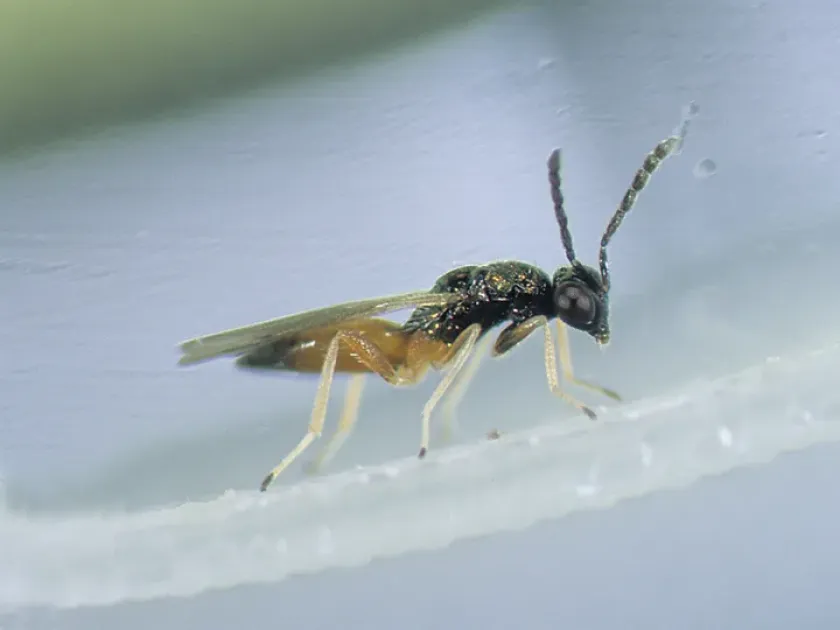
Adult Pnigalio wasps are small, typically ranging from 1 to 3 mm in length. They often exhibit a metallic body coloration and possess agile flight, allowing them to effectively locate their hosts across different crop fields.
The larvae of Pnigalio are ectoparasitoids. They attach to the outside of the host's body and derive all necessary nutrients by feeding on the host's hemolymph, eventually causing the host's death.
These wasps are widely distributed in both temperate and tropical climates. Due to their adaptability, they occupy diverse habitats including open fields, orchards, and protected greenhouse environments.
Their rapid developmental cycle allows for multiple generations per season, which is essential for maintaining consistent pressure on pest populations throughout the growing period.
What it damages
Pnigalio does not cause damage to plants. In agricultural systems, it serves as a critical biological control agent, specifically targeting larvae of leaf-mining flies (Agromyzidae).
The primary hosts of Pnigalio are pests that create tunnels within leaf tissue, such as Liriomyza species. These leaf miners are notorious for damaging crops like tomatoes, cucumbers, and ornamental plants.
By parasitizing the larvae of leaf miners, Pnigalio reduces the impact of these pests on plant photosynthetic activity. Thus, the presence of the wasp is a sign of ecological health.
Loss of Pnigalio populations due to chemical exposure often leads to catastrophic outbreaks of secondary pests. Therefore, preserving these wasps is vital for maintaining agricultural stability.
Farmers view Pnigalio as a valuable asset. The wasp acts as a self-regulating mechanism that mitigates the need for external chemical interventions to manage specific larval infestations.
When it appears
The seasonal activity of Pnigalio begins in early spring, synchronized with the emergence of the first generation of their host species. As temperatures rise, the wasp’s flight activity increases.
During the summer months, Pnigalio exhibits its highest level of activity. Rapid reproduction allows the wasp to quickly increase its population density, effectively tracking the rise in host numbers.
As autumn approaches, the biological rhythm of the wasp slows down. They prepare for winter by pupating in protected environments, including leaf debris or the upper layer of the soil.
In greenhouses or controlled environment agriculture, Pnigalio can be active year-round if the host species are present and environmental conditions are kept stable.
The seasonal appearance of Pnigalio is dynamic and directly tied to the presence of their hosts, ensuring they are present exactly when they are most needed to protect the crop.
Signs of infestation
The primary sign of Pnigalio activity is the observation of stagnant leaf mines on the plant. If the galleries show signs of interruption or the host larva appears dead, it is a strong indicator of parasitism.
Close inspection of affected leaves under magnification may reveal the small, translucent or light-colored larvae of the wasp feeding on the surface of the paralyzed leaf miner host.
Adult females of Pnigalio leave tiny puncture marks on the leaves during their host-searching and host-feeding behavior. These marks are often the first visible sign of the wasp's presence.
Yellow sticky traps used for monitoring in greenhouses often capture adult Pnigalio specimens. These captures allow farmers to confirm the presence and approximate population density of the beneficial insects.
The eventual emergence of adult wasps from the mines of their hosts is the final, undeniable proof of successful parasitization and effective biological regulation in the field.
Control measures
The primary control strategy for Pnigalio is conservation. Avoiding broad-spectrum insecticide sprays is essential, as these chemicals often prove fatal to these beneficial wasps.
Implementing an Integrated Pest Management (IPM) strategy is highly recommended. This includes using selective, biorational insecticides that target the pest while sparing the natural enemies.
Planting nectar-rich flower borders around fields can significantly enhance the longevity and fecundity of adult Pnigalio, providing them with essential carbohydrates.
Maintaining soil health and leaving some plant debris in non-crop areas can create refuge sites for the wasps to overwinter safely, ensuring a healthy population for the following season.
For high-value crops, biological augmentation (releasing laboratory-reared populations of Pnigalio) can be employed to quickly suppress severe leaf miner outbreaks without resorting to harsh chemicals.
Taxonomy
- Latin name
- Pnigalio
- Order
- Hymenoptera
- Family
- Eulophidae
- EPPO code
- PNIGSP
Discussion
No discussions yet — be the first.