
Pediobius
Pediobius furvus
Description
How to identify
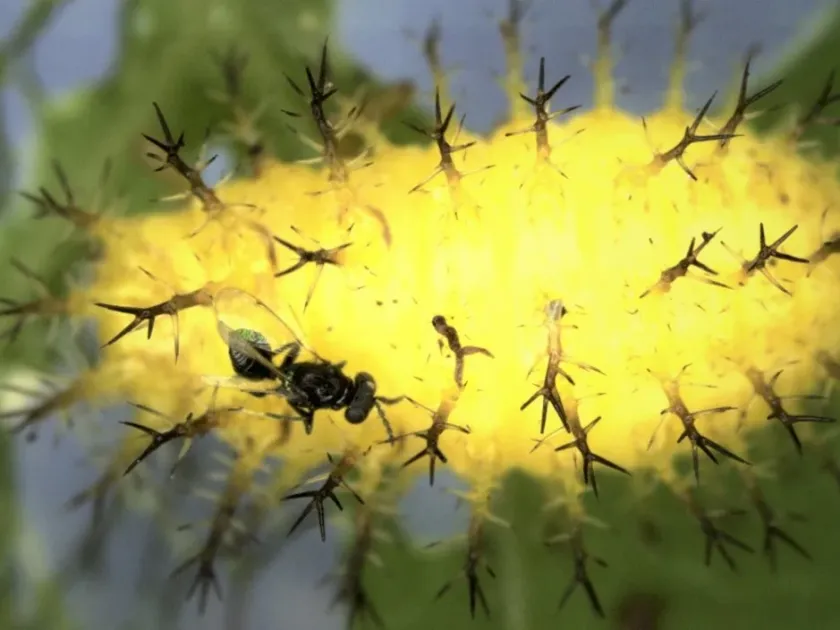
Pediobius furvus is a specialized parasitoid wasp belonging to the Eulophidae family within the order Hymenoptera. It is widely recognized in biological control programs.
The adult wasp is very small, typically measuring between 1.5 and 2 mm in length. Its body exhibits a dark, metallic blue or black coloration, which is a hallmark of this species.
The morphology includes specific wing venation and antennal structures that distinguish it from other members of the Eulophidae family during microscopic examination.
Although mistaken by some for a pest, Pediobius furvus is a strictly entomophagous insect, meaning it feeds exclusively on other insects, specifically their pupae.
Understanding its biology is essential for agronomists looking to implement sustainable and effective integrated pest management (IPM) strategies.
What it damages
Pediobius furvus does not cause any damage to crops. It is not a herbivore and does not consume plant tissues, stems, leaves, or reproductive organs.
Instead, it provides a vital ecosystem service by parasitizing the pupae of various moth species that are major pests of maize and other grains.
By effectively suppressing the population density of these harmful pests, the wasp acts as a natural pesticide that reduces the need for chemical intervention.
The presence of this parasitoid is a positive indicator of a healthy agroecosystem, contributing to increased crop quality and quantity.
Farmers can rely on this biological agent to manage pest outbreaks, which often prevents significant economic losses without the use of harsh synthetic chemicals.
When it appears
The activity period of Pediobius furvus is closely synchronized with the life cycles of its host insects and the thermal conditions of the agricultural environment.
During the warmer months, the wasp undergoes several generations, peaking when host larvae pupate in the fields, providing an abundant resource for the wasp.
Overwintering usually occurs in the larval or pupal stage inside the remains of its host, protected within crop residues or sheltered spots in the field.
As temperatures rise in the spring, the wasps emerge and begin their search for fresh hosts, marking the start of the seasonal biological control cycle.
Optimal environmental conditions are crucial for their development, and fluctuations in temperature can significantly impact their efficacy in the field.
Signs of infestation
The most common sign of the presence of Pediobius furvus is the discovery of empty or parasitized host pupae on the stalks or leaves of crop plants.
Unlike damage caused by pests, these pupae will have tiny, clean exit holes where the adult wasp has emerged after completing its larval development.
There is a noticeable absence of larval frass or foliage feeding damage around these sites, which helps to correctly identify the role of the wasp.
Regular scouting using yellow sticky traps or visual inspection of pupal sites can help determine the rate of parasitism currently occurring in the field.
Finding these characteristic exit holes is a clear indicator that the population of the pest is being naturally controlled by this beneficial insect.
Control measures
Managing the environment to protect and encourage Pediobius furvus is an essential component of professional agricultural practice.
Agronomists should prioritize the use of selective pest control methods that do not harm beneficial hymenopterans, such as biological insecticides or precise timing of applications.
The preservation of hedgerows or wild-flower margins can provide essential nectar sources for adult wasps, increasing their longevity and reproductive success.
- Minimize the use of broad-spectrum insecticides during host pupation periods.
- Implement selective spraying based on economic threshold levels.
- Encourage the use of biological control agents to maintain natural balance.
By fostering a habitat suitable for Pediobius furvus, farmers can achieve sustainable yields while reducing dependence on intensive chemical inputs.
Taxonomy
- Latin name
- Pediobius furvus
- Order
- Hymenoptera
- Family
- Eulophidae
- EPPO code
- PEDBFU
Discussion
No discussions yet — be the first.