
Pediobius
Pediobius
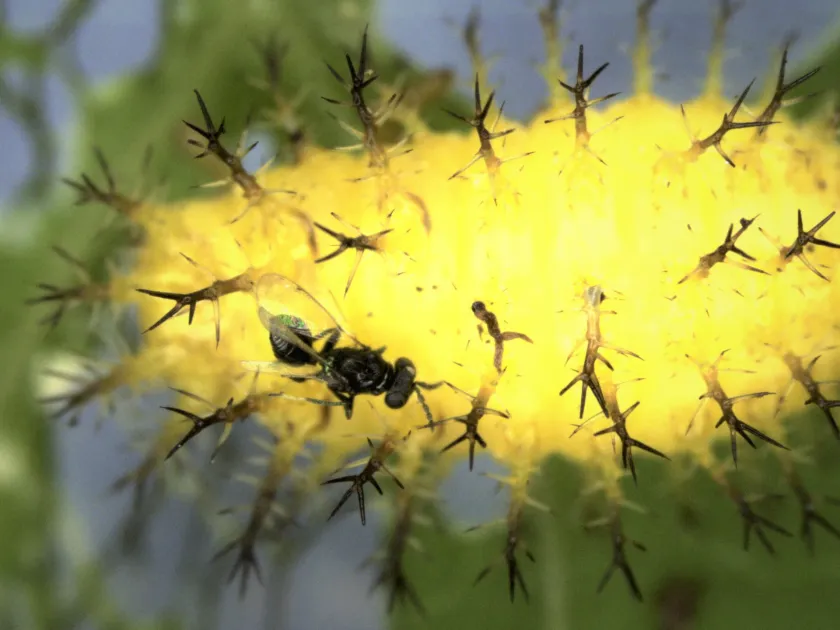
Description
How to identify
Pediobius is a genus of parasitic wasps belonging to the family Eulophidae, order Hymenoptera, known for its complex life cycles.
These wasps are extremely small, often measuring only a few millimeters in length, making them difficult to observe in the field without magnification.
Morphologically, they typically exhibit a dark, often metallic appearance, which is common among various chalcid wasps.
Classification of the genus is vast, with many species acting as specialized parasitoids targeting specific hosts within agricultural ecosystems.
Accurate identification requires professional entomological expertise, focusing on subtle wing venation and antennal segment patterns.
What it damages
In agricultural settings, the impact of Pediobius is often indirect as it can parasitize beneficial insects used in biological control programs.
By attacking the natural enemies of crop pests, Pediobius may reduce the efficiency of integrated pest management (IPM) strategies.
This biological interference can lead to secondary outbreaks of primary pests, such as aphids or various foliage-feeding insects.
The host range is broad, affecting both beneficial species and certain minor pests depending on the specific ecosystem balance.
The economic harm stems from the disruption of natural predator-prey dynamics, which is crucial for maintaining sustainable agricultural yields.
When it appears
The seasonal activity of Pediobius is highly synchronized with the life cycle of its hosts, which are prevalent during the growing season.
Multiple generations can occur throughout the year, allowing for rapid population increases whenever host numbers are sufficient.
Winter survival typically occurs in the larval or pupal stages, sheltered within plant debris or organic matter in the soil profile.
Peak emergence usually coincides with the most active periods of the host species, influenced by regional temperature and humidity levels.
Seasonal weather fluctuations can significantly affect the synchronization between the parasite and the host, altering their population dynamics annually.
Signs of infestation
Signs of Pediobius infestation are almost exclusively internal, as they develop as endoparasitoids inside their hosts.
One may observe a cessation of movement in host larvae or pupae, followed by abnormal coloration or bloating before death.
Small, pin-sized exit holes on the pupal shells of host insects provide clear evidence that the parasite has successfully completed its life cycle.
A decline in the overall effectiveness of beneficial predator populations in a greenhouse or field often hints at the presence of such parasitoids.
Laboratory dissection of suspected hosts reveals the developing larvae or pupae of the wasp within the host’s internal cavity.
Control measures
Management focuses on preserving beneficial insect populations, ensuring they remain the dominant force in natural pest regulation.
Avoid the prophylactic use of broad-spectrum insecticides, which often kill parasitoids and predators more effectively than the intended pest targets.
Sanitation practices, such as the removal and destruction of crop residues, help limit the overwintering success of these parasitic species.
Integrated Pest Management strategies should prioritize the use of selective biopesticides that do not harm the local beneficial insect community.
Regular field scouting and monitoring are essential to assess the level of parasitism and adjust crop management practices accordingly.
Taxonomy
- Latin name
- Pediobius
- Order
- Hymenoptera
- Family
- Eulophidae
- EPPO code
- PEDBSP
Discussion
No discussions yet — be the first.