
Eucalyptus gall wasp
Ophelimus maskelli
Description
How to identify
The Eucalyptus gall wasp (Ophelimus maskelli) is a minute insect from the order Hymenoptera, belonging to the family Eulophidae. Adult wasps are approximately 1 mm long and possess a dark, metallic body.
Females are equipped with a specialized ovipositor designed to inject eggs directly into the leaf tissue of eucalyptus trees. Due to their extremely small size and cryptic behavior, they are rarely seen by the naked eye.
Reproduction is primarily parthenogenetic, allowing populations to multiply rapidly when environmental conditions are optimal for development. The entire life cycle of this pest is intimately linked to the host plant tissues.
Dispersal primarily occurs via wind currents or the transportation of infested plant material between regions. Identification is typically confirmed through the observation of specific leaf symptoms.
Morphological characteristics of the adults require microscopic analysis for accurate species confirmation, as they share features with other members of the family.
What it damages
The primary hosts of this pest are various species of Eucalyptus, which are cultivated for timber, essential oils, or as ornamental trees in various global regions.
The wasp induces the formation of galls—pathological tissue outgrowths that serve as both a shelter and a food source for the developing larvae.
Heavy infestations result in premature leaf drop, which significantly weakens the tree and reduces its overall photosynthetic capacity and growth rate.
In nurseries and ornamental landscapes, Ophelimus maskelli can lead to severe aesthetic degradation and the eventual death of young saplings.
The severity of the damage is often dependent on the host tree's age and health, with younger specimens showing more pronounced canopy deformation and stress.
Signs of infestation
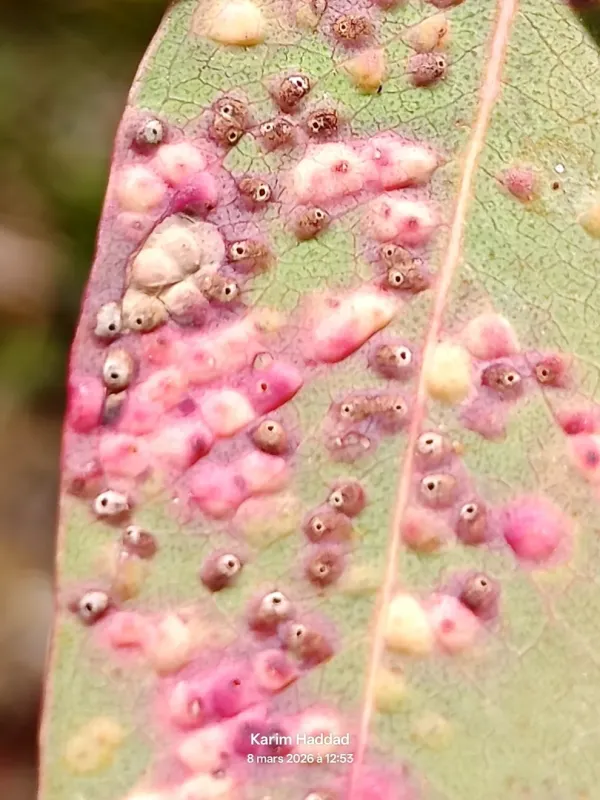
The earliest sign of infestation is the emergence of numerous tiny nodules or bumps on the leaf surface, which may initially appear as light green or yellowish spots.
As the larvae mature, the galls enlarge and may shift to reddish or brown colors, becoming highly visible against the green foliage of the eucalyptus tree.
Heavily infested leaves become distorted, curled, and brittle, leading to premature leaf drop which can leave branches bare during the growing season.
Inside the galls, the larvae feed on the internal leaf tissues, interrupting normal nutrient transport and weakening the tree's physiological defense systems.
The overall appearance of the tree becomes stunted and sparse, indicating a high level of colonization that requires immediate management attention.
Control measures
Biological control remains the most sustainable and effective management strategy, utilizing parasitoid wasps like Closterocerus chamaeleon to regulate pest numbers.
Cultural practices include the pruning and safe disposal of heavily infested branches to reduce the pest population density in the local environment.
Systemic insecticides may be used in nursery settings under strict guidelines, though they are generally discouraged for broad-scale forestry due to ecological concerns.
Stringent quarantine and phytosanitary measures during the transport of eucalyptus seedlings are essential to prevent the spread of the gall wasp to new areas.
- Regular inspection of eucalyptus foliage.
- Removal and destruction of infested plant waste.
- Integration of biological control agents.
Taxonomy
- Latin name
- Ophelimus maskelli
- Order
- Hymenoptera
- Family
- Eulophidae
- EPPO code
- OPHEMA
Discussion
No discussions yet — be the first.