
Ophelimus
Ophelimus
Description
How to identify
Ophelimus (Ophelimus maskelli) is a tiny hymenopteran insect belonging to the Eulophidae family. These wasps are minute, measuring approximately 1 mm in length, and typically have a dark, brownish-black body.
This species is globally recognized as an invasive pest that has spread alongside the planting of Eucalyptus species for timber and ornamental purposes.
The life cycle includes egg, larval, pupal, and adult stages. The insect is highly prolific, and its development is entirely endophytic, occurring within the leaf tissue.
Females possess an ovipositor that allows them to pierce young leaves and deposit eggs directly into the plant parenchyma, where the larvae will eventually develop.
The dispersal of this pest is largely facilitated by the trade of infested nursery stock, which underscores the importance of strict phytosanitary practices.
What it damages
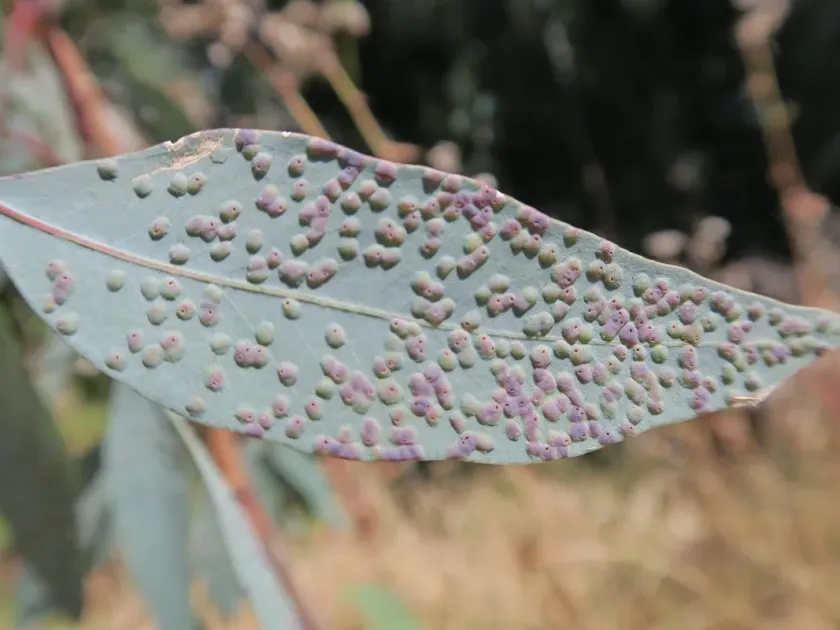
Ophelimus primarily targets Eucalyptus species, where it induces the formation of galls — abnormal cellular growths caused by the larval feeding process.
These galls interfere with the normal physiology of the leaves, significantly reducing the tree's photosynthetic capacity and nutrient allocation.
Heavy infestations lead to leaf chlorosis, premature senescence, and ultimately, massive leaf drop, which weakens the overall vigor of the tree.
In ornamental settings, the aesthetic value of the trees is severely compromised by the distorted and damaged foliage covered in numerous galls.
The continuous stress caused by persistent infestation can make the affected trees more susceptible to secondary pests and various environmental stressors.
Signs of infestation
The most distinctive symptom is the presence of numerous small, raised, nipple-like galls scattered across the leaf surface.
As the galls mature, they may change color and become hardened, often resulting in localized necrosis and the twisting of the leaf blade.
Upon close inspection, particularly with a hand lens, the exit holes made by emerging adults can be seen on the surface of the older galls.
Yellowing of the leaves in the canopy, starting from the younger growth, is a strong indicator of an ongoing infestation.
Monitoring the foliage for the presence of tiny, active adult wasps during warm periods is useful for early detection.
Control measures
Biological control is the most sustainable approach, utilizing parasitoid wasps like Closterocerus chamaeleon to naturally regulate the pest population.
Chemical control via contact insecticides is generally ineffective because the larvae are protected inside the galls for the duration of their development.
Systemic insecticides may provide some protection, but their application is often restricted to young trees due to the challenges of treating mature forest stands.
Cultural practices, such as the pruning and burning of heavily infested branches, help in lowering the density of the pest in local nurseries.
The primary defense remains rigorous inspection of new planting material and the promotion of natural predator populations in Eucalyptus growing areas.
Taxonomy
- Latin name
- Ophelimus
- Order
- Hymenoptera
- Family
- Eulophidae
- EPPO code
- OPHESP
Discussion
No discussions yet — be the first.