
Oomyzus scaposus
Oomyzus scaposus
Description
How to identify
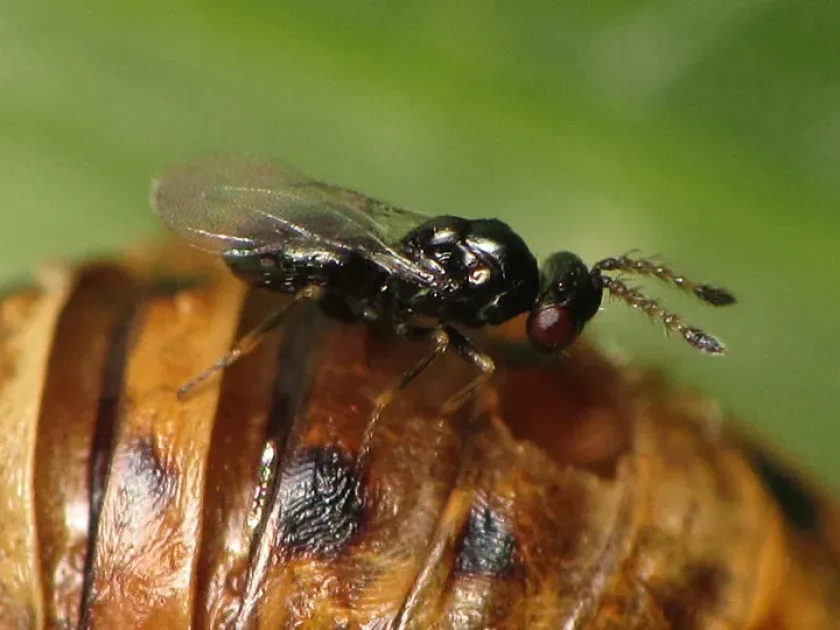
Oomyzus scaposus is a specialized species of parasitic wasp belonging to the family Eulophidae within the order Hymenoptera.
The adult insect is a minute creature, typically measuring only a few millimeters in length, making it extremely difficult to detect in field environments.
Females of this species exhibit specific search behaviors characteristic of specialized parasitoids, actively locating hosts by detecting chemical cues emitted by plants.
Adult coloration usually ranges from dark brown to black with a metallic sheen, which is a typical identifying feature for many small chalcidoid wasps.
Taxonomically, this species is classified as an entomophage, with a life cycle intricately linked to the development of other insects, often acting as a specialized parasitoid of pests.
What it damages
The primary source of nutrition and development for this species consists of larvae of other insects that inhabit the stems or tissues of host plants.
A strong association is frequently observed between this species and various cereal crop pests, where it parasitizes leaf-mining fly larvae or wheat sawfly larvae.
From an agronomic perspective, Oomyzus scaposus plays a complex role, as its parasitic nature can sometimes limit the population of beneficial insect predators.
Damage indirectly associated with this species manifests as the suppression of primary pest larval development, which may reduce the overall biological stress on the crop.
Critical damage could occur if the parasite shifts its focus to systematically eliminating beneficial insects used in biological control programs.
When it appears
The activity of adult Oomyzus scaposus is synchronized with the growing season of major agricultural crops, typically spanning from late spring through the summer months.
The species' life cycle is entirely dependent on host phenology, ensuring that the emergence of new wasp generations aligns with the presence of host larvae.
Under favorable temperate conditions, the parasite is capable of producing several generations per growing season, maintaining high population dynamics.
Overwintering typically occurs at the pupal or adult stage inside puparia or within the plant tissues where the larval development took place.
Spring emergence is triggered by specific temperature thresholds that initiate the metabolic activity of their hosts residing within cereal stems.
Signs of infestation
Visual identification of the wasp's presence is possible by observing specific exit holes in plant stems, through which adults emerge after pupation.
Dissecting infested stems within pest colonies often reveals mummified larval remains, providing clear evidence of parasitoid activity.
The presence of microscopic empty shells within plant tissues serves as a secondary indicator that the Oomyzus scaposus development cycle has been completed.
In the field, a gradual decline in primary pest numbers without the application of chemical insecticides can often indicate effective parasitoid intervention.
Specialized entomological tools, such as yellow sticky traps, allow for the systematic monitoring of adult wasp populations during their active flight period.
Control measures
Direct control measures against this species are rarely required, as it often acts as a natural regulator of pest populations within the agroecosystem.
If suppressing the activity of this species is necessary, the use of selective insecticides with minimal impact on non-target beneficial fauna is strongly recommended.
Standard agronomic practices, such as the timely removal of crop residues and deep autumn plowing, help destroy the parasite's overwintering sites.
Limiting the use of broad-spectrum pesticides during flowering stages helps preserve beneficial insect populations and maintains ecological balance.
Consistent phytosanitary monitoring is essential to accurately identify dominant insect species, ensuring that beneficial parasitoids are not misidentified as pests.
Taxonomy
- Latin name
- Oomyzus scaposus
- Order
- Hymenoptera
- Family
- Eulophidae
- EPPO code
- TETSCO
Discussion
No discussions yet — be the first.