
Oomyzus
Oomyzus
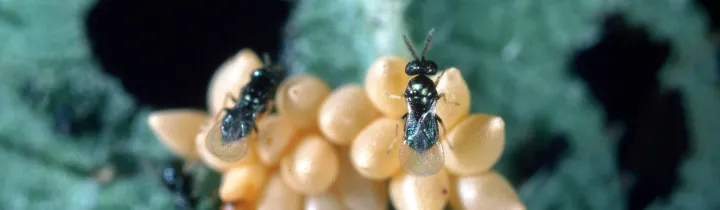
Description
How to identify
Oomyzus is a genus of insects belonging to the order Hymenoptera and the family Eulophidae. These tiny parasitic wasps serve as significant components of the natural biological control complex in various agricultural ecosystems.
Adult Oomyzus are minute, typically measuring between 1 and 2 millimeters in length. Their bodies are usually dark, often displaying metallic green or black hues, which is a common characteristic of many eulophid wasps.
Identification at the species level is extremely difficult without specialized microscopic examination. Agronomists and entomologists identify them by analyzing the specific structure of their antennae and wing venation patterns.
Taxonomically, the genus is closely related to other egg parasitoids. They exhibit significant ecological plasticity, allowing them to adapt to diverse climatic conditions and host environments across different regions.
While often viewed as beneficial entomophages, their role can be complex, as they may parasitize both harmful pests and other beneficial insects, necessitating careful observation within an integrated pest management framework.
What it damages
Oomyzus species do not damage plant tissues directly. Their impact is determined by their life history as parasitoids of the eggs of various Lepidoptera and other insects that affect field and vegetable crops.
Their primary hosts include the egg masses of several moth species, such as leafrollers and cutworms, which are known for causing significant damage to agricultural harvests.
In certain ecological scenarios, Oomyzus may act as a hyperparasite, attacking other beneficial parasitoids. This can inadvertently disrupt natural biocontrol, potentially leading to a higher pest population density.
The damage to crops is indirectly linked to the activity of the hosts they parasitize. If the parasite population successfully suppresses the primary pest, it serves a beneficial role; if it attacks beneficial insects, it can be detrimental.
Therefore, field assessment is crucial to determine if the presence of Oomyzus is providing net benefits or contributing to an imbalance in the agroecosystem's protective layer.
When it appears
The activity of Oomyzus is highly synchronized with the phenology of its hosts. Adults typically appear during the spring and summer months as soon as stable, warm temperatures are established.
Peak populations usually coincide with the mass egg-laying periods of the targeted pest species. Depending on the geographical region, this activity window generally spans from late spring through August.
The life cycle involves multiple generations per season. Development speed is highly sensitive to temperature fluctuations; warmer weather accelerates the reproductive cycle, leading to rapid population growth.
Winter survival typically occurs at the pupal or adult stage, often within the host eggs or sheltered among plant debris, allowing the species to persist through the dormant winter season.
As soil and air temperatures rise in the spring, overwintering individuals emerge to begin searching for fresh egg masses, which corresponds with the start of the primary crops' vegetative growth.
Signs of infestation
Signs of Oomyzus infestation are often subtle and difficult to detect without careful inspection. The most characteristic indicator is the presence of tiny, circular exit holes on the surface of the pest's eggs.
Infested eggs frequently undergo color changes, often darkening or turning grey compared to healthy eggs, which indicates that the internal development of the parasite is occurring.
Microscopic analysis of collected samples may reveal the presence of a larva or pupa inside the egg. Once the adult wasp has emerged, the empty egg shell remains as an obvious sign of parasitism.
A reduction in the number of larvae hatching from egg masses in the field, coupled with the observation of parasitism signs, is a primary indicator of Oomyzus activity and natural suppression.
Agronomic monitoring involves regular sampling of leaves and stems to inspect egg masses, followed by laboratory counts to calculate the percentage of parasitism and determine the population impact.
Control measures
Specific control measures against Oomyzus are generally not recommended, as they are essential natural agents that help keep pest populations below economic injury levels without human intervention.
Agricultural practices should focus on preserving the natural habitat of these entomophages. Minimizing the use of broad-spectrum insecticides is critical, especially during peak activity periods of these wasps.
If chemical intervention for primary pests is necessary, preference should be given to selective products that have minimal toxicity to beneficial hymenopterans, ensuring the survival of the parasite population.
Integrating biological control strategies within an IPM program allows for the maintenance of stable Oomyzus populations, reducing the overall reliance on chemical pesticides for crop protection.
- Adjusting planting dates to avoid pest population peaks.
- Maintaining field margins with nectar plants to support entomophages.
- Prioritizing field monitoring over routine, calendar-based spraying.
- Utilizing biological control agents for targeted pest suppression.
Taxonomy
- Latin name
- Oomyzus
- Order
- Hymenoptera
- Family
- Eulophidae
- EPPO code
- OOMYSP
Discussion
No discussions yet — be the first.