
Neochrysocharis formosa
Neochrysocharis formosa
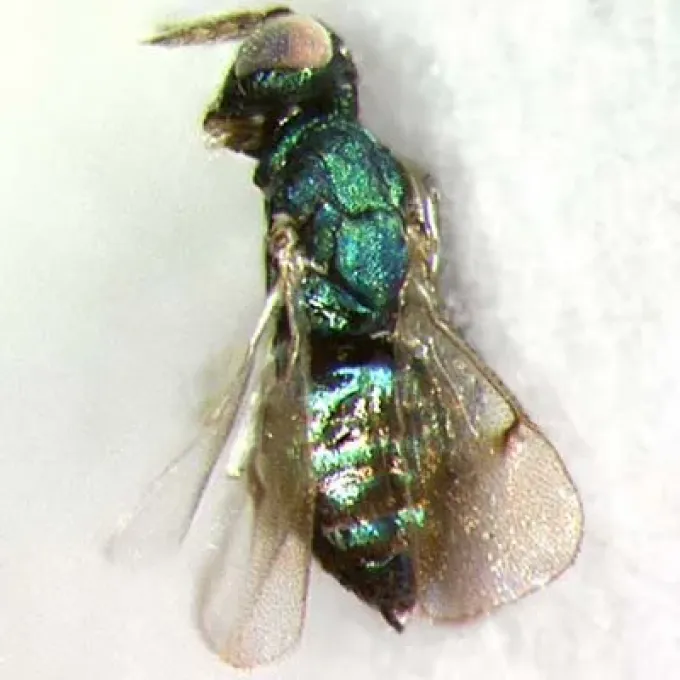
Description
How to identify
Neochrysocharis formosa is a species of hymenopteran insect belonging to the Eulophidae family. While many members of this family are known as parasitoids, this specific species acts as a significant plant pest, particularly in intensive agricultural settings.
The adult insect is a minute wasp, typically measuring between 1 and 2 millimeters in length. Its body often displays a dark, metallic coloration, which makes it extremely difficult to identify in the field without the aid of specialized magnifying equipment or yellow sticky traps.
The larval stage is responsible for the destructive activity. The larvae are legless and light-colored, specifically adapted for an endophytophagous lifestyle, which involves living and feeding inside the plant tissue throughout their development.
The life cycle of this pest is highly dependent on climate conditions. In environments like greenhouses or under warm seasonal conditions, the development from egg to adult occurs rapidly, facilitating multiple generations within a single growing season.
Female wasps deposit their eggs directly into the leaf parenchyma. Once hatched, the larvae immediately begin tunneling, creating a network of mines that characterize the infestation and provide a protected environment for the developing larvae.
What it damages
This pest has a broad host range, primarily targeting vegetable and ornamental crops. Key agricultural plants susceptible to infestation include tomatoes, eggplants, cucumbers, and various types of leafy greens commonly grown in greenhouses.
The primary damage is caused by larvae consuming the mesophyll of the leaf. This activity results in the formation of serpentine mines, which reduce the total functional leaf area available for photosynthesis, leading to energy depletion.
As the infestation progresses, leaves lose their ability to sustain the plant, leading to chlorosis, necrosis, and premature leaf drop. This decline in plant vigor directly correlates with a reduction in total crop yield and commercial quality.
The physical damage caused by larval tunnels also creates entry points for secondary pathogens, such as bacteria and fungi, which can exacerbate the decline of the plant and introduce systemic infections that are difficult to treat.
In cases of severe infestation, the cumulative damage can lead to total crop failure. The presence of these mines also makes the produce unmarketable, as the aesthetic damage is often unacceptable for consumer standards.
Control measures
Effective management begins with monitoring. The deployment of yellow sticky traps is a critical component in detecting the presence of adults early, allowing for timely intervention before the larval population becomes established.
Cultural practices play a vital role in control. This includes the prompt removal and destruction of infested plant material and the elimination of weed species near growing areas that may serve as alternative hosts during off-seasons.
Chemical control focuses on the application of systemic insecticides. These products are necessary because they must be absorbed into the leaf tissues to reach the larvae living inside the mines, where contact-only insecticides are ineffective.
Biological control is highly recommended, especially in protected cultivation. Releasing natural enemies or specific parasitoids that target the larval stages can provide sustainable long-term suppression of the pest population.
- Implement strict greenhouse sanitation protocols.
- Use physical barriers like fine mesh screens to exclude adults.
- Rotate insecticides to prevent the development of resistant populations.
Taxonomy
- Latin name
- Neochrysocharis formosa
- Order
- Hymenoptera
- Family
- Eulophidae
- EPPO code
- CHRNFO
Discussion
No discussions yet — be the first.