
Necremnus tutae
Necremnus tutae
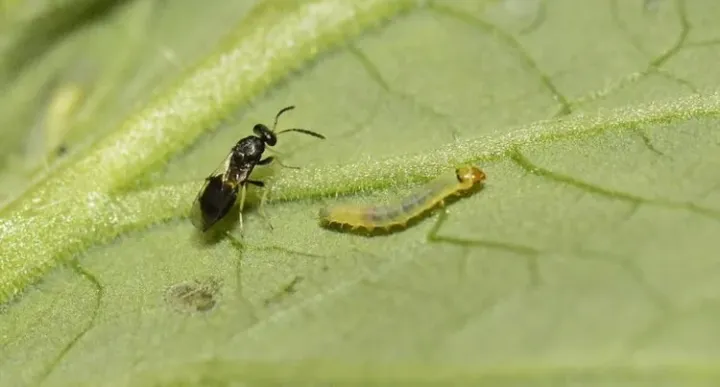
Description
How to identify
Necremnus tutae is a tiny parasitoid wasp belonging to the Eulophidae family. It is a highly specialized natural enemy of various leaf-mining insects.
The adult wasps are microscopic, measuring between 1 and 2 millimeters in length, and possess a metallic sheen on their bodies which is typical for the species.
They are known as ectoparasitoids, meaning they paralyze their host and lay their eggs on the surface of the larva's body, rather than inside it.
Their sensory system is highly evolved, allowing females to detect the presence of Tuta absoluta larvae within the leaf tissue by sensing plant volatiles released during feeding.
Accurate identification of this species in a greenhouse environment usually requires expert entomological analysis, but their presence is easily detected by their specific parasitic activity.
What it damages
Necremnus tutae is exclusively a beneficial organism and does not cause damage to plants. It is considered an ally in sustainable agricultural practices.
Its primary host is the South American tomato pinworm, Tuta absoluta, which is one of the most destructive pests for tomato crops worldwide.
By consuming the larvae of the leafminer, the wasp prevents the damage these pests typically cause, such as destruction of photosynthetic leaf tissue and fruit tunneling.
This parasitoid effectively suppresses pest outbreaks without leaving any chemical residues on the produce, making it ideal for organic and IPM production systems.
The contribution of this wasp to pest management is significant, often leading to a substantial decrease in the need for external chemical interventions.
When it appears
The population dynamics of Necremnus tutae are tightly linked to the life cycle of the host and the environmental conditions within the greenhouse.
Optimal development occurs at temperatures ranging from 20 to 28 degrees Celsius, which are standard for most tomato-growing facilities.
During the spring and summer months, the wasp can complete several generations, allowing it to keep up with the rapid reproduction of the tomato leafminer.
In greenhouses with climate control, the activity can be maintained throughout the year, provided there is a constant presence of the host larvae.
The efficiency of the wasp is highest when ambient humidity is moderate, as extreme conditions can negatively affect their searching and reproductive behavior.
Signs of infestation
The most reliable sign of Necremnus tutae activity is the presence of dried-up or mummified Tuta absoluta larvae within the leaf mines.
Upon close inspection of the leaf surface, one might observe the small, oval-shaped pupae of the wasp near the remnants of the consumed pest.
A reduction in the number of new, expanding leaf mines indicates that the parasitoid population is successfully controlling the spread of the moth.
Plants showing improved vigor and fewer signs of tunneling in their foliage are a positive outcome of having this biological agent present.
- Presence of parasitized host larvae.
- Decline in new leaf damage symptoms.
- Stabilization of pest populations at sub-economic levels.
Control measures
To successfully integrate Necremnus tutae into a pest management program, it is essential to minimize the use of broad-spectrum synthetic insecticides.
Growers should consult compatibility tables to ensure that any necessary pesticides are non-toxic to these beneficial wasps.
Implementing a regular release schedule of laboratory-reared wasps can ensure that the population of the parasitoid is sufficient to meet pest pressure.
Maintaining a clean greenhouse environment and preventing the introduction of hyperparasites is crucial for the long-term success of the biological program.
Providing supplementary food sources, such as nectar-producing plants near the greenhouse, can boost the longevity and search efficiency of adult wasps.
Taxonomy
- Latin name
- Necremnus tutae
- Order
- Hymenoptera
- Family
- Eulophidae
- EPPO code
- NCRMTU
Discussion
No discussions yet — be the first.