
Necremnus
Necremnus leucarthros
Description
How to identify
Necremnus leucarthros belongs to the order Hymenoptera and the family Eulophidae. These tiny parasitic wasps are crucial components of complex agroecosystems.
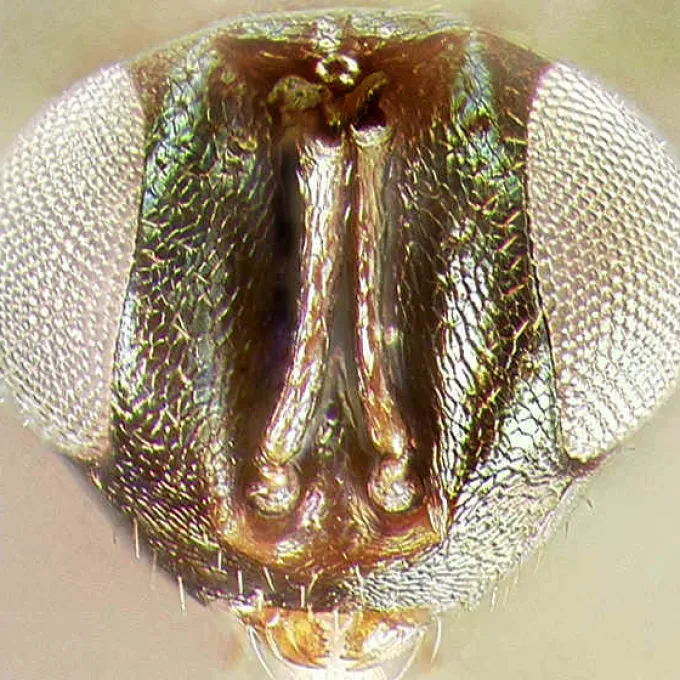
Adults are small parasitoids that often exhibit a metallic sheen, a feature common to many members of the Eulophidae family, requiring microscopic analysis for species confirmation.
The larval stages develop within the tissues of host plants or inside the bodies of other insects, effectively hiding them from immediate visual inspection.
The species is highly specialized, and its role as a parasitoid makes it a subject of interest in both integrated pest management and insect population ecology.
Taxonomic identification of Necremnus is typically performed by specialists focusing on morphological characters, particularly wing venation and antennal structures.
What it damages
Necremnus leucarthros primarily targets leaf-mining insects that infest a variety of agricultural crops, impacting their overall health and development.
While the parasitoid does not consume leaves directly, its activity can shift the balance of predator-prey relationships, potentially leading to outbreaks of other pests.
Affected crops include tomatoes, cucumbers, potatoes, and various legumes, occurring in both greenhouse environments and open-field agricultural production.
The economic impact is often indirect, stemming from the disruption of biological control programs that rely on native parasitoids to keep pest populations low.
In intensive farming settings, the presence of these wasps can complicate the use of biological control agents if the target host species are themselves beneficial or neutral.
When it appears
The phenology of Necremnus is strictly governed by the activity of its host insects, which determines its presence throughout the growing season.
Adults typically emerge in the spring once temperatures reach optimal levels, allowing them to begin searching for hosts to parasitize.
Peak populations are usually observed mid-summer, aligning with the highest density of leaf-miners feeding on the foliage of agricultural crops.
The overwintering phase occurs in the pupal stage, usually hidden within plant residues or in the top layers of the soil profile.
Depending on the climatic zone and seasonal temperatures, the insect can complete multiple generations, directly influencing the timing of protection strategies.
Signs of infestation
Detecting Necremnus in the field is challenging because the visible signs of infestation are usually identical to the damage caused by leaf-mining hosts.
Changes in the density of leaf mines, combined with evidence of parasitism on collected larvae, are the most reliable indicators of its presence.
Microscopic inspection of the leaf surface may reveal tiny exit holes or oviposition scars left by adult wasps, although these are rarely seen by the naked eye.
A sudden decrease in the efficiency of existing biological control agents on a farm can indicate the interference of Necremnus with local parasite populations.
Laboratory rearing of samples taken from infested leaves is the gold standard for confirming the specific identity of the parasite involved in the infestation.
Control measures
Effective management of Necremnus requires an integrated approach that balances the need for crop protection with the preservation of beneficial insect fauna.
Standard agronomic practices, such as the removal or deep incorporation of crop residues, are essential to destroy overwintering sites for pupae.
Chemical control measures should be applied with extreme caution, selecting products that have minimal impact on non-target species to avoid secondary outbreaks.
Biological strategies, including the introduction of selective predators or the use of fungal-based biopesticides, can help manage pest levels effectively.
- Use of yellow sticky traps for population monitoring.
- Crop rotation to break the lifecycle of leaf-mining hosts.
- Monitoring of plant health to ensure maximum tolerance to pest-related stress.
Taxonomy
- Latin name
- Necremnus leucarthros
- Order
- Hymenoptera
- Family
- Eulophidae
- EPPO code
- NCRMLE
Discussion
No discussions yet — be the first.