
Eucalyptus gall wasp
Leptocybe invasa
Description
How to identify
The Eucalyptus gall wasp (Leptocybe invasa) is a tiny hymenopteran insect belonging to the Eulophidae family. Adult wasps are approximately 1.1 to 1.2 mm in length.
The insects are dark brown in color with a metallic sheen, making them quite cryptic and difficult to detect on the foliage of host trees without magnification.
Reproduction is primarily parthenogenetic, meaning that populations are almost exclusively composed of females, which allows for rapid colonization of new areas.
The female wasp uses her ovipositor to inject eggs into the midribs and petioles of young leaves and succulent shoots of susceptible eucalyptus species.
The life cycle varies depending on environmental conditions but generally spans several months, allowing for multiple overlapping generations in warmer climates.
What it damages
Leptocybe invasa primarily infests various species of Eucalyptus, significantly affecting plantations, nurseries, and ornamental urban trees.
The damage is caused by the formation of galls, which are abnormal growths on leaf tissues and twigs where larvae feed on the plant's nutrients.
Heavy infestations lead to the deformation of shoots, stunted plant growth, and premature leaf drop, which severely hampers the tree's development.
In forest nurseries, young trees are particularly vulnerable, and severe attacks can lead to the total failure of plantations or significant economic losses.
The reduction in the photosynthetic capacity of the tree due to gall formation results in general physiological decline and increased susceptibility to other pathogens.
Signs of infestation
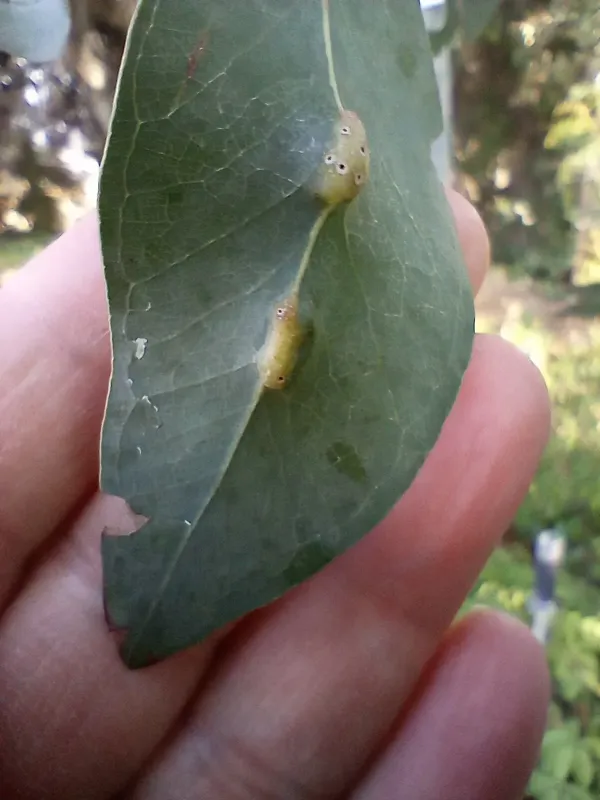
The primary symptom of infestation is the presence of characteristic galls on the leaves and young stems, which appear as bumps or swellings.
These galls can range in size and color, often appearing green initially and turning reddish-brown as the larvae mature and development progresses.
Leaves affected by the wasp often exhibit curling, thickening, and overall distorted shapes, which are easily noticeable upon inspection.
Once the adults emerge, tiny exit holes become visible on the surface of the galls, indicating that the generation has completed its development.
Regular monitoring of young foliage and shoots is essential for the early detection of the pest before it reaches outbreak proportions.
Control measures
Management of the Eucalyptus gall wasp is challenging because the larvae are enclosed within plant tissues, protecting them from contact insecticides.
Biological control, specifically the introduction of specialized parasitoid wasps like Selitrichodes neseri, has proven to be the most effective long-term strategy.
In nursery settings, systemic insecticides applied to the growing media or foliage can provide some protection against the oviposition of female wasps.
Strict quarantine measures are vital to prevent the movement of infested nursery stock between regions and to keep new areas free of the pest.
Silvicultural practices, including the removal and destruction of heavily infested plant material, can help to reduce the population pressure in local areas.
Taxonomy
- Latin name
- Leptocybe invasa
- Order
- Hymenoptera
- Family
- Eulophidae
- EPPO code
- LPCYIN
Discussion
No discussions yet — be the first.