
Eucalyptus gall wasp
Leptocybe
Description
How to identify
Eucalyptus gall wasp (Leptocybe invasa) is a small hymenopteran insect belonging to the Eulophidae family. Measuring only about 1 mm in length, it is a highly invasive species with a shiny, dark-colored body.
The population consists predominantly of females, which reproduce through thelytokous parthenogenesis. This reproductive strategy allows the species to establish large populations rapidly in new environments.
The insect is rarely observed in its adult stage due to its size and flight behavior, making the inspection of plant tissue for gall formation the primary identification method.
The life cycle is closely integrated with the growth cycles of its host plant. The larvae live protected within the plant tissues, creating specific chambers that eventually form visible galls.
Its small size facilitates dispersal via wind currents and, more importantly, human-assisted movement through infested nursery stock and propagation materials.
What it damages
The pest specifically attacks various Eucalyptus species, causing significant damage to both foliage and young stems, which hinders the overall productivity of plantations.
The wasp induces the formation of galls by injecting substances into the plant tissue. These galls interfere with the tree's photosynthesis and metabolic processes, weakening the host.
Heavy infestations lead to severe leaf distortion, defoliation, and stunted growth. In nurseries, young seedlings can die completely as a result of extensive tissue damage.
The damaged areas also serve as potential entry points for secondary pathogens, such as fungal infections, which further compromise the health of the trees.
Economic impact is particularly high in countries where eucalyptus is grown for wood, pulp, or essential oil production, as entire commercial stands can be affected.
When it appears
The activity of the Eucalyptus gall wasp is highly dependent on temperature and host plant vigor. Warm conditions accelerate the insect's generation time.
Multiple generations can occur throughout the year in subtropical and tropical climates, allowing for a near-continuous presence of the pest if the tree continues to produce new leaves.
Peak infestation usually aligns with the flushes of new growth in the host trees, as the wasp requires soft, young tissue for successful egg deposition.
Seasonal fluctuations in local climate determine the intensity of outbreaks, with warmer seasons typically associated with higher pest populations and more visible gall development.
Effective monitoring should focus on periods of active tree growth, with regular checks conducted to detect the initial onset of symptoms before populations reach critical levels.
Signs of infestation
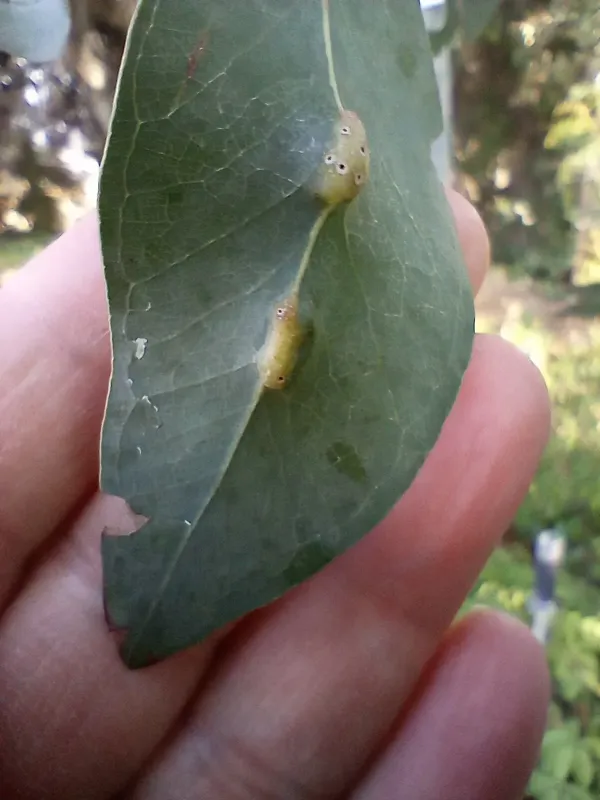
The first signs of infestation are small, bumpy protrusions or bumps on the leaf blade or petiole, often appearing reddish or yellowish compared to the healthy leaf tissue.
As the larvae mature, these bumps develop into mature, woody galls that can significantly distort the shape and symmetry of the leaves and stems.
- Curling and deformation of young leaf tips.
- Formation of prominent knob-like structures on petioles.
- Premature yellowing and leaf drop.
- Stunted development of the apical meristem.
- Overall tree thinning due to chronic infestation.
Visual inspections focused on the lower surface of leaves and stems are usually sufficient to confirm the presence of Leptocybe invasa in an area.
Control measures
Breeding for resistant eucalyptus genotypes is the most sustainable long-term solution for managing Leptocybe invasa in commercial forestry.
Biological control, particularly the introduction of specific parasitoid wasps that feed on L. invasa larvae, has proven effective in several countries in reducing infestation levels.
Chemical control is challenging because the larvae are protected inside the galls, meaning systemic insecticides must be applied precisely during the adult wasp's emergence period.
Cultural practices, such as the pruning and burning of heavily infested material, can help to limit the source of infestation within a confined area like a nursery.
Strict phytosanitary measures and quarantine regulations regarding the movement of eucalyptus seedlings are essential to stop the further spread of this invasive species.
Taxonomy
- Latin name
- Leptocybe
- Order
- Hymenoptera
- Family
- Eulophidae
- EPPO code
- LPCYSP
Discussion
No discussions yet — be the first.