
Euplectrus platyhypenae
Euplectrus platyhypenae
Description
How to identify
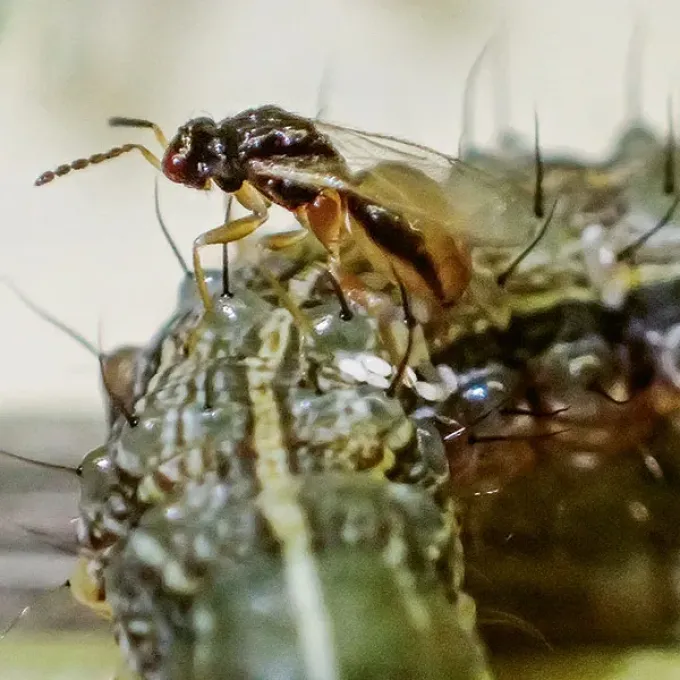
Euplectrus platyhypenae is a member of the Hymenoptera order and the Eulophidae family. It is a tiny parasitic wasp known for its role as an ectoparasitoid, meaning it completes its larval development on the exterior of its host's body.
Adult specimens are small, elusive, and difficult to identify in the field without specialized entomological equipment. They are usually identified by the presence of their larvae attached to the dorsal side of host caterpillars.
The larvae are pale and segmented, firmly anchored to the host, which is usually a caterpillar species. This external feeding strategy makes the parasitized host easily recognizable during routine field scouting.
The life cycle is tightly synchronized with the presence of host larvae. Females lay eggs in clusters on the host, ensuring that the next generation has immediate access to the nutritional resources required for metamorphosis.
As a specialist parasitoid, it serves as a natural regulator of populations, often appearing in agricultural environments where their specific hosts have reached significant density.
What it damages
This species does not damage crops; instead, it provides a vital service by attacking foliage-feeding caterpillars. It is considered a beneficial insect rather than a plant pest in agronomic terms.
The primary hosts of E. platyhypenae are lepidopteran larvae, particularly those belonging to the Noctuidae family, which are known to cause severe defoliation in crops like corn and cotton.
By parasitizing these pests, the wasp effectively halts their feeding activities, preventing further destruction of leaves and stems. This process serves as a natural form of pest suppression.
Any perceived damage in areas where this insect is found is caused by the caterpillars themselves, not by the parasitoid. The presence of the wasp is a sign that biological suppression is underway.
Farmers benefit from the reduced need for heavy insecticide applications when healthy populations of these wasps are present to manage pest outbreaks naturally.
Control measures
Protection and conservation are the primary goals when managing Euplectrus platyhypenae, as it is a natural ally in crop production. No eradication measures are necessary or recommended.
To support these populations, farmers should avoid the indiscriminate use of broad-spectrum insecticides. Targeted chemical applications are preferred to preserve beneficial insect biodiversity.
Integrated Pest Management (IPM) programs should account for the presence of parasitoids before making treatment decisions. If the wasp population is high, chemical interventions may be delayed or reduced.
Habitat management, such as maintaining field margins with nectar-rich plants, provides essential energy sources for adult wasps, thereby increasing their longevity and reproductive success.
Agronomic scouting should include monitoring for signs of parasitism on caterpillar hosts, allowing farmers to make informed decisions that align with sustainable agricultural practices.
Taxonomy
- Latin name
- Euplectrus platyhypenae
- Order
- Hymenoptera
- Family
- Eulophidae
- EPPO code
- EUPLPL
Discussion
No discussions yet — be the first.