
Euplectrus comstockii
Euplectrus comstockii
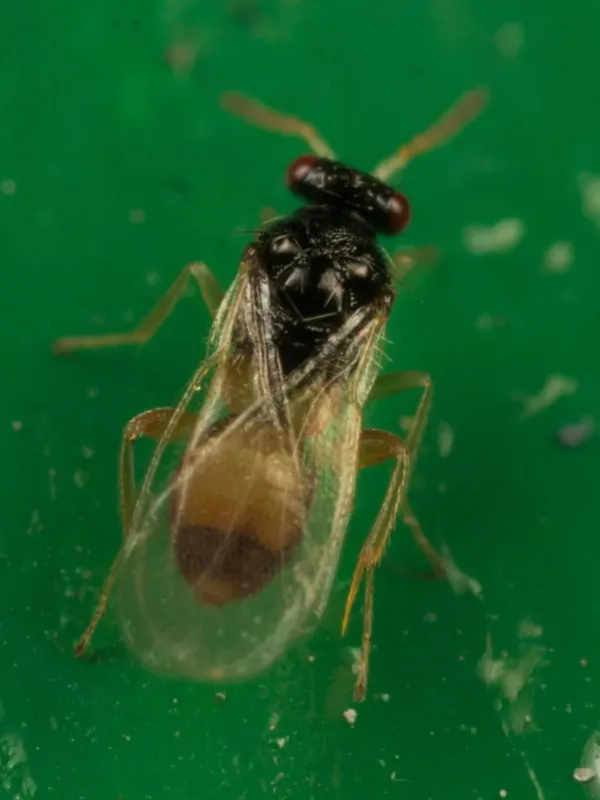
Description
How to identify
Euplectrus comstockii is a species of parasitoid wasp belonging to the family Eulophidae within the order Hymenoptera. These tiny wasps are essential components of natural pest control systems in various agricultural environments.
Adult specimens are very small, typically measuring 2–3 mm in length. They possess the characteristic morphology of chalcid wasps, including elbowed antennae and specific wing venation patterns used by specialists for precise classification.
This species is characterized by its ectoparasitoid lifestyle. The female wasp deposits eggs directly onto the skin of the host, typically a caterpillar, where the developing larvae feed externally on the host's tissues.
Identifying Euplectrus comstockii in the field is challenging due to the high morphological similarity among related species. Microscopic examination of the mesoscutum and cuticle sculpturing is often required for accurate determination.
In agronomy, recognizing these insects is crucial for assessing the natural control capacity within a farm. Their presence often indicates a healthy ecosystem capable of self-regulating pest populations.
What it damages
The primary hosts of Euplectrus comstockii are larvae of various Lepidoptera species, including those from the Noctuidae family, which are major agricultural pests. By parasitizing these caterpillars, the wasp contributes to significant reductions in pest populations.
The damage caused by the host to crops, such as leaf consumption and tissue destruction, is effectively halted when the parasitoid larvae consume the caterpillar. This process prevents the pest from completing its development and reproducing.
While the wasp itself does not damage plants, its absence can lead to increased pest pressure. Therefore, farmers are encouraged to protect these wasps to ensure they continue to provide natural protection for their crops.
These parasitoids are active in various types of environments, including field crops and ornamental greenhouses. They target pests that feed on a broad range of foliage, reducing the necessity for chemical interventions.
In cases where host populations are extremely high, natural parasitoid activity might not be sufficient to save a crop. Integrated pest management strategies are then utilized to supplement the wasps' effect while preserving their population.
When it appears
The activity cycle of Euplectrus comstockii is synchronized with the life cycle of its hosts. Adult wasps typically emerge during the warm months, coinciding with the peak period of caterpillar activity on agricultural plants.
The species can complete multiple generations per season, depending on the ambient temperature and humidity levels. This rapid reproductive cycle allows the parasitoid population to respond quickly to sudden increases in host numbers.
Overwintering usually occurs in the pupal stage, protected by silken cocoons or in sheltered crevices within the soil or plant debris. As temperatures rise in the spring, the new generation emerges to begin searching for hosts.
Environmental factors significantly influence their survival. Excessive heat or persistent rainfall can disrupt their lifecycle, while stable, mild conditions facilitate their movement and host-seeking behavior.
Monitoring for their presence involves inspecting plants for sluggish caterpillars and searching for telltale pupation sites near the remains of the host larvae.
Signs of infestation
The most visible sign of infestation by this wasp is the presence of small, light-colored eggs glued to the dorsal surface of the caterpillar. These are usually clustered near the thoracic segments of the host.
Affected caterpillars show signs of distress: they move slowly, stop feeding on plant tissue, and may exhibit changes in color or skin texture as they become depleted of nutrients by the parasitoid larvae.
After finishing their feeding cycle, the parasitoid larvae abandon the host. One can often find small, dark, granulate-looking pupal cocoons on the surface of the leaves where the caterpillar was last observed.
Mass infestations result in a noticeable drop in host population density within a specific area. If one finds withered caterpillar remains with dark cocoons nearby, it confirms the active role of Euplectrus comstockii.
- Appearance of eggs on the host's body.
- Reduced feeding and mobility in caterpillars.
- Premature death or cessation of host development.
- Presence of dark-colored parasitoid cocoons near host remains.
Control measures
Protecting Euplectrus comstockii is the cornerstone of its management. Farmers should avoid the use of broad-spectrum, persistent insecticides during the periods when these beneficial wasps are actively hunting.
When chemical intervention is unavoidable, selecting selective, low-toxicity pesticides is vital. Targeting the application timing to avoid periods of parasitoid peak activity can significantly improve survival rates for these beneficial insects.
Enhancing the habitat by planting flowering cover crops provides adult wasps with nectar, which is essential for their longevity and reproductive success. This simple technique can dramatically increase the parasitoid population density.
Integrated Pest Management (IPM) strategies emphasize the use of biological agents first. Pheromone traps for caterpillars can manage the host population without harming the parasitoids themselves.
Regular field scouting to evaluate parasitism rates helps farmers make informed decisions about whether to intervene. High rates of host parasitism mean that additional chemical treatments may be unnecessary or counterproductive.
Taxonomy
- Latin name
- Euplectrus comstockii
- Order
- Hymenoptera
- Family
- Eulophidae
- EPPO code
- EUPLCO
Discussion
No discussions yet — be the first.