
Euplectrus
Euplectrus
Description
How to identify
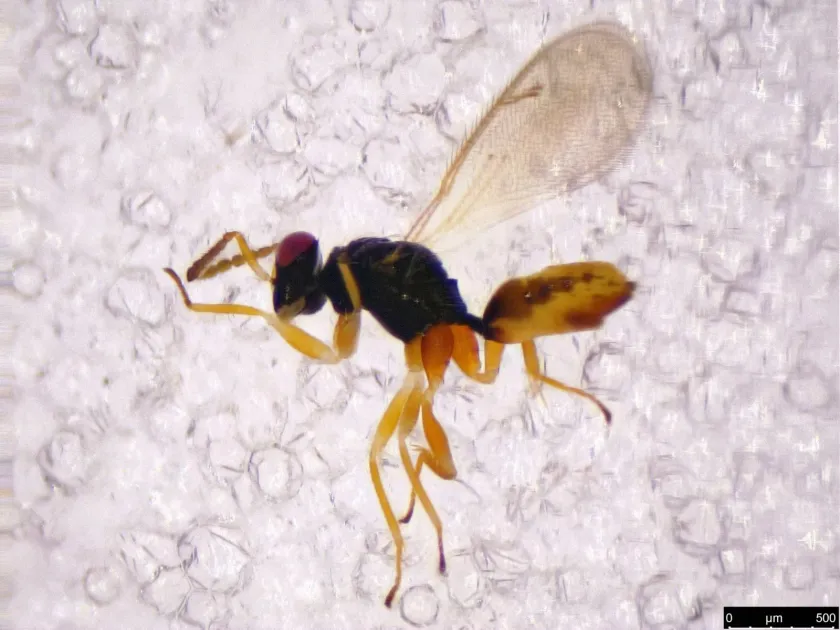
Euplectrus is a genus of parasitic wasps belonging to the family Eulophidae (order Hymenoptera). Contrary to common misconceptions, these insects are not plant pests and do not feed on crops.
These wasps are minute, typically measuring only a few millimeters in length. They are characterized by a dark, often metallic-colored body, which allows them to camouflage effectively while hunting for prey.
Biologically, Euplectrus species are ectoparasitoids. This means the female wasp lays her eggs on the surface of the host (usually caterpillars), and the larvae feed externally on the host's tissues.
They are specialized natural enemies, with different species of Euplectrus targeting specific groups of Lepidopteran larvae that are known to cause damage to agricultural crops.
Identifying them involves looking for the characteristic presence of small clusters of larvae on the bodies of caterpillars, which is a clear indicator of their beneficial activity.
What it damages
Euplectrus causes absolutely no damage to plants. They are strictly insectivorous, focusing their life cycle entirely on regulating the populations of foliage-feeding caterpillars.
Scientific evidence confirms that their role in an agroecosystem is purely beneficial. They do not damage leaves, stems, or fruits, making them a significant ally for farmers.
The perceived damage in fields where Euplectrus is present is caused by the caterpillars they are actively controlling, not by the wasps themselves.
Farmers should treat Euplectrus as a valuable biological control agent rather than a target for pest management efforts.
Removing these beneficial wasps through indiscriminate pesticide use often leads to a resurgence of pest populations, as the natural biological suppression is removed.
When it appears
The activity of Euplectrus is synchronized with the life cycle of their hosts, the caterpillars. They are most active during the periods of peak moth and caterpillar infestation in the fields.
In temperate climates, they are most prevalent during the summer months when warm weather facilitates the rapid development of their offspring.
Euplectrus possesses a short generation time, allowing them to produce multiple generations within a single growing season, which is crucial for controlling pest outbreaks.
As temperatures decrease in the autumn, the wasps enter a dormant stage or seek overwintering sites, depending on the specific environmental conditions.
Monitoring for their presence involves observing crop canopy areas during the early stages of pest development to assess the level of natural parasitism.
Signs of infestation
The primary sign of Euplectrus activity is the presence of small, cream-colored larvae clustered on the dorsal side of caterpillars.
An infested caterpillar will show reduced feeding activity, eventually stopping its consumption of foliage entirely, which is an immediate benefit to the crop.
Once the larvae finish feeding, they pupate near the remains of the host, leaving behind visible, dark cocoons attached to the leaf surface.
The presence of these cocoons or sluggish caterpillars is a reliable indicator that the biological control agent is effectively reducing the pest population.
- Clusters of wasp larvae on the host's body.
- Cessation of feeding by caterpillars.
- Visible pupae or cocoons on leaf surfaces.
Control measures
The best "control" measure for Euplectrus is conservation. Farmers should aim to protect these beneficial wasps to ensure long-term pest management success.
Avoid broad-spectrum insecticides that are toxic to parasitoids. Opt for selective biological controls that preserve the natural enemy population.
Planting flower strips or nectar-producing borders around fields provides necessary resources for adult wasps, increasing their lifespan and parasitism rates.
Integrated Pest Management (IPM) practices should prioritize the preservation of Euplectrus by using threshold-based applications rather than prophylactic spraying.
By fostering a healthy environment for these wasps, growers can significantly reduce their reliance on chemical interventions, promoting a more sustainable agricultural practice.
Taxonomy
- Latin name
- Euplectrus
- Order
- Hymenoptera
- Family
- Eulophidae
- EPPO code
- EUPLSP
Discussion
No discussions yet — be the first.