
Diglyphus websteri
Diglyphus websteri
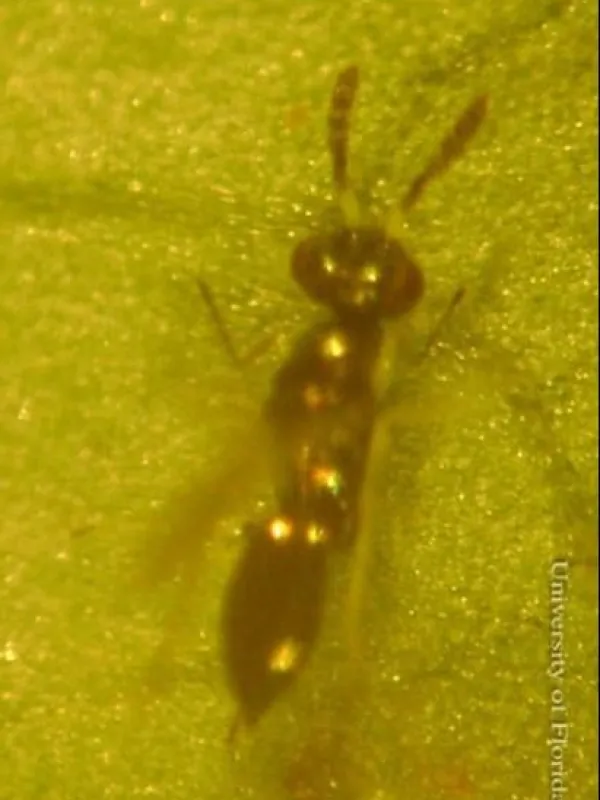
Description
How to identify
Diglyphus websteri is a species of parasitic wasp belonging to the family Eulophidae. In the context of modern agronomy, this insect is recognized not as a pest, but as a beneficial parasitoid that serves as a natural enemy to various agricultural pests.
The adult wasp is small and typically possesses a metallic luster. These insects are highly mobile and specialized in detecting the presence of larvae concealed within the leaf tissues of host plants.
The biological cycle of this species consists of complete metamorphosis. As an ectoparasitoid, the female lays eggs near the larvae of leaf-mining insects, providing her offspring with a ready food source upon hatching.
They are characterized by unique wing morphology and sensory capabilities that allow them to thrive in diverse agro-ecosystems, from open fields to commercial greenhouse operations.
The presence of Diglyphus websteri is a biological indicator of a balanced environment where natural regulatory mechanisms are successfully suppressing pest populations.
What it damages
It is crucial to clarify that Diglyphus websteri does not inflict damage on crops. It is entirely carnivorous in its larval stage, preying specifically on the larvae of leaf-mining flies (Agromyzidae), which are notorious for damaging various vegetable and floriculture crops.
By consuming leafminer larvae, this beneficial wasp prevents the destruction of plant leaves. This preservation of foliage ensures that the plant maintains its photosynthetic efficiency and overall vigor throughout the growing season.
The feeding activity of the parasitoid larva occurs within the leaf mine, effectively neutralizing the pest before it can cause further damage to the leaf structure or progress to the pupal stage.
Because the species does not feed on plant tissue, flowers, or roots, it poses no threat to agricultural productivity. Instead, it provides a valuable ecosystem service by suppressing pest populations naturally.
Effective management of crops often involves encouraging the proliferation of such parasitoids to reduce the need for synthetic chemical interventions, thereby promoting sustainable farming practices.
Control measures
The "protection" of Diglyphus websteri involves habitat management rather than eradication. The primary goal is to ensure that the environment remains favorable for the wasps to flourish and effectively control pest populations.
Farmers are advised to avoid the prophylactic use of broad-spectrum insecticides, as these chemicals often indiscriminately kill beneficial parasitoids, leading to secondary pest outbreaks.
Integrating floral resources, such as border strips of flowering plants, provides the adult wasps with necessary nectar, which increases their longevity and reproductive success in the field.
Integrated Pest Management (IPM) strategies should prioritize the monitoring of Diglyphus websteri levels before considering any chemical control measures for leafminers.
- Minimize the use of non-selective toxic pesticides.
- Establish floral nectar sources for adult parasitoids.
- Implement regular pest-to-parasitoid ratio monitoring.
- Adopt selective biological control agents whenever possible.
Taxonomy
- Latin name
- Diglyphus websteri
- Order
- Hymenoptera
- Family
- Eulophidae
- EPPO code
- DIGLWE
Discussion
No discussions yet — be the first.