
Diglyphus intermedius
Diglyphus intermedius
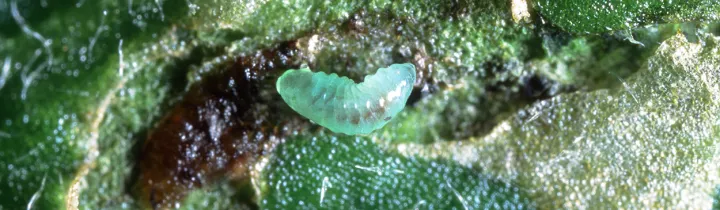
Description
How to identify
Diglyphus intermedius is a species of parasitic wasp belonging to the family Eulophidae. It is a highly specialized parasitoid that plays a significant role in the biological regulation of leafminer populations within agricultural ecosystems.
Adults are tiny insects, usually dark with a metallic sheen. Their wings are transparent, and their body structure is typical of the Eulophidae family, featuring distinct cephalic and thoracic regions that are adapted for locating and parasitizing hosts.
The larvae develop endoparasitically within the mines created by host flies on plant leaves. They are white or pale yellow, focusing their energy on consuming the host larva, which leads to the cessation of the pest's development.
Pupation occurs within the leaf mine, providing the developing wasp with protection against environmental stressors and potential predators. This micro-environment allows the species to survive effectively under varied field and greenhouse conditions.
Reproduction is sexual, and the females are highly efficient at detecting hosts via chemical cues emitted by damaged plant tissues. The life cycle duration is highly dependent on ambient temperature and humidity levels.
What it damages
Although Diglyphus intermedius is a beneficial natural enemy, it is inextricably linked to the presence of Agromyzidae leafminers, which are primary pests. High populations of the parasite indicate significant ongoing pest activity.
Key crops prone to infestation include tomatoes, cucumbers, eggplants, and various ornamental greenhouse plants. The primary damage is caused by the leafminer larvae, which consume the internal leaf tissues, leaving characteristic winding trails.
Symptoms appear as visible necrotic or chlorotic tunnels on the leaves, which disrupt photosynthesis and reduce the plant's overall vigor. Severe infestations lead to rapid leaf senescence and wilting.
The reduction in photosynthetic area significantly impacts fruit quality and overall yield. Furthermore, the extensive damage to the leaf epidermis creates entry points for secondary pathogens, such as fungi and bacteria.
Economic damage is twofold: direct loss of foliage and quality, and the cost associated with intensified pest management measures required to control the primary leafminer populations.
Control measures
Effective management requires an Integrated Pest Management (IPM) approach. The preservation of existing Diglyphus populations is critical, as they provide natural suppression of leafminers without additional input costs.
When chemical control is necessary, practitioners should select insecticides that are low in toxicity to parasitic wasps. Broad-spectrum pesticides should be strictly avoided to prevent the destruction of beneficial insect populations.
Cultural practices, such as weed removal and sanitation in and around greenhouses, are essential for reducing overwintering sites for pests. Maintaining a clean environment significantly lowers the pressure from migratory insects.
Monitoring with sticky traps is a recommended practice to detect the onset of leafminer activity. Early intervention with biological control agents or targeted, soft chemicals can prevent outbreaks from reaching economic thresholds.
- Implement monitoring systems with yellow sticky traps.
- Prioritize the use of biological control agents.
- Choose selective insecticides over broad-spectrum ones.
- Maintain strict greenhouse hygiene and remove weeds.
Taxonomy
- Latin name
- Diglyphus intermedius
- Order
- Hymenoptera
- Family
- Eulophidae
- EPPO code
- DIGLIT
Discussion
No discussions yet — be the first.