
Diglyphus insularis
Diglyphus insularis
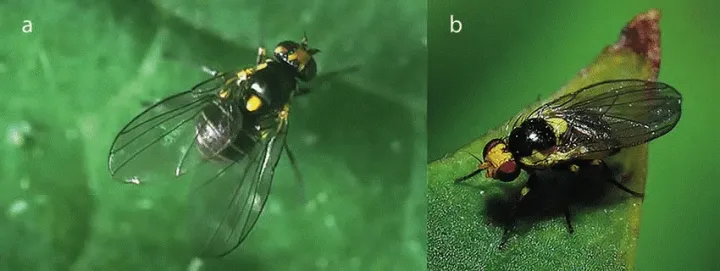
Description
How to identify
Diglyphus insularis belongs to the family Eulophidae within the order Hymenoptera. While many species in this genus act as beneficial parasitoids, specific conditions can lead to their categorization as pests in commercial greenhouse environments due to their impact on the agroecosystem balance.
Adults are tiny, often metallic-colored insects measuring less than 2 mm in length. Their identification requires specialized entomological equipment to distinguish them from other closely related parasitic wasps.
The life cycle involves an egg-laying stage on the host plant, followed by larval development within the plant tissues. The progression from egg to adult is highly dependent on ambient temperature and host availability.
In greenhouses, these insects can complete several generations in a single season, leading to a rapid buildup of the population if left uncontrolled during the early stages of crop development.
Expert identification is crucial, as misclassification could lead to the elimination of beneficial organisms that provide natural biological control against other major greenhouse pests.
What it damages
The primary damage is caused by larvae that feed on the mesophyll of the leaves, creating characteristic tunnels known as mines. This feeding behavior disrupts the photosynthetic efficiency of the plant.
Common hosts include various vegetable crops grown in protected environments, such as cucumbers, tomatoes, and eggplant. Ornamental plants are also frequently affected in nursery settings.
The physical destruction of leaf tissue leads to reduced vigor, impaired growth, and susceptibility to secondary infections by pathogens entering through the feeding punctures.
Heavy infestations result in widespread chlorosis and premature leaf drop, which can significantly decrease the commercial value of the crop and reduce overall fruit yield.
In production agriculture, the cumulative effect of larval mining leads to plant stress, which makes the crops less resilient to environmental fluctuations or irrigation deficits.
##season##The activity of Diglyphus insularis is closely linked to climate conditions, with peak populations occurring during warm, stable periods in the greenhouse.
In heated facilities, the pest can remain active throughout the winter months, posing a constant threat to year-round production cycles.
Longer daylight hours promote faster reproductive rates, often leading to rapid population explosions during the spring and summer months.
Monitoring should be intensified during the seedling and early vegetative stages, as plants are most vulnerable to irreversible damage during this period.
The pest may overwinter as pupae within plant debris or greenhouse structures, highlighting the importance of thorough end-of-season sanitation practices.
Signs of infestation
The most recognizable symptom is the appearance of winding, pale-colored mines on the leaf surface, which eventually coalesce into larger necrotic blotches.
When held up to light, the leaf reveals the presence of larvae or frass within the mines, providing clear evidence of an active infestation.
Lower leaves tend to yellow and wither first, as they represent the oldest and most available food source for the developing larvae.
- Presence of translucent, meandering tunnels on leaves.
- Progressive wilting of the lower foliage.
- Small, pin-sized punctures visible on the leaf surface.
- Stunted plant growth and reduced vigor in young plants.
Continued feeding eventually leads to leaf curl and tissue necrosis, which can compromise the entire leaf canopy if the infestation reaches high levels.
Control measures
Integrated Pest Management (IPM) is the most effective approach for controlling Diglyphus insularis in greenhouse conditions, emphasizing prevention and biological agents.
Rigorous sanitation protocols, such as the removal and destruction of crop residues, are essential to break the pest's life cycle and prevent carryover to the next season.
Chemical control measures should be applied only when necessary, using selective pesticides that are compatible with biological control programs to protect natural predators.
Consistent monitoring using yellow sticky traps allows growers to detect initial arrivals, facilitating rapid intervention before the population reaches an economic threshold.
Maintaining optimal greenhouse environmental conditions and crop vigor through balanced nutrition improves the plant's natural defense mechanisms against leafmining activity.
Taxonomy
- Latin name
- Diglyphus insularis
- Order
- Hymenoptera
- Family
- Eulophidae
- EPPO code
- DIGLIN
Discussion
No discussions yet — be the first.