
Diglyphus
Diglyphus
Description
How to identify
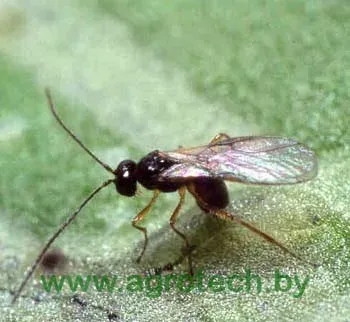
Diglyphus (Latin Diglyphus isaea) is a beneficial parasitic wasp belonging to the family Eulophidae of the order Hymenoptera.
This tiny insect is recognized as a professional biological control agent rather than a pest, measuring roughly 1.5 to 2 mm in length.
The adult wasp has a dark, metallic-colored body, which allows it to blend into the canopy while searching for host larvae.
Its life cycle is specialized, focusing on locating and parasitizing the larvae of leafmining insects found inside plant tissues.
Due to its rapid developmental cycle, it is widely utilized in integrated pest management programs to suppress leafminer outbreaks efficiently.
What it damages
The primary targets of Diglyphus are the larvae of leafminers belonging to the genus Liriomyza, which affect many commercial crops.
The female wasp identifies a leafminer larva within the leaf, paralyzes it, and lays an egg on its surface, permanently halting the damage.
Leafminer damage consists of distinct, serpentine-shaped white tunnels in the leaves, which reduce photosynthesis and plant vigor.
Adult Diglyphus also feed on the hemolymph of the host larvae, providing a secondary mechanism to control pest numbers effectively.
Commonly affected crops include tomatoes, cucumbers, peppers, and various floral species that are susceptible to leafminer tunneling.
When it appears
The performance of Diglyphus is highly dependent on environmental factors, particularly ambient temperatures within the greenhouse or field.
It thrives and reaches maximum activity at temperatures ranging from 20 to 25 degrees Celsius, making spring and summer the prime seasons.
Cooler temperatures tend to decrease the wasp's mobility and reproductive rate, potentially reducing the overall efficacy of the biological control.
In climate-controlled greenhouses, the wasp can be sustained throughout the year, provided that a food source (leafminers) is available.
Strategic timing for releases is essential, ideally introducing the wasps as soon as the first leafminer mines appear on the crop leaves.
Signs of infestation
A reliable sign that Diglyphus is working is the premature cessation of mine expansion on the plant's leaves.
Closer observation will reveal dead, desiccated leafminer larvae within the tunnels instead of active, healthy specimens.
The presence of tiny exit holes on the surface of the tunnels indicates that a new generation of Diglyphus wasps has successfully emerged.
When the biological control is effective, one should notice a clear reduction in the number of new tunnels being formed.
Overall plant health improves as the infestation is curtailed, allowing the plant to recover from previous damage and resume normal development.
Control measures
The successful use of Diglyphus relies on maintaining a safe environment for the insects to flourish within the crop canopy.
Avoid the use of broad-spectrum chemical insecticides, as they are non-selective and will kill the beneficial wasp population.
Regular scouting using yellow sticky traps is recommended to monitor the pest population and determine if additional releases are needed.
Integrated strategies should focus on preventive releases rather than corrective ones, ensuring the population is established before an outbreak.
- Target temperature: 20–28°C.
- Application frequency: 1-2 weeks.
- Pesticide safety: Use only compatible products.
Taxonomy
- Latin name
- Diglyphus
- Order
- Hymenoptera
- Family
- Eulophidae
- EPPO code
- DIGLSP
Discussion
No discussions yet — be the first.