
Closterocerus trifasciatus
Closterocerus trifasciatus
Description
How to identify
Closterocerus trifasciatus is a minute parasitic wasp belonging to the family Eulophidae. Although often associated with parasitic roles, this species is known to cause damage to leaves of specific woody plants.
The adult insect is characterized by its small size and distinct metallic appearance. The species name reflects the presence of three dark transverse bands on its wings, which is a key identification feature.
The larval stage is internal, developing within the leaf tissue. Larvae are legless, white, and adapted for moving through the narrow tunnels they create by consuming the leaf parenchyma.
The life cycle involves complete metamorphosis, moving through egg, larva, pupa, and adult stages. The pupal stage typically occurs within the leaf mine, providing protection against environmental hazards.
These insects are highly specialized, often targeting specific host genera such as Alnus (alder) and Betula (birch), which makes their presence predictable within certain ecological zones.
What it damages
The primary hosts for this pest include deciduous trees and shrubs, particularly those in the Betulaceae family. Birch and alder trees are the most common targets for infestation.
The larvae feed on the internal tissues of the leaf, creating serpentine or blotch mines. By consuming the parenchyma, they directly interfere with the plant's ability to photosynthesize effectively.
Heavy infestations lead to widespread chlorosis, necrosis, and premature leaf drop. In young saplings or nursery stock, this can significantly stunt growth and weaken the plant's overall vigor.
The aesthetic value of trees in urban parks and residential areas is severely degraded when the foliage becomes riddled with mines and turns prematurely brown due to leaf miner activity.
Repeated annual damage can make trees more susceptible to secondary stressors, including drought, pathogens, and other pests, eventually leading to branch dieback.
When it appears
Adult emergence generally occurs in late spring, corresponding with the initiation of new leaf growth on host plants. This timing allows the first generation to exploit fresh, nutrient-rich foliage.
The pest produces multiple generations throughout the growing season. The development rate is highly dependent on ambient temperatures, with warmer summers accelerating the life cycle.
Overwintering occurs primarily at the pupal stage, hidden within fallen leaves on the forest floor. This makes the leaf litter a critical reservoir for the next season's population.
Peak infestation activity is usually observed in mid-summer, when the cumulative effect of multiple generations becomes visible on the canopy of the affected trees.
As autumn approaches, the population cycles begin to slow down, and the final generation enters a state of diapause, waiting for the return of favorable temperatures in the following year.
Signs of infestation
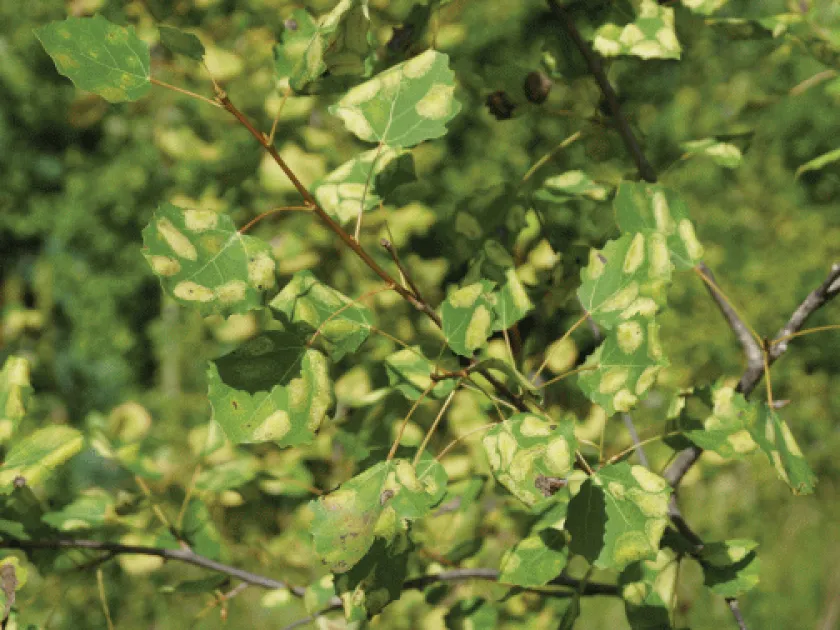
The most recognizable sign is the presence of winding, light-colored tunnels (mines) appearing on the leaf surface. These tunnels expand as the larva increases in size and continues feeding.
Damaged leaves often show signs of drying out and turning brown as the mine tissue dies. In severe cases, the leaf may curl, wither, or drop from the tree before the normal autumn timeframe.
- Serpentine or blotch-shaped translucent lines on leaves.
- Browning and necrosis of leaf tissue around the mining tunnels.
- Small, circular emergence holes on the leaf surface where adults have exited.
- Premature canopy thinning and leaf yellowing in summer.
Looking at the leaf against light often reveals small, granular deposits of frass (larval excrement) within the tunnels, which is a definitive indicator of an active infestation.
Trees affected by this pest show a loss of deep green color, and the crown may appear unhealthy or scorched even when water is readily available in the soil.
Control measures
Sanitation is the most effective cultural control measure. Collecting and destroying fallen leaves in late autumn or early winter helps eliminate the pupal overwintering sites.
Biological control plays a significant role in nature. Encouraging the presence of natural predators and parasitoids can keep the population of Closterocerus trifasciatus at manageable levels.
Chemical control can be implemented using systemic insecticides, which are absorbed by the plant and target the larvae feeding within the leaf tissue, ensuring precise and effective protection.
Monitoring using yellow sticky traps can help detect the arrival of adult wasps, allowing for timely intervention before large-scale egg-laying occurs during the peak activity period.
Maintaining high plant health through regular irrigation, mulching, and proper fertilization enhances the tree's resilience, helping it recover faster from the damage caused by leaf miners.
Taxonomy
- Latin name
- Closterocerus trifasciatus
- Order
- Hymenoptera
- Family
- Eulophidae
- EPPO code
- CLCETR
Discussion
No discussions yet — be the first.