
Cirrospilus vittatus
Cirrospilus vittatus
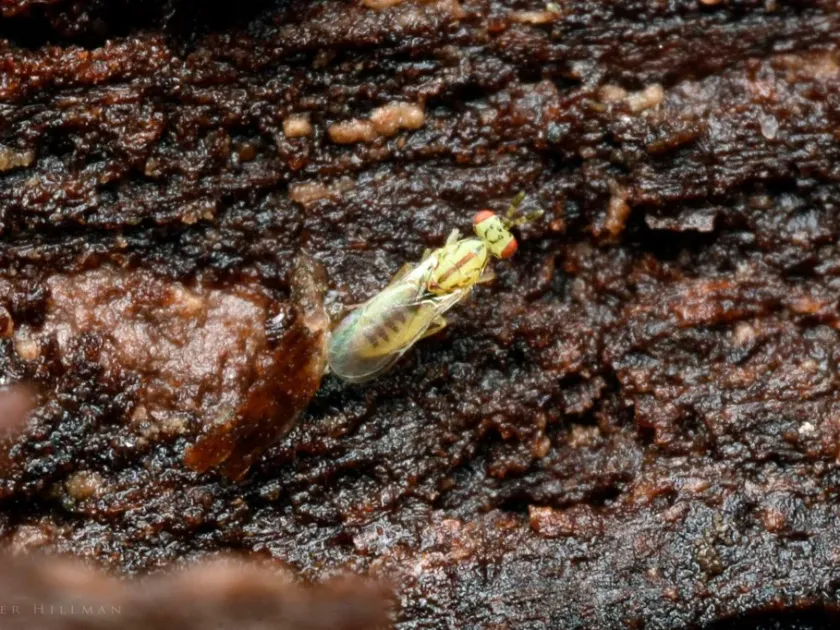
Description
How to identify
Cirrospilus vittatus is a species of parasitic wasp belonging to the family Eulophidae within the order Hymenoptera. This group of insects is known for its complex role in ecosystems, frequently functioning as parasitoids of various leaf-mining insects.
Adult specimens are typically very small, measuring only a few millimeters in length. Their morphology includes delicate wings and a body structure characteristic of eulophids, often displaying metallic or dark brown color patterns depending on the population.
The life cycle encompasses four main stages: egg, larva, pupa, and adult. The larval stage is critical, as it often involves parasitizing larvae of other insects that infest host plants, thereby exerting a regulatory effect on pest populations.
These insects are highly adaptive, capable of thriving in diverse environments ranging from open fields to climate-controlled greenhouses. The development speed of each generation is highly dependent on ambient temperatures.
Identification of the species is usually performed through microscopic examination of adult features. Understanding its role as a biocontrol agent or a potential minor pest is crucial for integrated pest management programs.
What it damages
The economic impact of Cirrospilus vittatus is multifaceted. While often beneficial as a biological control agent, it can occasionally be associated with damage in intensive horticultural settings where host-parasite relationships are disrupted.
Primary target crops include various greenhouse vegetables and ornamental flowering plants. Damage typically occurs when the insect interferes with the health of the host plant, or if populations reach levels that cause visible leaf tissue degradation.
Symptoms of infestation often appear as miners on leaves or discolored patches where the tissue has been compromised. These lesions interfere with the plant's photosynthetic efficiency, potentially stunting overall growth.
In cases of high infestation, the aesthetic value of ornamental crops is significantly diminished, leading to market losses. For vegetable crops, the reduction in leaf area can negatively affect fruit development and yield quality.
Regular scouting is necessary to differentiate between damage caused by the wasp itself and damage caused by the primary pests it might be parasitizing. This distinction dictates the appropriate management strategy for the grower.
Control measures
Effective management requires a balanced strategy that favors biological control over intensive chemical intervention. The goal is to maintain the ecosystem balance while protecting high-value crops from excessive damage.
Cultural practices, such as removing infested plant debris and maintaining greenhouse hygiene, are essential. These actions help reduce the overwintering sites for the insects and interrupt their reproductive cycle effectively.
Biological control methods, including the strategic release of predators or the use of biopesticides, are highly recommended for greenhouse production. These methods minimize environmental impact and preserve beneficial insect populations.
Chemical control should be reserved as a last resort. If necessary, targeted application of selective insecticides can help control outbreaks without causing widespread harm to the local biodiversity.
- Monitor populations using sticky traps.
- Implement strict sanitation of greenhouse facilities.
- Prioritize the use of biological control agents.
- Avoid broad-spectrum pesticide applications.
Taxonomy
- Latin name
- Cirrospilus vittatus
- Order
- Hymenoptera
- Family
- Eulophidae
- EPPO code
- CIRRVI
Discussion
No discussions yet — be the first.