
Cirrospilus variegatus
Cirrospilus variegatus
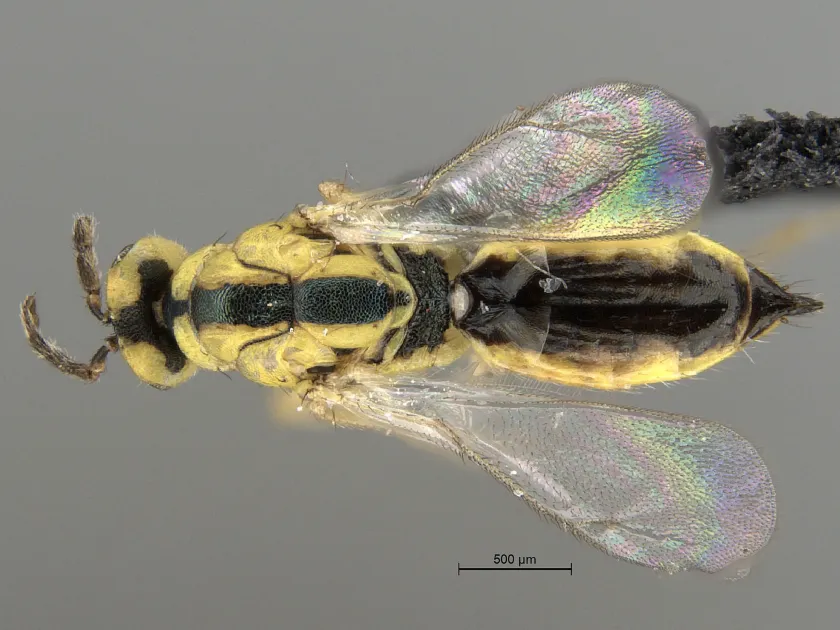
Description
How to identify
Cirrospilus variegatus is a species of parasitic wasp belonging to the family Eulophidae, within the order Hymenoptera. Despite its role as an entomophagous insect, its interaction with agricultural crops can be complex.
Adults are very small, characterized by a variegated body pattern, which provides camouflage while moving across leaf surfaces in search of hosts. Their size makes them difficult to monitor without specialized tools.
The life cycle encompasses four stages: egg, larva, pupa, and adult. The larval stage is exclusively parasitic, typically developing inside or upon the larvae of leaf-mining insects that infest various plant species.
These wasps are often seen in agroecosystems where they help regulate populations of leaf miners. However, they are frequently documented in studies concerning the balance between biological control agents and agricultural pests.
Recognition of this species usually involves identifying the exit holes on the host leaves where the adult wasps emerge after successfully completing their development within the host.
What it damages
Damage to plants is often linked to the interaction with leaf miners, as the search for hosts and the oviposition process by Cirrospilus variegatus can compromise the structural integrity of leaves.
The pest primarily affects vegetable and fruit crops, particularly those grown in greenhouses where leaf-mining insects are prevalent. This includes crops like tomatoes, cucumbers, and ornamental shrubs.
The physical act of piercing the leaf tissue for egg-laying creates entry points for various pathogens, including fungi and bacteria, leading to tissue necrosis and weakening of the plant's overall health.
Severe infestations reduce the total photosynthetic area of the leaf, which consequently affects nutrient synthesis, leading to stunted growth, reduced fruit quality, and significant yield losses.
Increased stress levels in plants make them more susceptible to subsequent attacks from secondary pests, creating a negative feedback loop that requires immediate intervention from farmers.
When it appears
The activity of Cirrospilus variegatus begins in the spring as temperatures rise, aligning with the emergence of host leaf-mining larvae that provide necessary nutritional resources.
Population peaks typically occur in mid-summer, when the environmental conditions are optimal for both the development of the wasp and the proliferation of its hosts throughout the agricultural field.
In controlled environment agriculture (greenhouses), the species can maintain multiple overlapping generations, provided there is a constant supply of host larvae and appropriate climatic conditions.
As autumn approaches, adult activity gradually decreases. The species enters a diapause phase, overwintering as pupae in soil or within protected plant debris until the following season.
Regular monitoring using yellow sticky cards is recommended from late spring to early autumn to detect initial adult populations and prevent the build-up of damaging levels.
Signs of infestation
Specific signs of infestation are predominantly found on the foliage, where the interaction between the wasp and its host occurs.
- Small, necrotic punctures on the surface of the leaves caused by the female's ovipositor.
- Visible winding tracks (mines) on leaves where host larvae have been active.
- Discoloration or yellowing of foliage in areas where the wasp has been feeding or searching.
- Premature leaf drop starting from the bottom of the plant due to chronic stress.
- Increased susceptibility to secondary diseases manifesting as wilting or brown spots.
Control measures
Integrated Pest Management (IPM) is essential for managing Cirrospilus variegatus. This includes cultural practices such as removing infested plant debris and maintaining field sanitation.
Chemical control should be used with extreme caution, as broad-spectrum insecticides often kill the beneficial wasps, leading to secondary pest outbreaks. Selective chemistry is the preferred path.
Biological control agents, when used correctly in conjunction with native populations of entomophages, can help maintain the density of the pest below the economic injury level.
Encouraging biodiversity around fields, such as planting non-crop borders, can provide nectar sources for adults, enhancing their survival and efficacy in naturally controlling host populations.
Farmers should implement a scheduled monitoring program to determine the timing of any necessary intervention, ensuring that control measures are applied only when thresholds are exceeded.
Taxonomy
- Latin name
- Cirrospilus variegatus
- Order
- Hymenoptera
- Family
- Eulophidae
- EPPO code
- CIRRVA
Discussion
No discussions yet — be the first.