
Cirrospilus quadristriatus
Cirrospilus quadristriatus
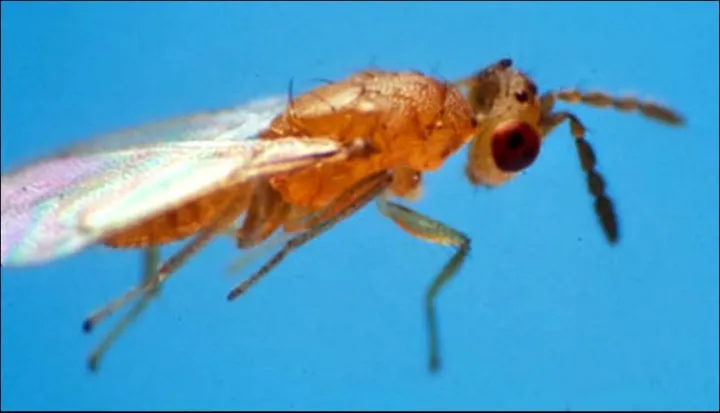
Description
How to identify
Cirrospilus quadristriatus is a species of parasitic wasp belonging to the Eulophidae family within the order Hymenoptera. It is a tiny insect known for its complex interactions with various leaf-mining species.
The adult insect is typically very small, often measuring between 1 to 2 millimeters in length, and is characterized by a sleek body, sometimes exhibiting metallic coloration.
The lifecycle involves four distinct stages: egg, larva, pupa, and adult. The larval stage is particularly significant as it feeds on the hosts associated with leaf-mining pests.
Due to its small size and similarity to other members of the genus Cirrospilus, identification requires specialized entomological equipment such as a stereomicroscope.
Understanding the biology of this species is crucial for agronomists, as it can function as both a potential regulator of pests and a disruptive agent in integrated pest management.
What it damages
Damage caused by Cirrospilus quadristriatus is mainly indirect, stemming from its parasitic activity on leaf-miners that infest various vegetable and ornamental crops.
By preying on or parasitizing the natural enemies of other pests, this insect can disrupt the balance of integrated pest management programs in greenhouses.
Visible damage to plants includes puncture marks on the leaves caused by females during oviposition, which can lead to localized necrosis.
In high densities, the larval feeding activity can compromise the physiological state of the leaf, reducing the plant's photosynthetic efficiency.
The cumulative effect of these activities can lead to premature leaf senescence and a reduction in the overall quality and yield of the crop.
When it appears
The seasonal activity of this species is highly dependent on ambient temperatures and the availability of its preferred host species in the field or greenhouse.
In greenhouse conditions, the insect can remain active throughout the year, provided that the climate supports the development of its host populations.
Activity usually begins in the spring as temperatures rise, allowing the population to emerge from overwintering sites in soil or crop debris.
Summer months represent the peak of population density, as favorable temperatures accelerate the lifecycle and increase the frequency of generations.
As autumn approaches and temperatures drop, the insect transitions into a state of diapause, seeking shelter to survive the winter months.
Signs of infestation
Key signs of infestation include the appearance of tiny stippling or puncture marks on the leaf surface, indicating where the wasp has interacted with the plant tissue.
Leaf yellowing and wilting may occur as the infestation progresses and the internal plant tissue is affected by the feeding of the larvae.
Under close inspection with a magnifying glass, one might notice small exit holes on the leaves where adult wasps have emerged from their pupation sites.
A noticeable loss of plant vigor and stunted growth in affected areas are common symptoms that often correlate with high levels of pest activity.
In some cases, the presence of these insects is marked by the localized drying of leaf margins, which affects the plant's ability to maintain water balance.
Control measures
Management strategies focus on maintaining a healthy environment for the crop while discouraging the build-up of parasitic populations that interfere with natural control.
Good sanitation practices are essential, including the removal and destruction of crop residues where the insects may overwinter or harbor larvae.
Integrated pest management should prioritize the use of biopesticides that specifically target the primary pest while minimizing harm to beneficial organisms.
- Monitor insect populations using yellow sticky traps regularly.
- Maintain optimal greenhouse humidity and airflow to deter pests.
- Implement strict crop rotation schedules to break pest cycles.
- Use biological control agents to manage leaf-miner host populations.
Chemical intervention should be considered only as a last resort, using selective insecticides that comply with local regulations to ensure safety for both the crop and environment.
Taxonomy
- Latin name
- Cirrospilus quadristriatus
- Order
- Hymenoptera
- Family
- Eulophidae
- EPPO code
- CIRRQU
Discussion
No discussions yet — be the first.