
Cirrospilus pictus
Cirrospilus pictus
Description
How to identify
Cirrospilus pictus is a species of parasitic wasp belonging to the Eulophidae family. These insects are known for their significant role in maintaining ecological balance by parasitizing various leaf-mining larvae.
Adult wasps are extremely small, typically measuring only a few millimeters in length, and are often overlooked in the field due to their rapid movement and elusive nature.
The life cycle involves an egg, larval, pupal, and adult stage. Development occurs primarily within the host's tunnel, which is created by the leaf miner larva inside the plant leaf.
Identifying this species accurately requires expertise in entomological microscopy, as many members of the genus Cirrospilus share similar morphological characteristics.
Understanding the presence of this insect is crucial for agronomists, as it serves as a natural regulator of populations that would otherwise cause significant foliage damage.
What it damages
Cirrospilus pictus acts as a parasitoid, meaning it targets larvae of pests such as leaf miners that infest various vegetables, fruits, and ornamental crops.
The damage caused by the primary pest—the leaf miner—is mitigated by the presence of this wasp, which effectively kills the larva and stops the progression of leaf necrosis.
While the wasp itself does not damage plants, its absence due to excessive chemical applications can lead to explosive outbreaks of the leaf-mining pests it usually regulates.
Consequently, the role of this insect is overwhelmingly beneficial in agricultural settings, contributing to lower rates of crop infestation without human intervention.
Managing fields with respect for this parasitoid ensures that the natural biocontrol processes remain intact throughout the growing season.
When it appears
Activity levels for Cirrospilus pictus align with the warm growing season, typically starting in late spring as temperatures rise and host activity increases.
The peak population density usually occurs during the summer months, matching the peak development cycle of common leaf-mining pests in orchards and greenhouses.
Winter is spent in a state of diapause, often as pupae hidden within plant debris or protected soil layers, waiting for the return of warmer conditions.
Adult wasps emerge as soon as host larvae are detected, beginning the cycle of searching and oviposition to ensure the survival of the next generation.
Monitoring the seasonal emergence helps growers understand when the population is most vulnerable to chemical exposure and when it is providing the most benefit.
Signs of infestation
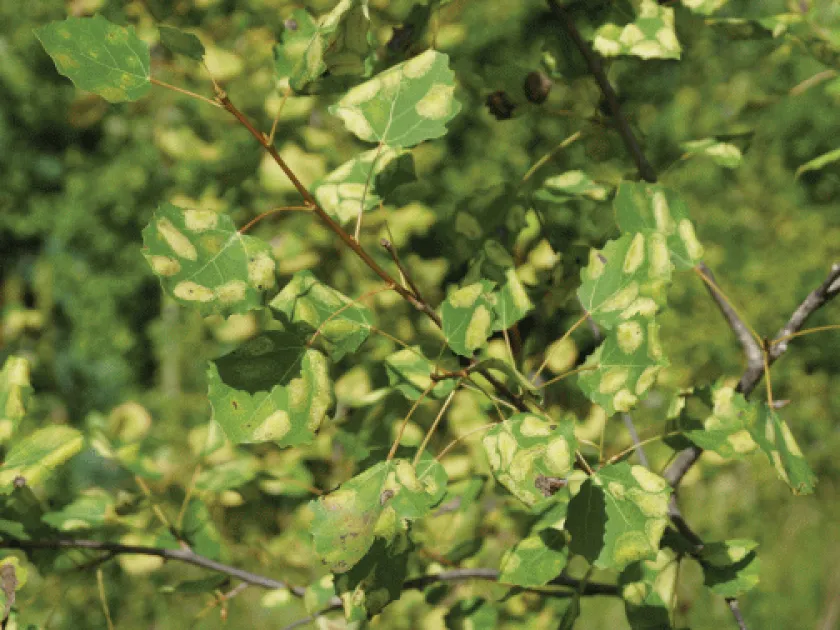
Signs of wasp activity include the discovery of empty tunnels or consumed host larvae remnants within the leaf mines of affected crops.
Looking closely at the leaves, one might find the small, characteristic pupal cases left behind by the developing wasps after they exit the leaf tissue.
A reduction in the number of active, living leaf miner larvae despite the presence of visible mine trails is a strong indicator of successful parasitoid activity.
Adult wasps may also be spotted resting on the underside of leaves or actively scouting for new hosts to lay their eggs upon.
If mines appear dormant and lack further expansion, it is likely that the parasitoid has successfully completed its development and suppressed the pest.
Control measures
Effective management focuses on Integrated Pest Management (IPM) strategies, which prioritize the preservation of existing natural enemies like Cirrospilus pictus.
Avoiding the use of broad-spectrum insecticides is critical, as these agents often eliminate the beneficial wasps along with the target pests.
By opting for selective, biorational pesticides, farmers can protect the parasitic wasp populations while still addressing urgent pest issues.
- Use selective pesticides with low impact on beneficial insects.
- Maintain buffer zones with nectar-rich plants to support adult wasps.
- Implement precise monitoring to time treatments only when necessary.
- Avoid chemical treatments during the peak flight period of the wasps.
Enhancing habitat complexity around fields encourages the survival of these wasps, ensuring long-term sustainable control of leaf-mining pests.
Taxonomy
- Latin name
- Cirrospilus pictus
- Order
- Hymenoptera
- Family
- Eulophidae
- EPPO code
- CIRRPI
Discussion
No discussions yet — be the first.