
Cirrospilus nigrovariegatus
Cirrospilus nigrovariegatus
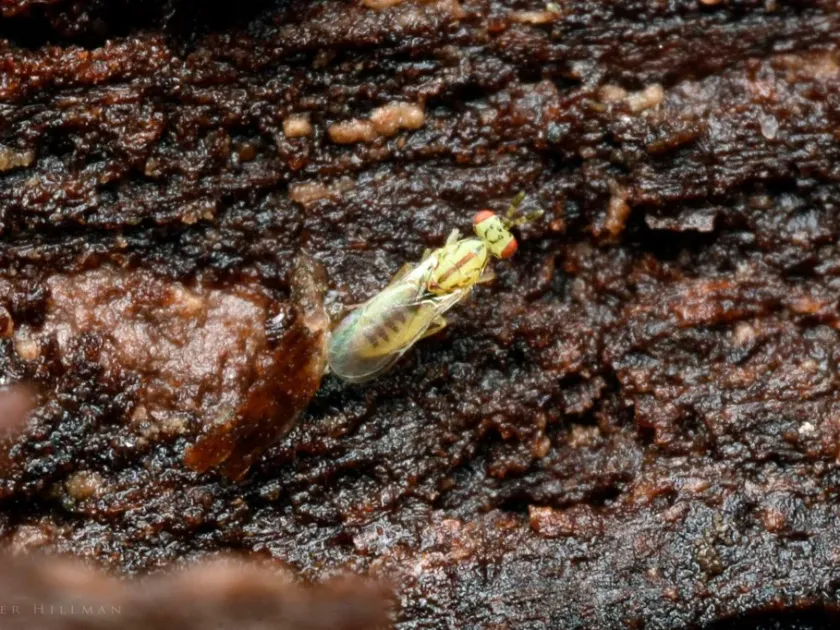
Description
How to identify
Cirrospilus nigrovariegatus is a species of parasitic wasp belonging to the family Eulophidae. While many members of this genus act as natural biological control agents, this specific species is frequently studied due to its presence in agricultural ecosystems and its impact on plant health.
Adults are minute insects characterized by a metallic sheen on their bodies. Due to their extremely small size, identifying them in the field requires specialized entomological knowledge and magnification tools, as they are easily overlooked during routine garden inspections.
The life cycle involves complete metamorphosis, including egg, larval, pupal, and adult stages. The development often occurs within the tissues of the host plant or associated with other leaf-mining insects that serve as the primary host for the wasp larvae.
The biology of this species is highly flexible, allowing it to adapt to various environmental conditions. This plasticity enables the pest to maintain its population levels across different agricultural seasons, making it a persistent challenge for commercial growers.
Research suggests that their interaction with plants is complex. While they can function as parasitoids of other pests, their feeding habits or oviposition behavior can cause localized damage to plant tissues, potentially affecting the quality of the foliage.
What it damages
This species primarily affects a variety of fruit trees and ornamental shrubs. Crops such as apples, pears, and roses are often among the most susceptible to infestations, especially in nursery settings where humidity levels are kept high.
The damage is caused by the larval stage feeding within the leaf tissues. This activity creates necrotic lesions and impairs the plant's ability to perform photosynthesis, leading to reduced overall vigor and metabolic efficiency of the affected host plant.
Economic damage is largely aesthetic for ornamental plants and physiological for fruit-bearing species. Severe infestations result in extensive defoliation, which can jeopardize the plant's ability to survive the winter and produce a high-quality yield the following season.
In addition to primary tissue damage, the presence of these insects can facilitate secondary infections by bacteria and fungi. These pathogens enter the plant through the wounds created by the larvae, leading to further decay of the leaf surface.
The severity of the damage is correlated with the population density of the pest. In agricultural scenarios with monoculture patterns, the lack of natural predators can lead to exponential growth of the population, causing significant commercial losses.
When it appears
The activity of these insects typically begins in early spring as temperatures rise, signaling the start of the plant's vegetative cycle. The timing of their emergence is closely synchronized with the growth of fresh foliage on host plants.
Multiple generations can occur throughout the growing season, particularly in warm climates. The most intense period of adult activity is usually mid-summer, when conditions for reproduction and larval development are optimal due to sustained high temperatures.
Overwintering occurs primarily in the pupal stage, hidden within plant debris or the upper layers of the soil. This strategy protects the insect from harsh winter conditions and ensures a rapid re-emergence when the environment becomes suitable again.
Monitoring should begin as soon as the first leaves open in the spring. Utilizing sticky traps is a recommended practice for detecting the presence of adults early on, allowing growers to intervene before the infestation reaches damaging levels.
Growers should maintain records of appearance dates to better predict future outbreaks. Climate variations can shift the timing of these cycles, so staying vigilant during the transition between spring and summer is essential for effective management.
Signs of infestation
The primary indicators of an infestation include the appearance of chlorotic spots, discoloration, and localized bruising on the leaves. Over time, these spots dry out and turn brown, creating an irregular appearance on the leaf surface.
The presence of mining patterns is a tell-tale sign, as larvae move through the leaf tissue. While these mines are sometimes confused with those of leaf-mining flies, a close inspection often reveals the specific patterns of the Cirrospilus larvae.
- Small, pale or discolored spots on leaf surfaces.
- Drying and curling of leaf edges during intense infestation.
- Presence of tiny exit holes where adult wasps have emerged.
- Noticeable decrease in leaf turgor and overall health of the affected plant part.
- Black excrement specks found within the leaf mines upon close examination.
If affected leaves begin to drop prematurely, it indicates that the infestation is significant. Such cases require immediate assessment and likely chemical or biological intervention to prevent further spread across the plantation.
For accurate identification, gardeners are advised to collect suspect leaves and place them in a sealed transparent bag. Observing the emergence of adult insects over several days will confirm the presence of the pest.
Control measures
An integrated pest management (IPM) approach is the most effective way to control this species. Sanitation, such as removing and destroying fallen leaves during late autumn, is crucial for reducing the overwintering population.
Biological control, including the use of entomopathogenic fungi or introducing beneficial insects that predate on the larvae, is highly recommended. This strategy minimizes the impact on the environment and maintains the natural balance of the garden.
Chemical control should be treated as a last resort, used only when economic or aesthetic thresholds are exceeded. Systemic insecticides are generally the most effective, as they reach the larvae hidden within the leaf tissue.
When applying pesticides, thorough coverage of the underside of the leaves is critical. This is where most eggs are laid and where early-stage larvae begin their development, making it the most vulnerable area to target.
Promoting overall plant health through balanced fertilization and proper irrigation helps increase resistance to pests. A strong plant is better equipped to withstand minor damage and recover much faster from an infestation event.
Taxonomy
- Latin name
- Cirrospilus nigrovariegatus
- Order
- Hymenoptera
- Family
- Eulophidae
- EPPO code
- CIRRNI
Discussion
No discussions yet — be the first.