
Chrysonotomyia punctiventris
Chrysonotomyia punctiventris
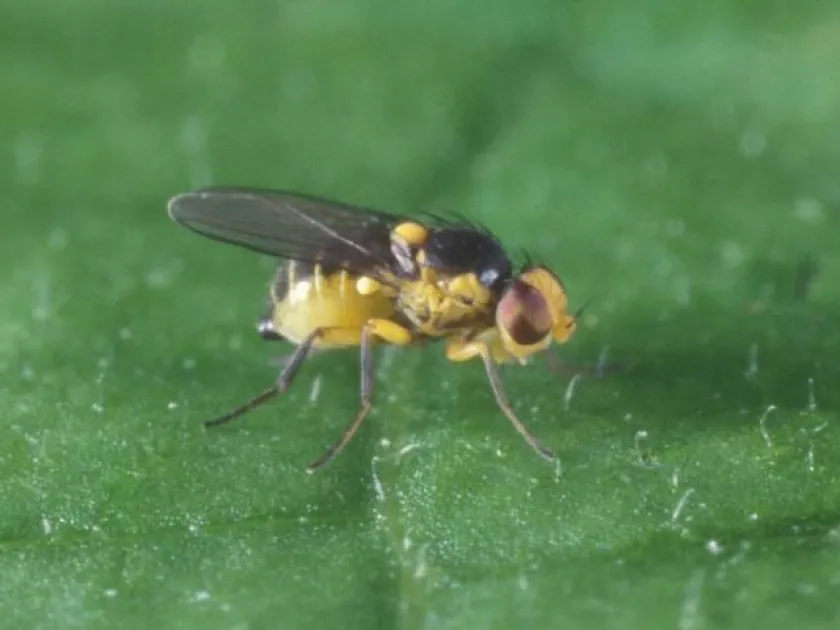
Description
How to identify
Chrysonotomyia punctiventris belongs to the order Hymenoptera, specifically the family Eulophidae. These are typically tiny parasitic or phytophagous wasps with complex life cycles.
Adult insects are microscopic in size, possessing distinct morphological traits such as specific wing venation and structural markings on the abdomen, which are key for identification.
The lifecycle involves eggs, three larval stages, a pupal stage, and the adult phase. Most of these stages are spent within the host plant tissues or in hidden niches.
Environmental factors, particularly temperature and humidity, play a critical role in determining the speed of development and the total number of generations per season.
The insect is highly adapted to a life of concealment, making it a challenging pest to monitor and manage in intensive agricultural settings.
What it damages
The primary damage is caused by the larval stage, which feeds on the leaf parenchyma. This mining activity creates distinct tunnels or blotches under the leaf epidermis.
The pest targets a variety of plants, often preferring succulent foliage where nutrient content is high and the tissue is easy to consume.
Mining significantly reduces the leaf's photosynthetic capacity, which leads to stunted growth and reduced yields in infested crops.
Severe infestations cause premature leaf drop, which weakens the overall health of the tree or shrub and leaves it vulnerable to secondary stressors.
In young plants, excessive foliage loss due to mining can result in mortality, especially when the plant fails to store adequate energy reserves before dormancy.
Signs of infestation
The first indicator of an infestation is the appearance of winding or serpentine mines on the leaves, which change color as the tissue dies.
Upon closer inspection, particularly by backlighting the leaf, one can see the larva actively feeding or leaving dark excrement deposits along the tunnel.
As the larvae mature and move, the leaves often become deformed, curled, or crinkled, eventually drying out and turning brown at the site of the injury.
High infestation levels lead to a general loss of vigor, with the foliage turning yellow or brown across the entire crown of the host plant.
Damaged tissues are frequently susceptible to secondary infections by various pathogens, including fungi and bacteria, which exacerbate the primary injury.
Control measures
Integrated Pest Management (IPM) is essential for controlling this species, involving a mix of cultural, biological, and chemical methods.
Systemic insecticides are the most effective chemical approach, as they are absorbed by the plant and target the larvae hidden within the leaf tissues.
Biological control, such as encouraging natural predators or using compatible parasitoids, can help keep population numbers below economic damage thresholds.
- Prompt removal and disposal of infested foliage to break the lifecycle.
- Monitoring adult flight activity to time insecticide applications accurately.
- Maintaining plant health through proper irrigation and fertilization.
To avoid the development of insecticide resistance, it is crucial to rotate treatments between different modes of action throughout the growing season.
Taxonomy
- Latin name
- Chrysonotomyia punctiventris
- Order
- Hymenoptera
- Family
- Eulophidae
- EPPO code
- CHRNPU
Discussion
No discussions yet — be the first.