
Chrysonotomyia
Chrysonotomyia
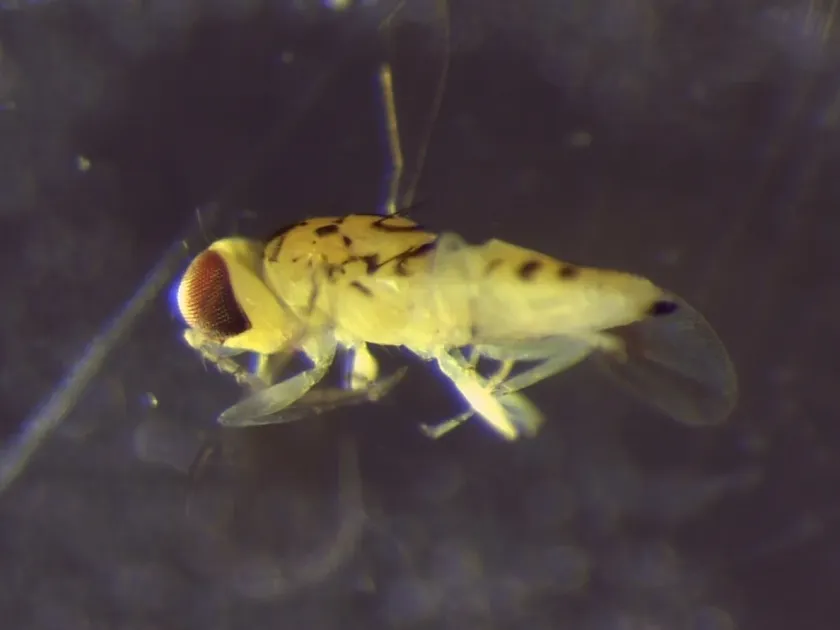
Description
How to identify
The genus Chrysonotomyia belongs to the order Hymenoptera and the family Eulophidae. These tiny wasps are frequently characterized by a distinct metallic coloration on their bodies.
Adults are very small parasitoid wasps, often difficult to identify in the field without specialized equipment due to their microscopic size.
What it damages
Species within this genus act as parasitoids, primarily developing inside the larvae of other insects, such as leafminers that feed on various agricultural crops.
While often considered beneficial for biological control, their presence must be carefully managed to ensure they continue to effectively suppress pest populations.
When it appears
The seasonal appearance of these insects corresponds directly with the life cycles of their host species. They are most active during the growing season when leafminer activity is at its peak.
Typically, multiple generations occur annually, allowing the population to adapt to shifting environmental conditions within the agricultural landscape.
Signs of infestation
Signs of their presence include small exit holes on infested leaf surfaces and a reduction in the damage caused by the host larvae that they parasitize.
Entomologists often use yellow sticky traps in greenhouses and open fields to monitor their activity and assess the population density of these wasps.
Control measures
Integrated Pest Management (IPM) is essential to protect these beneficial insects. Avoiding broad-spectrum pesticides is critical to maintaining high parasitism rates.
Promoting biodiversity around fields helps support these natural enemies, ensuring they remain a reliable tool for controlling harmful leaf-mining pests.
Taxonomy
- Latin name
- Chrysonotomyia
- Order
- Hymenoptera
- Family
- Eulophidae
- EPPO code
- CHRNSP
Discussion
No discussions yet — be the first.