
Chrysocharis syma
Chrysocharis syma
Description
How to identify
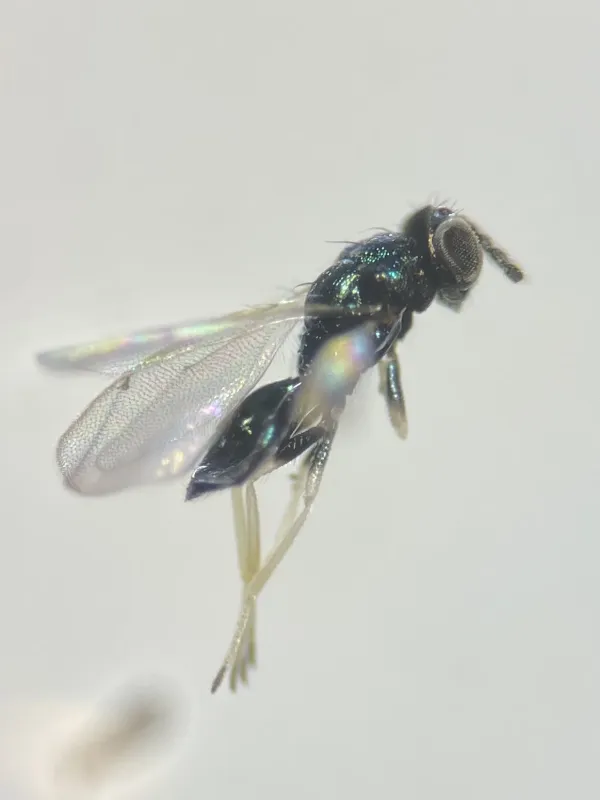
Chrysocharis syma is a species belonging to the order Hymenoptera and the family Eulophidae. These are tiny wasps that serve as important components of agricultural ecosystems, often functioning as parasitoids.
Adult specimens typically feature a metallic body color, often manifesting as green or blue shades. With a size range of 1 to 3 millimeters, they are microscopic insects that require specialized equipment for proper morphological identification.
The morphology of this species is defined by specific wing venation patterns and antennae structures typical for the Eulophidae family. Their life cycle is closely linked to their host insects, often leaf miners.
Systematically, they are classified as endoparasitoids, meaning their larvae develop inside the host's body. This specialized lifestyle makes them highly effective regulators of insect populations.
Identifying this species in a field setting usually involves professional entomological analysis of genital characteristics or specialized DNA barcoding to differentiate them from other Chrysocharis species.
What it damages
The species does not feed on plant tissues directly. Instead, it interacts with plants by targeting other insects, specifically leaf miners, which are the ones causing physical damage to the crops.
The "damage" caused by this insect is primarily indirect. In some ecological contexts, if they parasitize other beneficial insects, they may disrupt the balance of the ecosystem, acting as hyperparasitoids.
They are primarily found on crops susceptible to leaf-mining larvae, including various vegetables and ornamental plants. Their presence is usually a sign that an infestation of primary pests is occurring.
Agronomically, their impact is measured by how effectively they control the primary pest population. A high density of Chrysocharis syma typically results in a lower population of leaf miners on the crop.
Effective crop management requires a holistic approach where the presence of these wasps is encouraged, as they contribute significantly to reducing the need for synthetic chemical applications.
When it appears
The activity of Chrysocharis syma is dictated by the availability of hosts and favorable weather conditions. They are most active during the main growing season, from spring to autumn.
Optimal temperatures for their reproduction and development range between 20°C and 25°C. Within these ranges, they can complete multiple generations in a single season.
As temperatures drop during late autumn, the wasps enter a state of dormancy. They typically overwinter as pupae within the leaf mines of their hosts or within the residual plant matter.
The spring emergence is synchronized with the first appearance of host larvae on the crops, ensuring that the next generation has immediate access to food sources for their offspring.
Monitoring seasonal patterns is crucial for understanding the population dynamics and planning any necessary crop protection measures that do not interfere with the natural life cycle of these beneficial insects.
Signs of infestation
The primary sign of their activity is the presence of microscopic exit holes on the surface of leaves. These holes are created by adult wasps when they emerge from the pupal stage.
Leaves infested by leaf miners that have been colonized by this parasitoid will show empty, abandoned tunnels. These tunnels often appear empty of their original leaf-mining inhabitants.
Visual signs are subtle and often require the use of a hand lens to distinguish between fresh leaf miner activity and parasitized sites where the wasps have already emerged.
- Presence of tiny emergence holes in leaf tissues.
- Tunnels appearing brownish and devoid of living larvae.
- Decrease in the progression of leaf-mining damage on the leaf surface.
Regular field scouting using yellow sticky traps is a recommended method for detecting their presence, as it allows agronomists to identify the wasp activity before major pest damage occurs.
Control measures
Because Chrysocharis syma acts as a natural enemy to agricultural pests, direct control against this species is generally discouraged. The focus should be on conservation and habitat management.
To support their population, growers should minimize the use of broad-spectrum insecticides that could inadvertently kill these beneficial wasps. Selective biopesticides are preferred alternatives.
Good agricultural practices, such as proper disposal of crop debris, should be managed to ensure that beneficial insects have the opportunity to emerge or relocate before debris destruction occurs.
Integrating these wasps into a wider Integrated Pest Management (IPM) program helps stabilize the crop environment and reduces the overall cost of chemical pest control.
By maintaining a healthy ecosystem with hedgerows and low-pesticide areas, farmers can naturally sustain populations of Chrysocharis syma to provide long-term protection against leaf-mining pests.
Taxonomy
- Latin name
- Chrysocharis syma
- Order
- Hymenoptera
- Family
- Eulophidae
- EPPO code
- CHRCSY
Discussion
No discussions yet — be the first.