
Chrysocharis parksi
Chrysocharis parksi
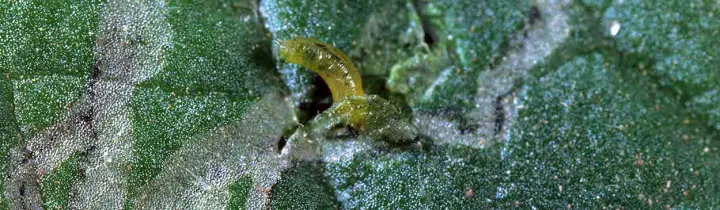
Description
How to identify
Chrysocharis parksi is a minute parasitic wasp belonging to the family Eulophidae, recognized primarily for its role as a natural enemy of agricultural pests.
These insects are extremely small in size, possessing dark bodies, often with a metallic sheen, which provides camouflage while moving across plant foliage.
The adult females are equipped with a specialized ovipositor designed to penetrate plant tissues or the cuticle of the host larvae to deposit their eggs.
As a specialized entomophage, this species is essential in many ecosystems for regulating the populations of various leaf-mining insects.
Accurate identification of this species usually requires microscopic analysis by specialists, given their cryptic nature and small scale of existence.
What it damages
While often considered beneficial, Chrysocharis parksi is associated with crops suffering from leafminer infestations, such as tomatoes, cucumbers, and legumes.
The insect itself does not feed on the plant tissues, but its life cycle is entirely dependent on the presence of leafminer larvae that cause direct damage to the crop.
The presence of this parasitoid indicates that the leafminers are established in the field, which leads to reduced plant health and lower photosynthetic capacity.
Economic impact is linked to the level of leafminer damage, as the parasitoid works to lower the population of these herbivores over the course of the season.
Agricultural managers must distinguish between the damage caused by the primary pest and the regulatory activity of the parasitoid wasp.
When it appears
The activity of Chrysocharis parksi is strongly tied to temperature fluctuations and the seasonal availability of their host larvae.
Activity peaks during the spring and summer months when the weather conditions favor the development of both the host leafminers and the parasitoids.
The life cycle is rapid, allowing the species to produce multiple generations within a single growing season, provided there is a continuous supply of host insects.
As temperatures begin to drop in the autumn, the wasps reduce their foraging activity and may enter a dormant state to survive the winter period.
In greenhouses and controlled environment agriculture, the lifecycle can proceed continuously throughout the year, contingent upon stable climate management.
Signs of infestation
Visible signs of infestation include the winding, pale tunnels known as mines on the surface of the leaves, where the host larvae develop.
Tiny exit holes on the surface of the mines serve as evidence that a parasitoid wasp has successfully completed its development and emerged from the host.
Leaves affected by the primary pest often exhibit chlorosis, curling, and early senescence, which negatively impacts the overall yield of the plants.
Inspecting the contents of the leaf mines often reveals either empty host skins or the presence of the parasitoid larva within the tunnel.
A reduction in the number of active leafminer larvae in the presence of parasitoid activity is a positive sign for the natural control of the pest.
Control measures
Effective management requires an integrated pest management (IPM) approach that prioritizes the conservation of native parasitoid populations.
Avoiding broad-spectrum chemical insecticides is critical, as these agents often eliminate beneficial insects like Chrysocharis parksi alongside the pests.
Biological control strategies should be employed to support the natural regulation of leafminer populations without disrupting the ecological balance.
Monitoring the fields using sticky traps can provide valuable data on the population trends of both the leafminers and their natural enemies.
Cultural practices, including the removal of weeds and debris that serve as alternative hosts, are recommended to minimize pest pressure in the field.
Taxonomy
- Latin name
- Chrysocharis parksi
- Order
- Hymenoptera
- Family
- Eulophidae
- EPPO code
- CHRCPA
Discussion
No discussions yet — be the first.