
Chrysocharis aeneiscapus
Chrysocharis aeneiscapus
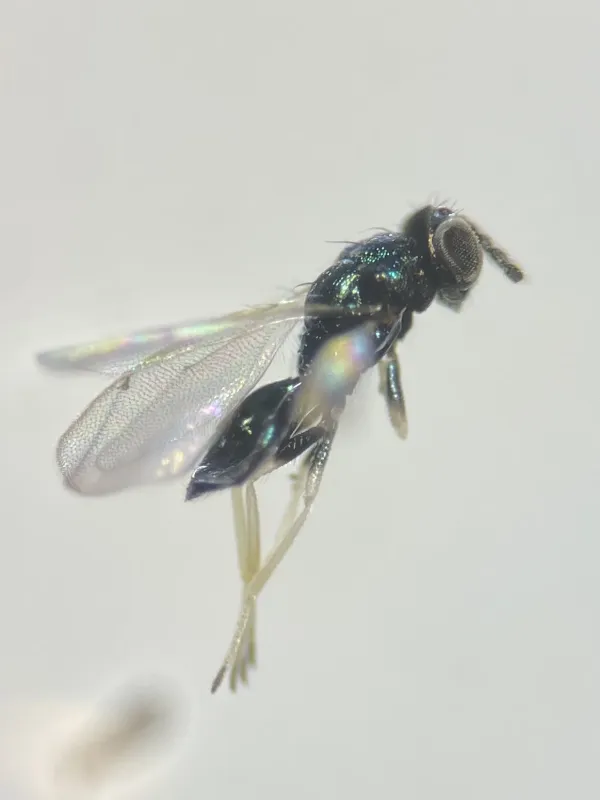
Description
How to identify
Chrysocharis aeneiscapus is a parasitic wasp species belonging to the family Eulophidae within the order Hymenoptera. These insects are highly specialized, often targeting the larval stages of other small insects in a complex ecological interaction.
Adult specimens are characterized by a metallic sheen, usually in shades of green, bronze, or blue. They are tiny organisms, often less than 2-3 mm in length, which makes them difficult to identify without magnification.
The larvae are endoparasitic, meaning they complete their development inside the host's body. They lack legs and are generally creamy white, perfectly adapted for survival within the confined space of a leaf mine or the host's tissue.
The females have a well-developed ovipositor, which allows them to penetrate plant tissues or the host's cuticle to deposit eggs. This highly sensitive behavior is driven by chemical cues emitted by the host or the damaged plant.
The species undergoes a complete metamorphosis, including egg, larval, pupal, and adult stages. The duration of these stages is strongly correlated with the ambient temperature and humidity levels of their environment.
What it damages
While often considered a beneficial natural enemy, Chrysocharis aeneiscapus primarily parasitizes leafminers (e.g., Liriomyza species). Therefore, its "damage" is usually indirect, related to its role in the ecosystem rather than direct plant feeding.
Crops most frequently affected by the complex of insects this species interacts with include tomatoes, cucumbers, peppers, and various ornamental plants. These crops provide ideal conditions for leafminer development.
Indirect negative impacts occur when these wasps outcompete other essential biological control agents, potentially leading to an increase in the primary pest population that was previously managed by those agents.
Leafminer larvae feed within leaf tissue, creating serpentine mines that reduce photosynthetic surface area. If the biological control balance is disrupted, leafminer outbreaks can significantly reduce crop yield and quality.
The presence of such parasites requires careful monitoring in integrated pest management (IPM) programs to ensure they are supporting, rather than hindering, the overall control effort.
When it appears
The activity of these wasps is strictly seasonal, starting in early spring as temperatures rise and pests become active. Peak populations typically coincide with the highest density of host larvae.
In greenhouse conditions, where climate is controlled, the generation cycle can continue throughout the year. The lack of cold winters allows for constant population pressure if host availability is stable.
Summer is the period of maximum reproductive activity, as higher temperatures accelerate development. However, extreme heat can sometimes become a limiting factor for both the parasite and its host.
Autumn marks the transition toward diapause. The wasps seek protected locations, such as plant debris or the topsoil layer, to survive the winter months until the next season begins.
Microclimatic factors, including dew point and humidity, significantly influence the mortality rates of the adult wasps, as they are fragile and susceptible to physical environmental stresses.
Signs of infestation
The primary diagnostic sign is the presence of tiny exit holes on the surface of leaf mines. These holes indicate that a wasp has successfully completed its development and emerged from the host larva.
Visual detection of the adults is possible using sticky yellow traps, which are highly attractive to them. Monitoring these traps provides data on population density and activity timing.
Affected leaves may show signs of premature necrosis or abnormal mine development. While these symptoms are primarily caused by the host, the presence of the parasite can alter the appearance of the mined tissue.
Dissection of the leaf mines under a microscope can reveal the presence of pupae or larval remains of the parasite, providing definitive proof of its activity within the crop.
A general decrease in the number of live leafminer larvae in the presence of existing mines often signals that the biological control agent is effectively working within the canopy.
Control measures
Integrated control strategies should prioritize the preservation of existing beneficial populations. This means avoiding the use of broad-spectrum insecticides that harm both the pest and the parasite.
Implementing a "soft" chemical approach involves selecting target-specific pesticides that do not affect the natural enemies of leafminers. This ensures the wasp population remains robust.
Sanitation is crucial: removing and destroying infested plant material at the end of the season reduces the overwintering capacity of both the pests and their parasitoids.
Biological augmentation, involving the release of mass-reared parasitoids, can be used as an effective tool when the natural population of the wasp fails to keep up with the pest outbreak.
- Minimize broad-spectrum pesticide use.
- Utilize yellow sticky traps for population monitoring.
- Ensure proper disposal of crop debris after harvest.
Taxonomy
- Latin name
- Chrysocharis aeneiscapus
- Order
- Hymenoptera
- Family
- Eulophidae
- EPPO code
- CHRCAE
Discussion
No discussions yet — be the first.