
Chrysocharis
Chrysocharis
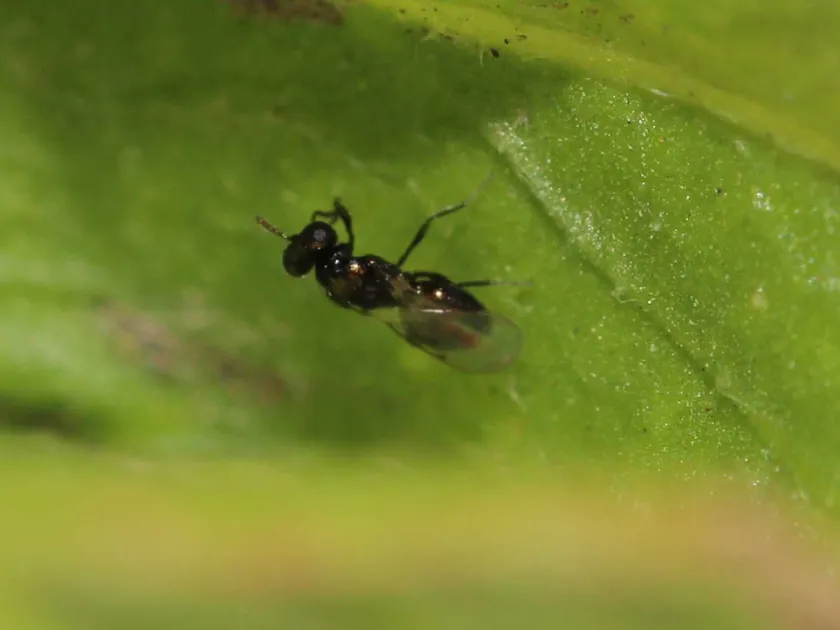
Description
How to identify
The genus Chrysocharis belongs to the Eulophidae family within the order Hymenoptera. These are tiny parasitic wasps known primarily for their role as parasitoids of leaf-mining insects.
Adults typically exhibit a metallic green or bronze coloration, making them difficult to spot against foliage. Accurate identification to the species level requires specialized microscopic examination of wing venation and antennae.
The larvae are endoparasitoids, completing their development either inside the host larva or within the leaf tissue occupied by the host. This hidden life cycle is typical for the species.
Biology of the genus is tightly linked to the population dynamics of Agromyzidae flies. They are considered crucial natural regulators in various agricultural ecosystems.
Understanding their taxonomy is essential for researchers aiming to utilize these wasps in biological control programs to suppress mining pest populations.
What it damages
Direct damage to crops is generally minimal, as the primary impact is caused by adult females probing leaves with their ovipositors to feed on plant sap.
These feeding punctures can leave small necrotic spots on the leaves, which, under high population densities, may affect the overall aesthetics of ornamental plants.
Crops most frequently visited include various vegetable species such as tomatoes, cucumbers, and beans, especially in greenhouse environments.
The ecological benefit of these wasps, which kill mining pests, often outweighs the minor physical damage caused by their oviposition activity.
In intensive farming, excessive chemical usage targeting these wasps can lead to secondary outbreaks of leafminers, as the natural biological control is disrupted.
When it appears
Activity is most pronounced during the warm spring and summer months when host populations of leafminers are at their peak.
In greenhouses, where environmental conditions are controlled, these wasps can remain active throughout the year, provided there is a constant supply of hosts.
The life cycle can be completed in as little as two to three weeks under optimal temperatures, typically ranging from 20 to 25 degrees Celsius.
Adults are most mobile during the early morning and late afternoon hours, avoiding the heat of the midday sun to minimize desiccation.
Winter survival is typically achieved through diapause, where the insect remains in the pupal stage inside the dried host mine or within the leaf litter.
Signs of infestation
An early indicator of presence is the cessation of leafminer activity within existing leaf mines, often accompanied by a distinct color change in the mined area.
Small, circular feeding punctures on the leaf surface, often appearing as tiny white or brown dots, are visible signs of female oviposition activity.
Leaf curling or yellowing may occur if the infestation rate of the primary pest is high and the subsequent parasitism levels are likewise elevated.
Dissection of the leaf mines under a magnifying glass may reveal the pupa or larva of the Chrysocharis wasp within the host gallery.
The presence of parasitoid waste products within the leaf mine acts as a diagnostic feature, indicating successful completion of the larval stage.
Control measures
Integrated Pest Management (IPM) is the best approach, prioritizing biological control and avoiding the use of broad-spectrum pesticides.
Cultural control practices, such as the removal of host weeds and crop residue, help manage the overall population of the primary host, thereby regulating the wasp.
In greenhouse operations, utilizing selective pesticides that are compatible with beneficial insects is critical to maintaining natural population levels.
- Monitoring with yellow sticky cards to track population surges.
- Preserving natural habitats around field borders to support parasitoid survival.
- Using biological agents instead of harsh chemical sprays when feasible.
Economic threshold levels should be carefully calculated to ensure that interventions are only taken when strictly necessary to protect the harvest.
Taxonomy
- Latin name
- Chrysocharis
- Order
- Hymenoptera
- Family
- Eulophidae
- EPPO code
- CHRCSP
Discussion
No discussions yet — be the first.