
Aprostocetus fidius
Aprostocetus fidius
Description
How to identify
Aprostocetus fidius is a member of the Hymenoptera order, family Eulophidae. This tiny insect is recognized as a specialized pest that affects various coniferous species, primarily impacting their foliage and new growth.
The adult form is a microscopic chalcid wasp. Due to its very small size and dark, metallic coloration, it is extremely difficult to spot during routine garden inspections without magnification.
The larval stage is legless, typically creamy-white or pale yellow. These larvae live exclusively inside plant tissues, where they develop within protective structures known as galls.
Identification often relies on observing the specific pathological growth on host plants rather than spotting the insects themselves, as they remain hidden for most of their lifecycle.
Proper classification is crucial for foresters and nursery managers, as these insects can be confused with other gall-forming species that have different ecological impacts on host plants.
What it damages
This pest is primarily associated with damage to juniper species (Juniperus). The presence of the pest disrupts the normal physiological development of the host plant's foliage.
Larval feeding stimulates the formation of galls, which are abnormal tissue growths. This process diverts nutrients away from healthy growth and weakens the affected branch.
As damage progresses, the needles turn yellow, become deformed, and eventually drop off prematurely, leading to a significant loss of aesthetic value in ornamental landscapes.
In cases of high infestation density, the cumulative stress can cause localized dieback, particularly in younger, more vulnerable plants in nursery settings.
While mature trees might tolerate light infestations, the damage caused by Aprostocetus fidius is most destructive to young saplings and ornamental varieties where foliage quality is paramount.
When it appears
The lifecycle begins with the emergence of adult wasps in the spring, coinciding with the period of rapid shoot elongation in the host plants.
Adult females deposit eggs directly into the tender tissues of new growth. This timing ensures that the emerging larvae have an immediate food source within the plant.
Throughout the summer months, larvae continue to feed and grow within the developing galls, gradually preparing for the later stages of their life cycle.
Overwintering occurs in the larval or pre-pupal stage, sequestered deep within the protective gall tissues, which provide thermal insulation against harsh weather conditions.
The following spring, the cycle repeats as adult wasps emerge, timed precisely with the flush of new green growth, allowing for rapid colonization of the host plant.
Signs of infestation
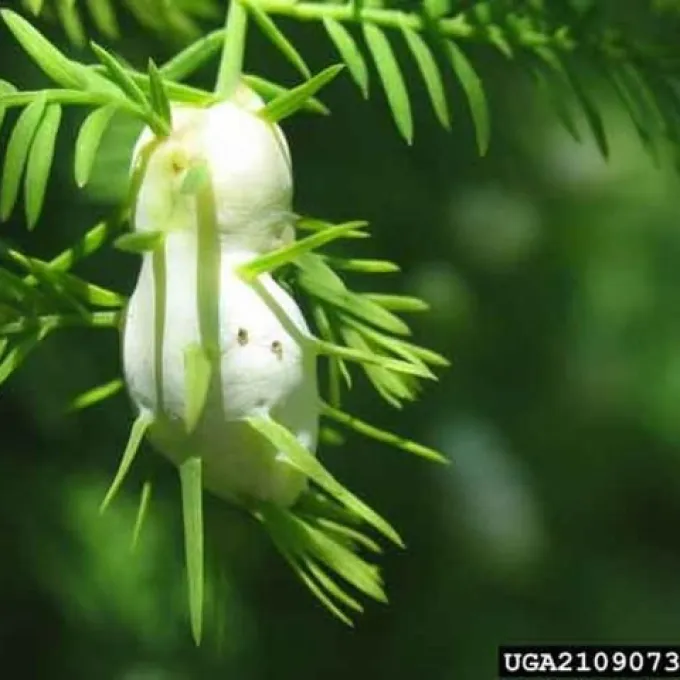
The most visible sign of an Aprostocetus fidius infestation is the development of abnormal swellings or galls on the needles and tender new shoots of the host juniper.
- Yellowing or chlorosis of the needles surrounding the gall area.
- Tiny, circular exit holes indicating where adults have successfully emerged.
- Noticeable twisting or curling of the terminal shoots.
- Premature needle drop following light mechanical pressure.
- Presence of internal chambers containing larvae when affected tissues are carefully dissected.
Monitoring during the early spring season is essential to catch these symptoms before the galls fully mature and the adult population spreads throughout the garden.
Visually, an infested plant may appear thin or sparse, with brownish or faded branches contrasting against the healthy green foliage of the rest of the canopy.
Early intervention is key, as the damage becomes increasingly visible and widespread as the season progresses towards late summer and autumn.
Control measures
Effective control of Aprostocetus fidius is challenging because the larvae are well-protected inside their galls, rendering contact-based pesticide applications mostly ineffective.
Sanitation is the most recommended practice: carefully pruning and destroying infested shoots early in the season will significantly reduce the population for the following year.
Systemic insecticides, applied during the precise window of adult emergence, can help manage populations by targeting the adults before they complete their egg-laying cycle.
Maintaining high plant vigor through proper irrigation and balanced fertilization can improve the host plant's natural resistance, potentially limiting the severity of infestations.
Avoiding overcrowding of plants in the nursery or garden landscape is vital, as dense plantings create an environment where the pest can easily migrate and re-infest healthy specimens.
Taxonomy
- Latin name
- Aprostocetus fidius
- Order
- Hymenoptera
- Family
- Eulophidae
- EPPO code
- APRSFI
Discussion
No discussions yet — be the first.