
Aprostocetus
Aprostocetus
Description
How to identify
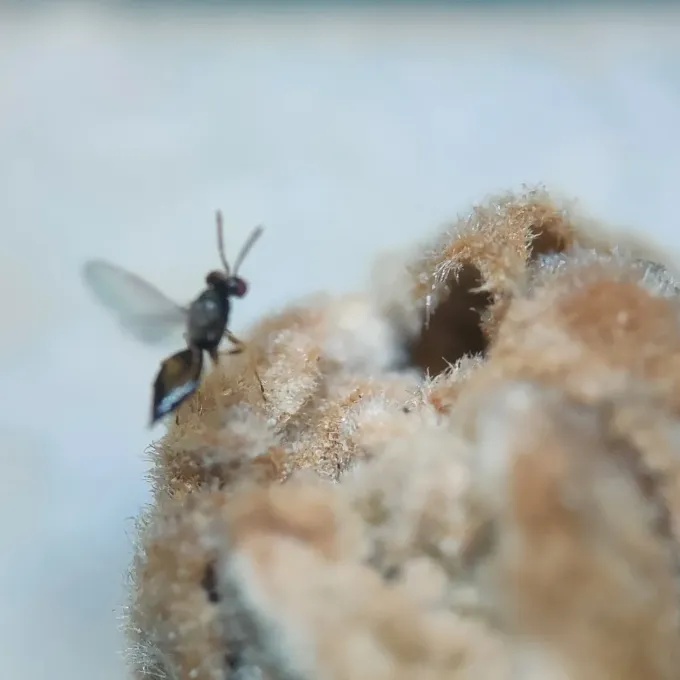
Aprostocetus is a genus of wasps belonging to the family Eulophidae within the order Hymenoptera. While many species are parasitoids, some are known to be phytophagous, causing significant damage to plant tissues.
These wasps are tiny, typically ranging from 1 to 3 mm in length. They often possess a dark, metallic-hued exoskeleton, which makes them quite difficult to spot during routine inspections.
The larval stage lives internally within host plants, often inside galls or developing seeds, where they feed on nutrient-rich tissues.
The biological complexity of this genus is high; identifying specific species often requires professional entomological expertise due to the subtle morphological differences.
Growers should distinguish between beneficial species that help control other pests and those that act as primary pests, causing structural damage to plants.
What it damages
Aprostocetus species frequently target ornamental shrubs, various forest trees, and specific fruit-bearing plants, affecting their overall vitality.
The formation of galls is a hallmark of their damage, as these growths hijack the plant's metabolic resources and disrupt normal vascular functions.
Damage to the reproductive organs, including ovaries and seeds, directly impacts the plant's ability to propagate and reduces total harvest yields.
The presence of larvae inside shoots can cause significant deformation and stunting, leading to brittle branches that are prone to mechanical breakage.
Furthermore, persistent infestations often lead to premature leaf drop and increased susceptibility to secondary pathogenic infections.
When it appears
The life cycle of these pests is tightly synchronized with the phenological stages of their host plants, with adult emergence timed for the growing season.
Activity usually peaks in late spring and early summer when new growth and buds become available for egg-laying by the female wasps.
Larvae develop over several weeks, often completing their growth cycle within the gall or host organ before pupating.
Overwintering typically occurs as mature larvae or pupae tucked away in fallen debris, leaf litter, or protective galls on woody stems.
Depending on the climate and geographical region, multiple generations may occur within a single year, necessitating sustained monitoring.
Signs of infestation
The emergence of abnormal growths or galls on leaves, stems, or leaf stalks is the most definitive sign of an Aprostocetus infestation.
Stunted, twisted, or distorted new shoots are often indicative of larvae feeding within the vascular tissue of the plant.
The appearance of small, pin-prick sized exit holes in fruits or seed pods confirms that the adults have recently completed their development and emerged.
Visible yellowing or wilting of localized foliage, despite adequate soil moisture, often points to internal damage caused by the larvae.
Observing an unusual increase in tiny flying insects around susceptible hosts during budding periods should alert growers to a potential outbreak.
Control measures
Sanitation is a critical control measure; prune and destroy infested plant parts before the adults have a chance to emerge and spread to healthy tissue.
Clearing and removing leaf litter during the autumn months significantly reduces the overwintering success of the pest population.
Systemic insecticides can be applied during the early larval stage, as this is the window when the pest is most vulnerable to chemical exposure.
Integrated Pest Management (IPM) practices, including the use of entomopathogenic fungi, offer a sustainable alternative to broad-spectrum chemical controls.
Consistent monitoring and the early identification of infested plants are essential to prevent the pest from becoming established across the entire planting area.
Taxonomy
- Latin name
- Aprostocetus
- Order
- Hymenoptera
- Family
- Eulophidae
- EPPO code
- APRSSP
Discussion
No discussions yet — be the first.