
Achrysocharis
Achrysocharis formosa
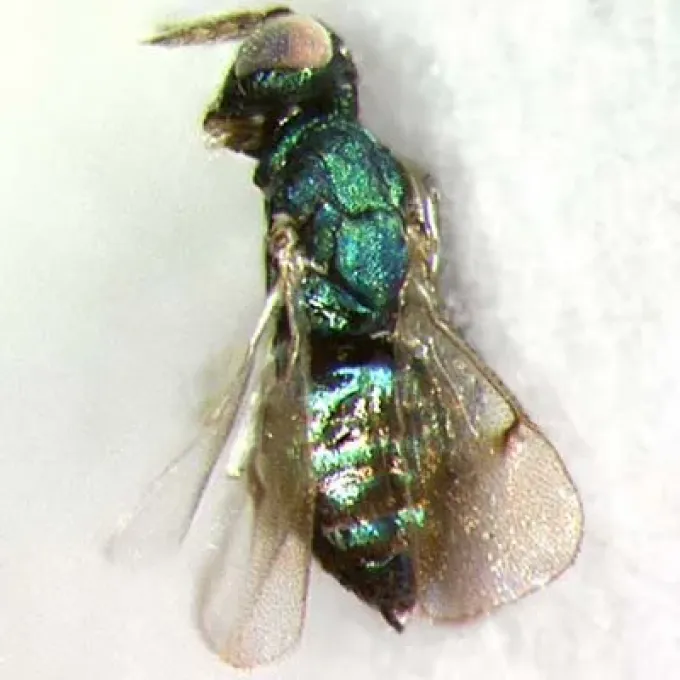
Description
How to identify
Achrysocharis formosa belongs to the family Eulophidae within the order Hymenoptera. As a member of this diverse family, it exhibits complex relationships within the ecosystem, often acting as a significant herbivore in specific agricultural contexts.
Adult specimens are small parasitoid-like wasps with a metallic sheen. They are highly mobile and active, making them difficult to monitor without using specialized entomological tools like sticky traps.
The larval stage is the primary period of development, during which the insect resides within the host plant tissue. This internal development protects the larvae from various environmental stresses and contact treatments.
Identification is typically performed by specialists observing wing venation and antennal structures under a microscope. Distinguishing this species from other related Eulophidae requires precision and expert knowledge.
Understanding the life cycle of this species is essential for agronomists, as its population dynamics are heavily influenced by temperature and the availability of specific host plants throughout the growing season.
What it damages
The pest primarily targets a wide range of horticultural crops, including common greenhouse staples. The larvae feed on the mesophyll layer of leaves, creating distinct patterns known as mines.
Economic damage is most significant in greenhouse environments where constant temperatures allow for continuous generations of the pest. This can lead to rapid infestation of an entire crop.
By consuming leaf tissues, the larvae disrupt the plant's ability to perform photosynthesis efficiently. This leads to stunted growth, reduced fruit production, and overall plant weakening.
Ornamental plants are also susceptible to damage, which ruins their aesthetic appeal and marketability. A single infested plant can serve as a center for further spread throughout the production area.
If left unmanaged, the cumulative effect of larval mining can lead to premature leaf drop and the complete collapse of the plant's vigor during the critical stages of fruit development.
Signs of infestation
The most recognizable signs of infestation are serpentine, white-colored trails on the leaf surface. These mines are caused by the larvae as they tunnel through the leaf parenchyma.
In addition to the visible trails, infected leaves often show small, dark excrement pellets left behind by the feeding larvae. These are clearly visible upon closer inspection of the leaf surface.
As the infestation progresses, the mines may merge, causing larger necrotic patches to form. This tissue death reduces the area available for photosynthesis, negatively impacting the plant's metabolism.
Severe infestations often cause the leaves to wilt, curl, and turn yellow before dropping from the plant. This structural damage is irreversible and leaves the plant susceptible to secondary pathogens.
Detection is often easier when observing the crop against direct sunlight, which makes the internal tunnels more transparent and clearly defined to the naked eye.
Control measures
Integrated Pest Management (IPM) is the most effective approach for controlling this pest. This involves combining cultural, biological, and chemical methods to minimize damage.
Cultural practices include the removal of host weeds from the vicinity of greenhouses and fields to eliminate alternate food sources and hiding spots for the pest.
Biological control using natural predators or parasitoids can be highly effective in reducing population levels. This strategy is preferred in organic and greenhouse-integrated systems.
Chemical control should be reserved for cases of high infestation, utilizing systemic insecticides that reach the larvae inside the leaf tissue. Strict adherence to label rates is necessary to avoid resistance development.
- Consistent use of yellow sticky traps for monitoring and mass trapping.
- Regular sanitation of greenhouse structures between production cycles.
- Early detection of symptomatic leaves and prompt removal.
- Application of biological agents in the early stages of the population buildup.
Taxonomy
- Latin name
- Achrysocharis formosa
- Order
- Hymenoptera
- Family
- Eulophidae
- EPPO code
- ACHSFE
Discussion
No discussions yet — be the first.