
Tetracnemoidea
Tetracnemoidea
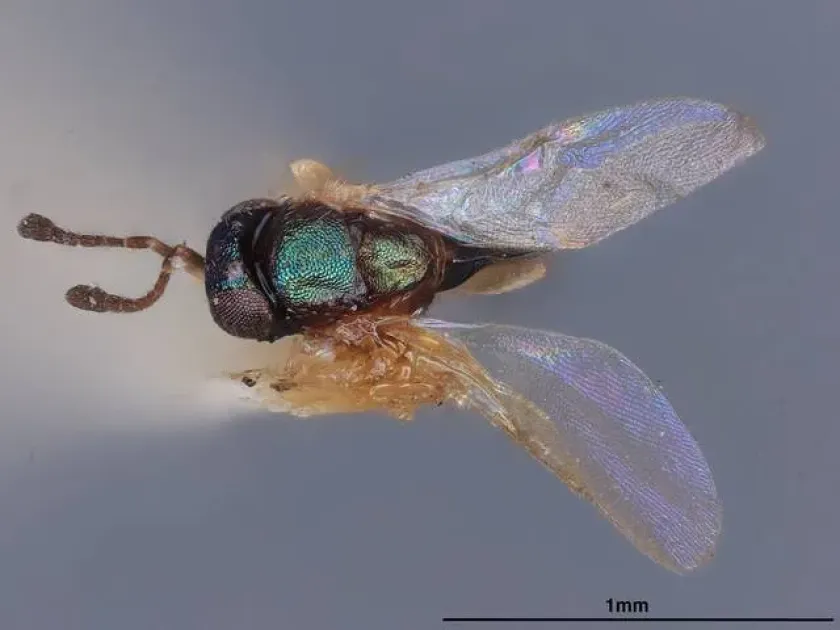
Description
How to identify
Tetracnemoidea is a genus of parasitic wasps belonging to the family Encyrtidae. In agricultural science, these tiny insects are primarily recognized as valuable biological control agents rather than pests.
Adult Tetracnemoidea wasps are minute, typically measuring between 1 to 2 mm in length. They often possess a dark, metallic coloration, which allows them to blend in with the foliage where they hunt their hosts.
Morphologically, they are distinguished by specific antennal structures and wing venation characteristic of the Encyrtidae family. Accurate identification often requires expert analysis under a microscope.
As endoparasitoids, they spend their larval stage developing inside the bodies of their hosts, effectively neutralizing them. They are essential components of sustainable agricultural systems.
Recognizing these wasps is vital for growers to avoid accidental pesticide applications that would eliminate these beneficial allies from their crops.
What it damages
These wasps do not cause damage to plants. In fact, they are highly beneficial because they target and kill mealybugs (family Pseudococcidae), which are notorious sap-sucking pests of citrus, grapes, and various ornamental plants.
The damage often attributed to insects in a field is caused by the mealybugs, not the parasitoids. The parasitoids actually mitigate the damage by reducing the mealybug population density.
Plants affected by mealybugs show symptoms such as leaf yellowing, shoot deformation, and the growth of sooty mold due to honeydew secretion. Tetracnemoidea helps suppress these populations naturally.
By consuming the internal tissues of the mealybugs, the wasp larvae prevent the pests from reproducing and spreading further across the crop canopy.
Protecting the Tetracnemoidea population is an investment in long-term crop health, as it reduces the economic pressure caused by invasive mealybug species.
When it appears
The activity of Tetracnemoidea is closely linked to the lifecycle of their hosts. They are most active during the warmer months when mealybug populations are expanding.
In greenhouse settings with controlled climates, these wasps can remain active throughout the year, provided temperatures are optimal for both the parasitoid and its host.
Their generation time is typically shorter than that of their hosts, allowing the wasp population to respond rapidly to fluctuations in mealybug numbers during the growing season.
As the weather cools, their metabolic activity decreases, and they may enter a period of reduced activity or overwinter in the mummy stage within the host.
Monitoring for these wasps is most effective during periods of high light intensity when they are actively searching for host larvae on the underside of leaves.
Signs of infestation
The most distinctive sign of Tetracnemoidea presence is the occurrence of "mummies." These are mealybugs that have died and turned into stiff, hardened, and often discolored shells.
If you observe mealybugs that look bloated or have changed color (often brown or tan) and appear fixed to the plant surface, they are likely parasitized.
Small, neat exit holes in the bodies of dead mealybugs indicate that the adult wasp has already emerged, confirming that the parasitoid is successfully reproducing.
Direct sightings of the tiny, dark wasps walking rapidly over leaves in search of hosts are another positive indicator of biological control success.
A decline in the overall vigor and reproductive capacity of the mealybug colony is a strong sign that the natural parasitoids are exerting successful control.
Control measures
No control measures are needed for Tetracnemoidea, as they are beneficial. Protection efforts should focus on conserving their populations.
Avoid the use of broad-spectrum insecticides that harm beneficial insects. If chemical control for mealybugs is absolutely necessary, select narrow-spectrum, systemic, or soft pesticides that have a minimal impact on parasitoids.
Integrated Pest Management (IPM) strategies should be prioritized, allowing the natural cycle of Tetracnemoidea to manage pest numbers effectively without human intervention.
Maintaining floral strips nearby provides the adult wasps with necessary nectar and pollen, which increases their longevity and search efficiency.
- Monitor for parasitoid activity before applying pesticides.
- Use selective chemicals only as a last resort.
- Avoid broad-spectrum spraying schedules.
- Enhance biodiversity to support native parasitoid populations.
Taxonomy
- Latin name
- Tetracnemoidea
- Order
- Hymenoptera
- Family
- Encyrtidae
- EPPO code
- TCNMSP
Discussion
No discussions yet — be the first.