
Psyllaephagus bliteus
Psyllaephagus bliteus
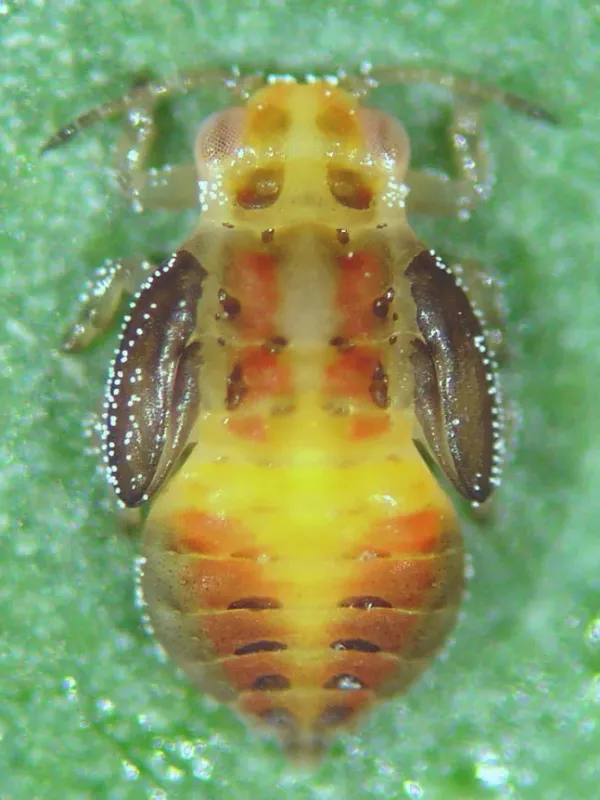
Description
How to identify
Psyllaephagus bliteus is a small parasitic wasp belonging to the order Hymenoptera and the family Encyrtidae, known primarily for its role as a biocontrol agent.
These tiny parasitoids are specialized predators that target the nymphal stages of specific psyllid species, effectively suppressing their populations.
Adult wasps are characterized by their small size and dark, metallic coloration, which helps them blend into the foliage while searching for hosts.
The life cycle of the wasp is tightly synchronized with that of the eucalyptus lerp psyllid, ensuring that its offspring have a consistent food source.
Female wasps deposit their eggs directly into the body of the host nymph, where the larvae develop and consume the host from within.
What it damages
This insect is beneficial to agriculture and forestry rather than a pest, as it performs the ecological service of regulating pest population density.
The primary host for Psyllaephagus bliteus is the red gum lerp psyllid (Glycaspis brimblecombei), a major pest of eucalyptus trees worldwide.
By parasitizing these psyllids, the wasp helps prevent the severe leaf drop and physiological stress that often results from high pest infestation rates.
In environments where the psyllid is an invasive species, the introduction of this wasp is a critical strategy for restoring ecological equilibrium.
The presence of this parasitoid significantly reduces the economic damage caused by the lerp psyllid by lowering the pest's numbers significantly.
When it appears
The activity of this parasitoid is highly dependent on ambient temperatures and the life cycle stages of its psyllid host in the field.
In warmer climates, these wasps can produce multiple generations per year, mirroring the reproductive cycles of their hosts in the eucalyptus canopy.
Population peaks are typically observed during the spring and summer months when host nymphs are most abundant on the leaves.
While activity may decrease during cooler winter months, the parasitoid is capable of overwintering as a larva within the host body.
The synchronized development ensures that the parasitoid is available to attack new generations of psyllids as soon as they appear in the canopy.
Signs of infestation
The most reliable sign of Psyllaephagus bliteus activity is the presence of dried, brown host nymphs on the underside of eucalyptus leaves.
Once the adult wasp has emerged from the host, it leaves behind a distinct, perfectly circular exit hole in the cuticle of the psyllid.
A reduction in the amount of sticky honeydew and lerps (protective covers) on the foliage is a secondary indicator of successful parasitism.
The infested psyllid colonies often appear less vigorous and exhibit changes in their characteristic white, waxy structures.
Field observation requires careful inspection of the leaves, as the parasitoids and their effects are small and can be easily overlooked without magnification.
Control measures
Effective management strategy involves preserving the existing population of this wasp by avoiding broad-spectrum chemical insecticides.
Integrated Pest Management (IPM) programs prioritize the conservation of Psyllaephagus bliteus as a primary tool for sustainable lerp psyllid control.
If chemical treatments are absolutely necessary, growers should select selective pesticides that minimize the impact on beneficial Hymenoptera.
Regular field surveys to count the number of exit holes in psyllid nymphs allow for monitoring the efficacy of the biological control agent.
Maintaining healthy tree stands and promoting biodiversity helps ensure the long-term survival and activity of this essential parasitoid.
Taxonomy
- Latin name
- Psyllaephagus bliteus
- Order
- Hymenoptera
- Family
- Encyrtidae
- EPPO code
- PSYABL
Discussion
No discussions yet — be the first.